
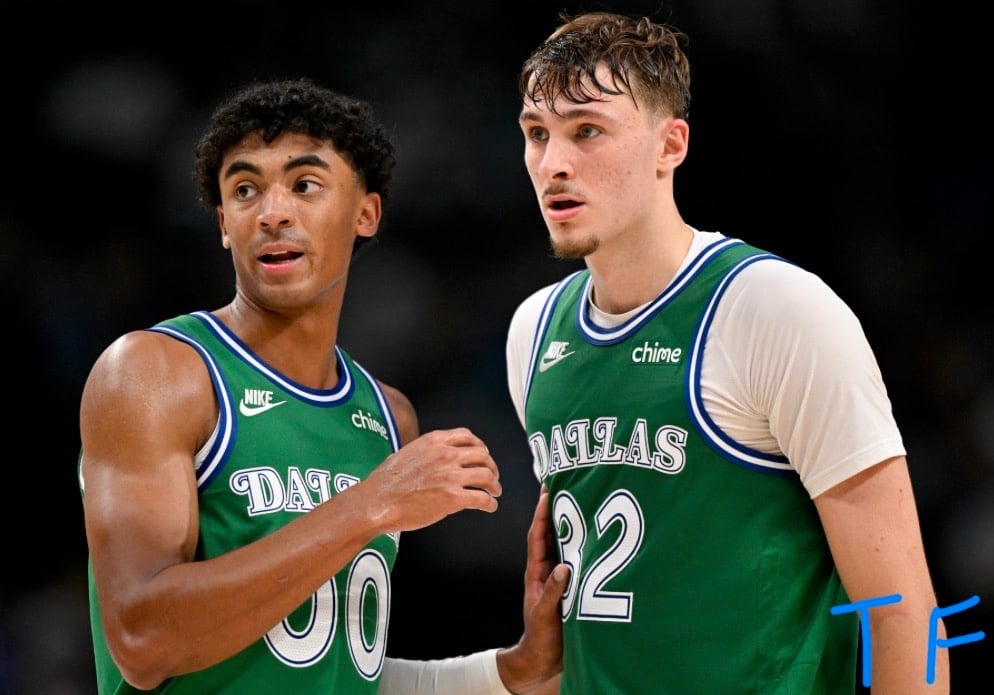

The Dallas Mavericks have stumbled onto something special with Cooper Flagg and Max Christie, and honestly, I’ve been on this train longer than most. When Christie was with the Lakers, my friends rolled their eyes at my optimism, but I couldn’t shake the feeling he just needed the right setting to break out.
The same gut feeling I had with Cooper Flagg. While still at Duke and starting out to be the rising star, I knew it. This is a diamond.
Now, with both of them in Dallas, it’s wild to see how their games mesh. You can already catch flashes of what might be one of the NBA’s most electrifying duos. I’m pretty sure we’re just scratching the surface of what these two can do together. Give them more time to gain experience, but they will give us some amazing and unforgettable NBA watch times. Mark my words.
Christie’s move from LA to Dallas after the Luka Doncic trade really proved my point. The defensive grit, the ability to score at all three levels, the mental toughness—it was always there. He just needed a team to actually bet on him, give him real minutes, and let him spread his wings. And we all know, the Lakers under the current team – especially as long as LeBron is there, there is no way for talent to shine.
Flagg, only 18, landed in Dallas with a tidal wave of hype and is already showing why. He’s got that rare mix of confidence and skill, and you can tell he’s just getting started. Let’s dig into their journeys, how their games fit, and why this pairing could end up defining the Mavericks for the next decade.
The Journey and Early Challenges of Cooper Flagg and Max Christie
Both took very different routes to Dallas. Christie had to fight through being overlooked, while Flagg came in with sky-high expectations as a top draft pick right after a franchise-shaking trade.
From College Standouts to NBA Rookies
Cooper Flagg landed with the Mavericks as the No. 1 pick in the 2025 NBA Draft, fresh off a standout run at Duke. His leap from Montverde Academy to the NBA happened fast, and the pressure on him was immediate. He became the new face of a team still reeling from massive changes.
Max Christie had a rockier ride. I watched him on the Lakers, where he never got a real chance to shine. The flashes were there, but LA never gave him the runway. When Dallas scooped him up in the blockbuster deal that sent Luka Doncic away, most Mavs fans didn’t even know his name.
Christie basically arrived as a throw-in, just another piece in a wild, six-player, three-team trade. He was only 21, and let’s be honest, the pressure of being part of the package for Luka Doncic is no joke.
Adapting to the Mavericks’ Expectations
Flagg and Christie both had to deal with big-time pressure, but it hit them differently. Flagg got thrown into the deep end—he had to be a primary shot creator at just 19. The “Cooper Flagg Primary Shot Creator Experiment” is still a work in progress. He’s learning to create space, find angles, and run an NBA offense against grown men.
Christie’s challenge? Prove he belonged. Unlike Anthony Davis, who missed time with injuries, Christie showed up every night for Dallas right after the trade. He scored at least 15 points in each of his first six games, and you could feel Mavericks fans start to take notice.
Coach Jason Kidd asked a lot from both. Christie had to become a high-volume shooter for a team desperate for threes. Flagg had to figure out how to handle the ball and survive as a teenager against NBA defenders. It’s a lot, but they’re learning fast.
Overcoming Adversity and Rookie Struggles
Flagg’s rookie year has had its bumps. He’s looked overmatched at times—especially against teams like the Thunder. Christie didn’t hesitate to defend him, saying he was impressed by Flagg’s poise under pressure.
Christie’s own struggles started in LA, where he never got a fair shake. After his hot start in Dallas, he cooled off late last season, but this year? He’s on fire, shooting 45.9% from deep on 5.5 attempts per game. That’s sixth-best in the league.
Defensively, there’s still work to do for both. The Mavericks’ numbers are only slightly better when Christie sits, and Flagg is still adjusting to NBA spacing and physicality. Still, their resilience stands out, and it’s hard not to root for them.
Max Christie’s Breakout: From Lakers to Mavericks Anchor
Christie’s leap from a benchwarmer in LA to a core guy in Dallas is proof that the right environment can change everything. His shooting, defense, and fit in the Mavericks’ system all look like what I’d hoped to see way back when.
Growth Into a Key Rotational Player
The Lakers never gave Christie a real shot. He’d play here and there, stuck behind a bunch of vets, and just couldn’t get into a rhythm. He flashed potential—38% from three—but it was always in short bursts, never for long stretches.
Everything changed in Dallas. After the Luka trade, Jason Kidd saw what LA missed. Christie finally got steady minutes, and suddenly he looked like a different player. In his first eight games as a Maverick, he brought the kind of consistency that just wasn’t there before.
He recently had a five-game streak with at least 15 points, something he’d never done. That 17-point, 5-rebound, 4-assist night? It felt like a coming out party. At 6’6″, he’s got the size and skill for today’s NBA wings, and Dallas is actually building lineups to highlight his strengths.
Elite Shooting and Offensive Versatility
Christie’s three-point shot has real gravity. He’ll go 6-for-12 some nights, spreading the floor for Anthony Davis and Flagg to work inside. His quick release and smooth form mean defenders can’t leave him open, which opens up the whole offense.
He’s more than a shooter, though. Now he attacks closeouts, makes better reads, and finishes through contact. Dallas doesn’t have to call plays for him—he just fits in, keeps the ball moving, and makes smart decisions.
Christie’s Offensive Contributions:
- 38% three-point shooting (Lakers final season)
- 11.2 points per game with Dallas
- 5 straight 15-point games (career high streak)
What I love is his calm. Christie doesn’t force shots or panic if a play breaks down. He just takes what’s there, keeps the offense humming, and rarely makes a boneheaded mistake.
Defensive Impact and Role in Team Chemistry
Christie can guard almost anyone on the perimeter. At 6’6″, he switches onto guards and wings, and Kidd trusts him with tough assignments. He’s not flashy, but he’s always in the right spot, fights through screens, and rarely gets caught napping.
He doesn’t chase blocks or steals—he just plays solid, team-first defense. That’s huge for Dallas, because it gives Kidd options and flexibility with his lineups.
Christie’s value goes beyond the stat sheet. He doesn’t need the spotlight, and his attitude reminds me of glue guys like Derrick White or KCP. Teammates trust him, especially in crunch time, and his unselfishness lifts the whole squad. He even called the Mavericks trade “the best day of his NBA career.” You can see that energy every night.
Cooper Flagg’s Rapid Rise and Unmatched Potential
Flagg’s rookie year has been a showcase of why he went No. 1. His growth as a facilitator, his poise, and his ability to fit into Dallas’s system all scream future franchise cornerstone.
Leadership Qualities Beyond His Years
Flagg already plays with a presence you don’t see in most rookies. His court vision has leveled up fast—his assists jumped from 2.8 a game in October to 4.5 by December. That’s not normal for a teenager in the NBA.
What’s wild is how much he looks to create for teammates. Only 38% of his two-point buckets come off assists, so he’s generating a lot on his own, but he’s still dishing out over four assists a night. Kidd has started using him as a forward initiator, not just a scorer, and it’s working.
He’s impressing the staff with his decision-making, too. Nico Harrison wanted someone to eventually share ball-handling with Kyrie Irving, and Flagg’s progress makes that look like a smart move.
Learning Curve as Mavericks’ Point Forward
Dallas uses Flagg as a point forward now, which means he’s reading defenses while being guarded by bigger, tougher guys. Strangely, his assist numbers actually went up after moving away from point guard. It shows how Dallas is using his size and vision in creative ways.
He led the ACC in scoring and finished eighth in assists at Duke, but the NBA is a different beast. Flagg is learning to create separation with footwork and angles, not just athleticism. That’s rare for a rookie, and it bodes well for the future.
Handling Pressure and Building Chemistry
Being the top pick comes with a target on your back. Flagg had to fit into the Mavericks’ system while dealing with sky-high expectations. The early-season losses could’ve rattled him, but he’s stayed focused on growth, not just numbers.
His chemistry with vets, especially in pick-and-rolls, keeps improving. Flagg averaged 4.2 assists in college, and he’s already matching that as a rookie while adjusting to NBA defenses. The front office still seems all-in on his development, and you can see why.
The Future: Mavericks’ Blueprint for Success
The Mavericks’ whole rebuild hinges on making the most of Flagg and Christie’s partnership. They’ve got to develop this young core, move on from the Luka era, and put these guys in spots to succeed.
Building Around Young Core and Star Partnerships
Dallas landed Flagg with the No. 1 pick in the 2025 NBA Draft after a lottery miracle. That came during a season wrecked by Kyrie Irving’s ACL tear and Anthony Davis’s injury issues. Flagg gives them a new anchor—size, skill, and a high hoops IQ.
Christie, at 22, is right in that sweet spot. He’s turned into an elite shooter—45.9% from three on 5.5 attempts, sixth in the league. He’s actually leading everyone with at least 200 threes in accuracy. That’s wild.
The Flagg-Christie connection is already clicking. In transition, they’re a problem—Christie leads the NBA in points per possession (1.52) for players with at least 80 transition chances. His spot-up shooting (47.7% on 172 tries) gives Flagg all the space he needs.
Ryan Nembhard rounds out the young core. Just recently, these three closed out a game with a 13-4 run. If you’re looking for a blueprint, that’s it right there.
Impact of Recent Trades and Team Dynamics
The Luka Doncic trade—wow, what a mess. Some folks call it the most controversial deal in NBA history, and honestly, I can’t blame them.
Dallas sent their franchise cornerstone packing to the Lakers. It was a wild six-player, three-team trade that brought in Anthony Davis, Max Christie, one first-round pick, and a jumble of future assets.
I remember watching Mavericks fans try to wrap their heads around losing the most talented player in team history. The city felt stunned, almost betrayed.
Christie? He was the sneaky part of that deal. Most fans couldn’t even recognize him when the news broke.
He came over from the Lakers, where I kept seeing him ride the bench and miss out on real development. The Lakers never really gave him a shot, which honestly bugged me from the start.
Dallas also decided to part ways with general manager Nico Harrison, even though he landed Cooper Flagg. Ownership figured the fallout from the Doncic trade needed a new face at the top.
Anthony Davis hasn’t met expectations so far. Injuries keep slowing him down, and his impact just isn’t what fans hoped for.
Jason Kidd is still running the show as head coach. He’s got the job of developing Flagg and squeezing the most out of Christie.
Kidd already told Christie to let it fly more often. He clearly believes in the young guard’s potential, and honestly, it’s about time someone did.
Looking Ahead: Reaching Legendary Status
I’ve been talking up Christie’s potential since his Lakers days. My friends used to laugh at how optimistic I was.
This season, though, he’s proving me right. Christie nails 52% on pull-up twos and actually leads all players with at least 50 pick-and-roll possessions in both points per possession (1.23) and effective field goal percentage (65.1%).
Flagg’s arrival just speeds up the clock. He’s only 19, but he already looks like the franchise’s future centerpiece.
The Mavericks want cost-controlled players who can grow together, so Christie fits that plan perfectly.
Neither guy is a finished product. Christie could use a more reliable floater and sharper playmaking—he’s only hitting 36.7% in the paint outside the restricted area.
Flagg? He needs to get used to the NBA’s physical style and the grind of the pro game.
The Mavericks sit second in fastbreak points per game, thanks in large part to Flagg and Christie just flying in transition.
But their off-ball movement and screen-setting? Still untapped. Kidd’s got a playbook full of pick-and-rolls and sneaky cuts that could unlock a whole new level for these two.
Christie’s defensive tools—his wingspan, energy, and size—give Dallas a solid base, even if he’s not shutting down stars yet.
Flagg’s versatility means the Mavericks can get creative with lineups around him. Honestly, that’s got to be exciting for any coach.