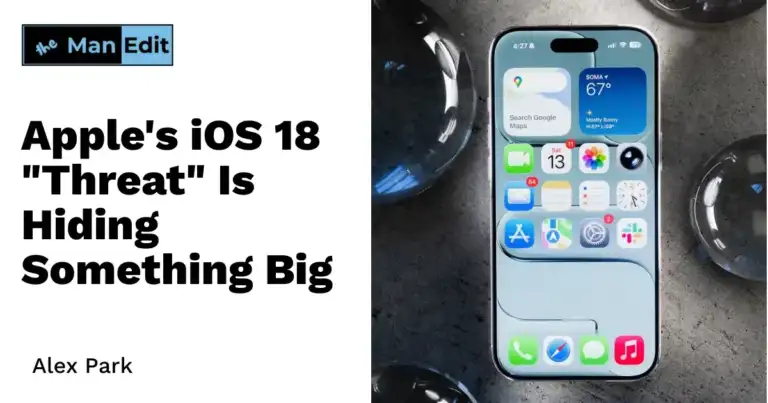

Is Apple trying to scare us into upgrading? Because right now, it feels less like a security alert and more like a high-stakes psychological operation designed to push us onto iOS 26. The tech world is buzzing, or perhaps more accurately, *panicking*, about a supposed critical vulnerability in iOS 18 dubbed “LinkLock.” We’re told that simply clicking an infected link could hand over the keys to your entire digital life. But here’s what nobody’s really talking about: the palpable whiff of manufactured urgency and the blatant attempt to herd users onto the latest, shiniest iOS version.
The “LinkLock” Scare: Real Threat or Upgrade Propaganda?
Let’s cut through the noise, because frankly, it’s deafening. Cybersecurity researchers and a chorus of tech outlets are screaming about “LinkLock,” a zero-click or one-click exploit that allegedly lets hackers raid your iPhone running iOS 18. Apple itself has chimed in, saying they’re “urgently investigating.” Sounds terrifying, right? Like something out of a spy movie where a single rogue pixel can steal your bank account. And for sure, for high-value targets like journalists or activists, this kind of exploit is a genuine nightmare. We’ve seen it before with Pegasus, and the consequences are devastatingly real.
But for the average Joe and Jane using an iPhone 13 or 14, still happily running iOS 18, is this really the existential threat it’s being painted as? Or is this just Apple’s latest, shall we say, *enthusiastic encouragement* to get everyone off older software and onto iOS 26? Call me cynical, but the timing feels a little too convenient.
The Verge reported on the “LinkLock” vulnerability, sparking heated debate across the platform. Critics were quick to point out the obvious contradiction.
Think about it. The official line is that iOS 18, which is on a staggering 70% of active iPhones globally, is suddenly a digital sieve. And what’s the immediate, unspoken implication? Upgrade! Upgrade now! To iOS 26! It’s a playbook we’ve seen before, and frankly, it’s getting a little stale. Are we really to believe that a system used by hundreds of millions of people is suddenly *that* insecure, just as a new OS drops?
The Cynical Take: Blackmail by Vulnerability?
On forums like Hacker News, the reaction isn’t fear; it’s eye-rolling cynicism. Users are calling this Apple’s latest “panic porn,” a transparent tactic to force upgrades. They’re pointing to the notorious CVE-2025-43529, a WebKit use-after-free zero-day, as an example of Apple allegedly “dangling” unpatched vulnerabilities to scare people into ditching iOS 18. Is it really a coincidence that these critical, unpatched flaws always seem to pop up just when Apple wants to push its latest OS? It feels less like diligent security and more like a carefully orchestrated sales pitch.
One IT architect shared a “terrifying” story about someone getting their 6-digit passcode shoulder-surfed at a bar and then blaming Apple for an “Authorization Gap.” Seriously? That’s not an Apple flaw; that’s a “don’t be an idiot in public” flaw. Yet, the narrative often shifts to “Apple needs to protect us from ourselves,” conveniently ignoring basic user responsibility. This isn’t just about security; it’s about control. Apple wants you on the latest OS, not just for features, but for their ecosystem. And if a little fear-mongering about unpatched CVEs helps them achieve that, well, so be it.
The Real Victims: Not Who You Think
While Apple spokespeople are busy saying things like, “Protecting our users’ security and privacy is our top priority,” the public is starting to see through it. Mondoo’s statistics are telling: only 18% of users updated despite “active exploits.” That means a whopping 82% are calling bluff, sticking to iOS 26.0/26.1 (the more stable versions) or even older. Why? Because the fear-mongering isn’t landing with the impact Apple hopes for. People are tired of the upgrade-or-die psyop. It’s a classic boy-who-cried-wolf scenario, and Apple might be burning through its credibility.
But let’s be clear: this isn’t to say the vulnerability isn’t real for *some* people. Dr. Anya Sharma, Head of Cybersecurity Research at Sentinel Labs, put it well:
“This ‘LinkLock’ exploit is particularly concerning because it requires almost no user interaction. It’s a stark reminder that even the most secure systems are not impenetrable.”
She’s absolutely right. For targeted individuals, this is a severe threat. For journalists and activists in oppressive regimes, as Maria Rodriguez from Privacy International highlights, it’s a direct threat to their safety and freedom. These are the *real* victims, whose privacy and lives are genuinely on the line, not the average user whose biggest risk is probably accidentally clicking on a phishing email for a fake gift card for “free” AirPods.
What Should You Do?
So, what’s the takeaway here? Should you panic? Probably not. Should you be aware? Absolutely. This “LinkLock” situation, whether it’s a genuine five-alarm fire or a cleverly orchestrated marketing ploy, still highlights a fundamental truth: no system is 100% secure. And relying solely on a tech giant to protect you from yourself is a fool’s errand.
If you’re still on iOS 18, and you’re not a high-value target for state-sponsored hackers, your risk is probably lower than the sensational headlines suggest. But here’s my advice, straight from the hip: practice good digital hygiene. Don’t click on suspicious links – seriously, if it looks too good to be true, it probably is. Use strong, unique passwords. Enable two-factor authentication everywhere you can. And if you’re truly paranoid, or if your work genuinely puts you in the crosshairs of sophisticated actors, then yes, upgrading to the latest iOS 26 might be a sensible move. But let’s not pretend this is purely about your safety. There’s always an agenda behind these urgent PSAs, and with Apple, that agenda often involves getting you onto their newest software, whether you want it or not. The question is, how much more fear-mongering are we willing to tolerate before we call them out?
Source: Google News