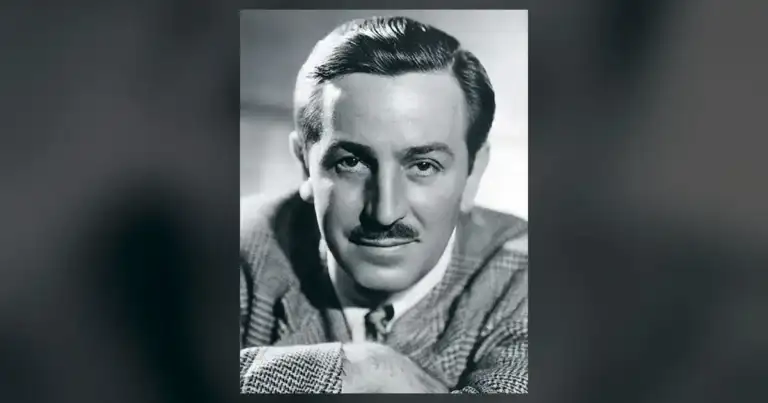

Walt Disney’s mommy issues are finally out in the open, and this is the dark, pulsating truth behind the magic, a truth Hollywood desperately tries to keep buried under a mountain of pixie dust and saccharine smiles.
Flora Disney’s death wasn’t just a tragedy; it was a cataclysm. It happened in 1938, a mere handful of weeks after Walt bought her a house. A faulty furnace, a silent killer, snuffed out her life. Biographer Neil Gabler called it “the most shattering moment” of his life. The corporate behemoth that bears his name would have you believe it was some minor footnote, an inconvenient detail to be glossed over. This wasn’t a footnote; it was the seismic event that reshaped everything.
The “Missing Mom” Pattern: No Accident, Just Trauma
Cast your mind across the Disney canon. Cinderella. Bambi. Beauty and the Beast. What threads through these tales like a dark, insistent whisper? The glaring absence of a mother. Or, perhaps even more chilling, a mother who is brutally, irrevocably gone. This isn’t some whimsical storytelling device. This is a pattern, stark and undeniable, a dark, twisted signature etched into the very DNA of Disney’s most iconic narratives. To suggest otherwise is to willfully ignore the elephant in the room.
This isn’t about narrative convenience; it’s about deep-seated, corrosive trauma. Walt Disney himself was a man haunted, a man who never truly reconciled with his mother’s sudden, violent death. That unresolved grief, that gaping wound, didn’t just influence his work; it seeped into it, infecting the very fabric of his burgeoning empire. The “missing mom” phenomenon in Disney films isn’t some academic theory debated in dusty university halls; it’s a stark, undeniable reality, plain for all to see. As Insider.com has observed, it’s a documented cultural pattern, regardless of how much Disney PR wishes it wasn’t.
The Furnace Accident: A Dark Stain on the American Dream
The official narrative is deceptively simple: a gas leak, a freak accident. But pause for a moment and truly consider the implications. Walt, the visionary, the architect of dreams, buys his parents a house – a symbol of success, security, the American Dream. And it becomes a death trap. How does a man, especially one with Walt’s obsessive drive and control, reconcile with such a catastrophic failure, such a profound reversal of intent? How does that not fundamentally alter his perception of the world, of his own agency, forever?
He carried that guilt, that searing pain, like a brand. It’s not a theory; it’s a fact, woven into every frame, every melancholic melody, every orphaned hero’s journey. That burden, that profound sense of responsibility for a mother’s untimely demise, is immense. It shaped his art, his vision, and ultimately, his legacy.
The Psychology of Loss: More Than Just a Trope
Psychologists have been screaming this from the rooftops for decades: early childhood trauma isn’t just a blip; it’s a blueprint. It shapes you, defines you, often irrevocably. For Walt Disney, it was the raw, brutal fact of his mother’s death. He bought the house. He was, in his own mind, responsible. That weight, that crushing sense of culpability, isn’t something one simply “gets over.”
This isn’t merely a “trope”; it’s a gaping window into the man’s soul, a raw nerve exposed for the world to see. It’s precisely why his movies, despite their glossy veneer, resonate so deeply, so universally. They tap into our primal fears: the fear of loss, the terror of being utterly alone, the existential dread of losing the one person who embodies unconditional love and security – your mother. Walt didn’t just understand that fear; he lived it, breathed it, and poured it, unvarnished, into his creations. It’s the reason we weep for Bambi, for Cinderella, for every hero yearning for a connection that was brutally severed.
“Walt Disney’s mother Flora died in a furnace accident in 1938, just weeks after Disney bought her a house—an event biographer Neil Gabler described as potentially ‘the most shattering moment of Walt Disney’s life.'”
Why They Hide It: The Corporate Lie
The monolithic Disney machine despises this kind of talk. It’s bad for business, a corrosive truth that threatens to tarnish the carefully constructed facade of endless joy and unblemished wonder. They peddle magic, not messy reality. Not trauma. But the truth, as always, is far more powerful, far more compelling. It’s the missing piece that explains the persistent undercurrent of melancholy in his brightest films, the aching longing for connection, the relentless search for family, the yearning for a maternal embrace that was snatched away too soon.
They want you to swallow a wholesome, simplistic narrative: the good guy always wins, the princess invariably finds her prince. But look closer, beyond the dazzling animation and the catchy tunes. The very foundation of that narrative is rotten, built on a personal hell, a tragedy that Walt Disney could never escape. It’s a corporate lie designed to protect a brand, not to honor a complex man.
The Price of Perfection: A Man Undone by Grief
Walt Disney’s relentless, almost pathological, pursuit of perfection wasn’t just artistic ambition; it was a coping mechanism, a desperate attempt to exert control over a world that had betrayed him so profoundly. Was this an unconscious effort to prevent another accident, another devastating loss? It’s a chilling, yet profoundly insightful, thought. A man consumed by the need for absolute control, driven by a deep, dark, unshakeable fear born from the ashes of his mother’s death.
His ambition was legendary, his vision unparalleled. But what was the true cost? He sacrificed his peace, his personal tranquility, pouring his raw, unadulterated pain into his art. And we, the audience, felt it, deeply and instinctively. We just didn’t have the language, the context, to understand why those sad songs and orphaned heroes resonated with such visceral power. We were experiencing his trauma, filtered through the lens of animation.
The Real Legacy: Trauma and Triumph, Intertwined
This isn’t about tearing down a legend; it’s about finally understanding the man behind the myth, the architect of dreams who was himself haunted by nightmares. Walt Disney was, without question, a genius, a titan who built an empire that continues to shape global culture. But he was also a man, a deeply flawed, profoundly wounded individual whose scars never truly healed.
His movies are not merely entertainment; they are a profound reflection, a haunting mirror of his own suffering, his own unresolved grief. The next time you settle in to watch a Disney classic, don’t just see the magic. Look closer. See the pain. See the loss. See the mother who isn’t there, whose absence shaped an entire universe. That is the real story. And it is, undeniably, hauntingly, unforgettable.
Source: Google News