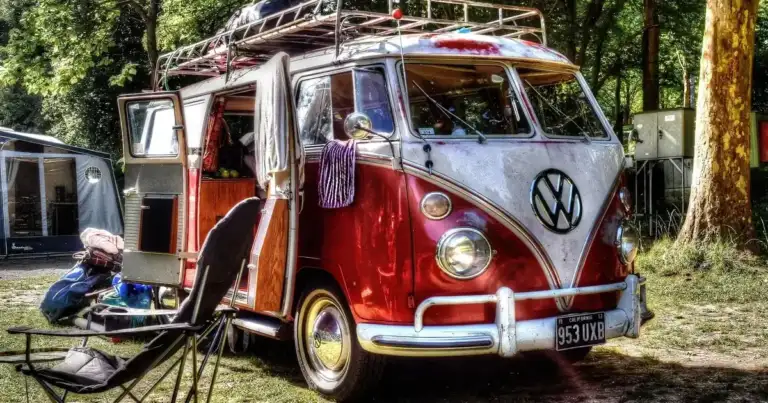

Let’s get one thing straight, right here, right now: camping isn’t relaxation; it’s a masochistic cult ritual performed for social media clout. Period. You heard me. The illusion of a serene escape into nature? That’s a carefully constructed myth, spun by outdoor gear companies and Instagram “influencers” who want you to believe that true connection with the wild requires suffering. It doesn’t. It’s time we collectively admitted that camping is often more work, more discomfort, and less genuine escape than any of us are willing to confess.
Camping Is a Scam: You’re Not Relaxing, You’re Just Suffering for Likes
Let’s be brutally honest: camping is a lie. It’s an elaborate, uncomfortable, and often expensive charade sold to us as “relaxation” and “connection with nature.” People keep falling for it, hook, line, and sinker.
They drag their families into the wilderness, spend hundreds—often thousands—on gear, and then come home more exhausted, more stressed, and often dirtier than when they left. Where’s the “escape” in that?
The Myth of the Great Outdoors Escape: A Harsh Reality Check
The idea of camping as a serene escape is a total fantasy, a glossy brochure image that crumbles the moment you step foot outside your car. You’re not “connecting with nature” when you’re battling a swarm of mosquitoes the size of small birds, desperately trying to swat them away from your dinner.
You’re certainly not “unwinding” when you’re sleeping on ground that feels like it’s been paved with jagged rocks, or when a rogue tree root decides to make intimate contact with your spine all night. Forget “relaxation.” This isn’t some profound spiritual journey; it’s glorified homelessness for the privileged, often with a hefty price tag attached.
The outdoor industry pushes this narrative with the relentless force of a category five hurricane. They want you to buy their expensive tents that promise to be waterproof but inevitably leak, their sleeping bags that claim to be warm but leave you shivering, and their portable stoves that take an engineering degree to operate. And don’t even get me started on the “influencers.”
They post their curated, picture-perfect campsites, bathed in golden hour light, with not a single bug bite or speck of dirt in sight. They make it look effortless, idyllic, and utterly aspirational. But the reality, my friends, is far from glamorous. You’re constantly working: setting up camp in a battle against the elements, cooking over a sputtering, smoke-belching fire, fending off bugs, and then cleaning up the whole damn mess. It’s a never-ending list of chores, just with a shittier view.
Why Do We Keep Doing This to Ourselves? It’s Not About Nature, It’s About Status.
It’s social signaling. Pure and simple. People want to flex their “escape” on Instagram, proving they’re “rugged” and “authentic.” They want to virtue-signal their grit, their ability to “rough it,” all while conveniently avoiding their actual chores at home. It’s a performative act, a modern-day ritual of self-inflicted discomfort designed to impress an audience that’s probably scrolling from their air-conditioned homes.
The public reaction to the truth about camping is often split down the middle, like a poorly chopped log. Diehards fiercely defend it, often with an almost religious fervor. They’ll tell you that if you don’t like it, you’re “doing it wrong.” “It’s character-building,” they snarl, as if enduring a leaky tent in a thunderstorm is a prerequisite for a strong moral compass. They’ll insist it’s “not real camping” if you’re uncomfortable, blaming your cheap tent, your lack of preparedness, or your supposed laziness. They will never, ever blame the activity itself. This isn’t just denial; it’s gaslighting of the highest order, trying to make you feel inadequate for not enjoying what is, for many, a genuinely miserable experience.
The Instagram Effect: Selling a False Dream, One Filtered Photo at a Time
Social media has warped our view of outdoor activities into an unrecognizable, highly filtered fantasy. We see perfectly staged photos: glowing campfires that never seem to smoke, gourmet meals cooked outdoors on spotless equipment, and happy, clean children who apparently never whine or get covered in mud. This creates an entirely unrealistic expectation, a pressure cooker of aspiration.
People scroll through these pristine images, feeling a gnawing sense of FOMO – Fear Of Missing Out. They feel pressured to join in, convinced they’re missing out on some profound, life-altering experience. They buy into the “authenticity” trap, believing that true self-discovery can only happen when you’re shivering in a sleeping bag. But real authenticity isn’t about manufactured discomfort or chasing a trend. It’s about finding what truly recharges you, what genuinely brings you peace and joy. And for most rational human beings, that’s not sleeping on a deflated air mattress with a rock digging into their hip.
The Hidden Costs of “Free” Nature: It’s a Financial and Temporal Black Hole
Let’s be clear: camping is anything but free. The upfront cost for even basic, entry-level gear—a tent, sleeping bags, cooking equipment, coolers, headlamps, first-aid kits—can easily run into hundreds of dollars. If you’re venturing into “glamping” or more specialized setups, you’re looking at thousands. This significant financial investment creates immense pressure. You have to enjoy it. You’ve spent too much money not to, even if every fiber of your being is screaming for a hot shower and a real bed.
Then there’s the time. The endless hours of planning, researching campsites, packing and repacking the car, the long drives to often remote locations. The arduous setup, the even more arduous breakdown, and then the recovery period when you get home, exhausted, stiff, and in desperate need of a deep clean. This isn’t a casual outing; it’s a significant labor investment. Many also overlook the environmental impact: overcrowded sites, mountains of waste left behind, the constant risk of wildfires, and the erosion of natural habitats. Is this truly “connecting with nature”? Or is it just loving it to death, one disposable cooler at a time?
The Unspoken Labor of Leisure: Who’s Really Relaxing?
Let’s talk about the division of labor, a topic often conveniently ignored in the romanticized narrative of camping. Often, and let’s be honest, it’s disproportionately women who bear the brunt of the planning, the meticulous packing, the meal preparation, and the endless cleanup. They’re doing more work, not less. This isn’t a vacation for them; it’s an extension of their domestic duties, but outdoors, often without the conveniences of a home kitchen or bathroom. This “unspoken labor” makes the idea of camping as relaxation even more absurd, highlighting a core problem: we’re constantly told to seek “escape” in activities that, in reality, demand more from us, not less.
Why do we accept this? Why do we romanticize hardship and discomfort? Why are we so afraid to admit that a five-star hotel with room service, a plush bed, and a sparkling clean bathroom is, in fact, objectively more relaxing than battling mosquitoes for a spot on a lumpy patch of dirt?
Redefining True Relaxation: Your Peace, Your Rules
True relaxation isn’t about conforming to some arbitrary ideal or following the herd. It’s about personal well-being. It’s about doing what genuinely recharges you, what fills your cup and eases your mind. For some, that might genuinely be a challenging hike up a mountain. For others, and I suspect a vast majority, it’s a quiet afternoon indoors with a good book, a cup of tea, and absolutely no threat of bears or leaky tents.
We need to ditch the guilt. Stop feeling inadequate if you don’t enjoy “roughing it.” Your version of relaxation is valid, important, and entirely yours. It doesn’t have to look like an influencer’s perfectly curated, highly filtered feed. As Dr. Anya Sharma, a renowned wellness blogger and author of ‘The Art of Unwinding,’ so eloquently puts it:
“True relaxation isn’t about conforming to a specific activity; it’s about finding what genuinely recharges you. For some, that’s a mountaintop. For others, it’s a quiet afternoon with a good book and a cup of tea, ideally indoors.”
The Cult of Discomfort: Why Are We Paying to Suffer?
Camping has, for many, become a cult of discomfort. People endure bans on public camping, overcrowding at designated sites, and trashed areas left by others. They call it “the experience,” insisting it builds character and resilience. This is a dangerous mindset. It normalizes suffering, tells us that true connection or self-improvement requires pain, and turns leisure into a performative act. We are literally paying good money to endure conditions we would normally go to great lengths to avoid. We’re doing it for bragging rights, for social media validation, and because we’ve been told, by a powerful industry, that it’s “good for us.”
It’s Okay to Say No to Camping: Reclaim Your Comfort
Let me be your permission slip: you are absolutely allowed to hate camping. You are allowed to prefer a comfortable bed, a flushing toilet, and a climate-controlled environment. You are allowed to seek relaxation without battling the elements, without the constant threat of insects, and without the backache that inevitably follows a night on the ground. Don’t let the outdoor industry, or the perfectly sculpted lives of social media influencers, dictate your definition of peace and enjoyment. Choose what genuinely unwinds you, what truly makes you feel rested and refreshed. Do not, under any circumstances, feel pressured to suffer for a photo opportunity or to conform to someone else’s idea of “getting back to nature.” Camping is not for everyone. It’s time to admit it, loudly and proudly. Stop pretending it’s a universally enjoyable activity. Find your own way to relax, and for the love of all that is comfortable, embrace it.
Photo: Photo by Grand Canyon NPS on Openverse (flickr) (https://www.flickr.com/photos/50693818@N08/31065767351)
Source: Google News