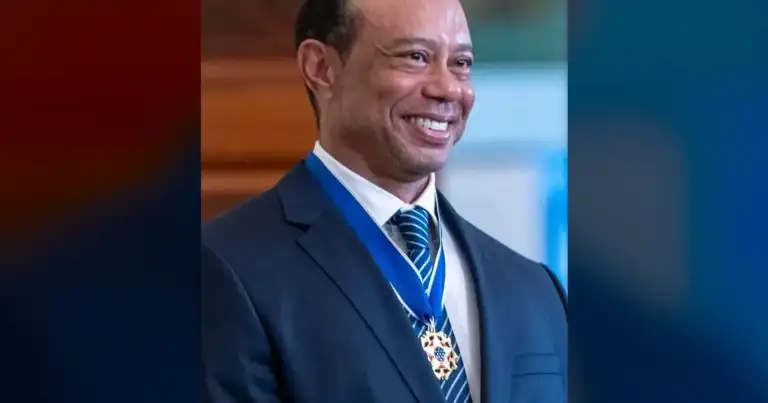

Let’s cut the crap. We’re not talking about a golf tournament or some glorified major. We’re talking about the relentless, insatiable public appetite for tearing down our heroes and then, just as quickly, rebuilding them, only to watch them crumble again. And at the epicenter of this grotesque three-ring spectacle? None other than Tiger Woods, the man who redefined an entire sport, and Dr. Drew Pinsky, the self-appointed high priest of celebrity addiction. This isn’t just news; it’s a mirror reflecting our own twisted fascinations.
The whispers, the reports, the TMZ-fueled frenzy about Dr. Drew “suspecting” Tiger is in denial about addiction issues aren’t just about Tiger. They’re about us. They’re about the voyeuristic hunger we have for the fall from grace, the desperate need to find a flaw, a chink in the armor of someone we once worshipped. It’s a tale as old as time, but with a modern, social media twist, where every armchair psychologist with a keyboard becomes an expert – and a judge, jury, and executioner of public opinion.
Dr. Drew: The Architect of Celebrity Crisis or Genuine Healer?
Let’s be unequivocally clear: Dr. Drew Pinsky has built an empire on the backs of celebrity struggles. He’s the guy you call when a star crashes and burns, the voice of reason (or so he positions himself) who can dissect the psyche of the rich and famous from a comfortable distance. And when it comes to Tiger Woods, a man whose public life has been a rollercoaster of unparalleled triumphs and devastating personal failures, it’s not just a goldmine; it’s a perpetual motion machine for his brand. It’s a symbiotic relationship where Dr. Drew gains relevance, and the public gets its fix of celebrity drama.
The idea that Tiger, a man who has faced more public scrutiny than most politicians, could be in “denial” isn’t a groundbreaking revelation. It’s a narrative that fits perfectly into the redemption arc we all crave. We want to see the struggle, the rock bottom, and then, eventually, the triumphant return, cleansed and reborn. But let’s peel back the layers here. Is Dr. Drew genuinely concerned, or is he simply playing to the cameras, ensuring his brand remains synonymous with celebrity crisis management? It’s a damn fair question, especially when you consider the timing of these “suspicions” often coincides with a lull in other celebrity misfortunes. Coincidence? I think not.
We’re not talking about a private conversation between a doctor and his patient. We’re talking about public speculation, aired on platforms designed for maximum impact, minimum nuance. This isn’t about healing; it’s about headlines. It’s about keeping the Tiger narrative alive, even when the man himself is trying to rebuild his life, his career, and his relationship with his children. It’s a brutal exploitation of a man’s vulnerabilities for clicks and ratings.
The WAGs, The Woes, and The Relentless Public Gaze
Remember those initial days of Tiger’s downfall? The WAGs, the whispered affairs, the shattered image of the perfect family man. It was a feeding frenzy, and we, the public, devoured every single morsel. Now, years later, the narrative shifts. It’s no longer just about the infidelity; it’s about the underlying issues, the “addiction.” And who better to frame that narrative than a celebrity addiction specialist? It’s a perfectly packaged scandal, ready for prime-time consumption.
But here’s the kicker: the public diagnosis, the pronouncements from afar, often do more harm than good. They turn a deeply personal struggle into a spectator sport. They force a man who has already endured immense public humiliation to once again face judgment, not from his peers on the green, but from the court of public opinion, presided over by talking heads and social media trolls. It’s a modern-day witch hunt, amplified by the echo chamber of the internet.
“The public’s insatiable hunger for a celebrity’s downfall often overshadows any genuine concern for their well-being. It’s a blood sport, and we’re all complicit.”
This isn’t about stats or game recaps. This is about the human cost of celebrity. This is about a man whose every move, every stumble, every attempt at recovery, is dissected, analyzed, and ultimately, monetized. Dr. Drew’s “suspicions” aren’t just an observation; they’re a continuation of the narrative, a fresh log on the roaring fire of public fascination with Tiger Woods’ personal demons. It’s a relentless cycle, fueled by our collective voyeurism.
And what about Tiger? Does he need Dr. Drew’s public pronouncements to seek help? Does he need the world to know he’s in “denial” to confront his issues? Or does he, like any human being, deserve the privacy and dignity to manage his challenges on his own terms, away from the blinding glare of the relentless public eye? These questions, my friends, are the real hot takes. Because while we’re busy dissecting the alleged denial, we’re all, in our own way, in denial about the role we play in this never-ending celebrity circus. We demand authenticity, then crucify it. We preach mental health awareness, then feast on public breakdowns. It’s time we looked inward and asked ourselves: are we part of the solution, or are we just another set of eyes in the coliseum, waiting for the next fall?
Source: Google News