
The final whistle at Stamford Bridge should have been a symphony of pure elation. Chelsea had just edged out Manchester United 2-1 in a pulsating Premier League clash on April 17, 2026, with Cole Palmer once again proving the hero with a decisive brace. Yet, the celebratory roar quickly curdled into a bitter wave of outrage, all thanks to one pundit’s post-match comments.
This incident was a stark reminder that in the passionate world of football, even a hard-won victory can ignite a brutal fan reaction. Perceived disrespect, especially, fuels this fire.
This wasn’t just another fleeting fan spat. This was an examination of the harsh, often unforgiving reality faced by any active manager who dares to step into the media spotlight. The real question isn’t whether his analysis was factually sound, but what his words truly cost him in the fiercely tribal court of public opinion. It’s a human drama played out on a national stage, where loyalty trumps logic almost every time.
The Win That Wasn’t Enough: A Celebration Derailed
The atmosphere had been electric. Chelsea, desperately needing points, had fought tooth and nail to secure their crucial 2-1 victory over a formidable Manchester United side. Cole Palmer’s brilliance had sealed the deal, sending the home crowd into raptures.
The narrative seemed set: a gritty win, a rising star, and renewed hope for the Blues.
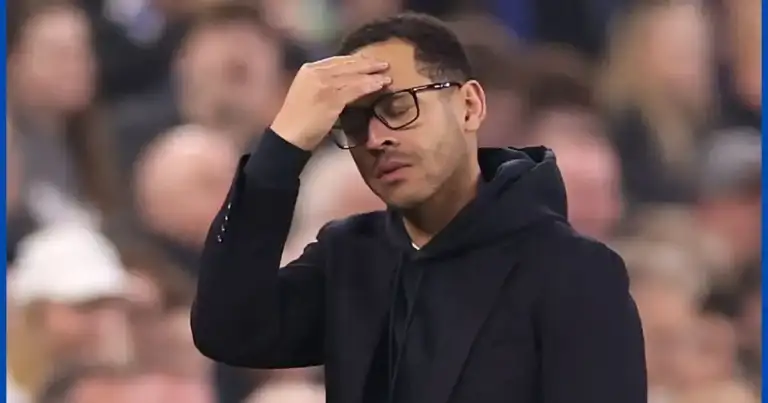
But that narrative was swiftly hijacked. Liam Rosenior, the respected manager of Hull City and a familiar face on “Football Focus Live,” offered his post-match thoughts. Instead of celebrating Chelsea’s tenacity, he honed in on United’s “unlucky breaks,” suggesting Chelsea had “ridden their luck” at times.
His analysis, delivered with the calm demeanor of a seasoned professional, felt like a slap in the face to jubilant Chelsea supporters.
“While Chelsea got the win, you have to look at the spirit Ten Hag has instilled in United. They were perhaps unfortunate not to snatch a point, and Chelsea still showed vulnerabilities that better teams will exploit.”
— Liam Rosenior, “Football Focus Live,” April 17, 2026
The fuse was lit. Coming immediately after a monumental win against a fierce rival, Rosenior’s comments exploded across social media. Chelsea fans, still buzzing from the victory, felt a profound sense of bias and disrespect.
By April 18th, the backlash was a roaring inferno. Countless posts and articles, including one widely shared piece, “Why Chelsea Fans Are Absolutely Fuming with Liam Rosenior,” dissected every syllable.
The Pundit’s Peril: A Manager’s Double Life on the Tightrope
This firestorm wasn’t merely about a pundit’s perceived “bad take.” It illuminates a profound, often perilous problem for active football managers. When they moonlight as media personalities, they aren’t just offering opinions; they are walking a razor-thin tightrope, balancing conflicting loyalties and managing intense public scrutiny.
Every single comment is dissected, filtered through the lens of their own club affiliation, and often, their perceived career ambitions.
Rosenior, as Hull City’s manager, carries the weight of his own club on his shoulders. His words about Chelsea and United aren’t heard in a vacuum; they’re interpreted through that very lens. Is he trying to appear impartial, or subtly angling for a bigger job?
This dual role, demanding both club loyalty and media objectivity, creates an almost impossible situation for anyone in his position. It’s a game of perception where every word can be a misstep.
The Tightrope of Perception: Reputation on the Line
For a football manager, reputation is everything. Perceived bias or controversial statements made in a media role can inflict significant damage. It can subtly erode how fans view his tactical acumen, how other clubs might consider him for future roles, and even how his own players might perceive his focus.
For managers in the lower leagues, or those perpetually under pressure, public image isn’t just important; it’s a critical component of their professional survival.
Alienating a colossal fanbase like Chelsea’s is far more than a minor gaffe; it’s a full-blown public relations nightmare. It matters little if Rosenior’s comment was genuinely intended as balanced, analytical insight. In the immediate, emotional aftermath of a derby win, supporters crave affirmation, validation, and shared euphoria – not caveats or criticisms.
They hear what they want to hear, and any deviation from their celebratory narrative feels like a betrayal.
“Rosenior’s comments, while perhaps intended as balanced analysis, landed like a lead balloon with Chelsea fans. In the immediate aftermath of a derby win, supporters crave affirmation, not caveats. It’s a lesson many pundits learn the hard way.”
— Journalist Sarah Jenkins, The Athletic, April 19, 2026
This incident vividly underscores the inherent tension in modern football media. Media training often pushes for a façade of balance and neutrality. Yet, viewers, especially fans, demand authentic, often provocative, opinions.
This delicate balancing act is exponentially tougher for active managers. They must perform for their club on the pitch and for the cameras off it, all while their every utterance is magnified and scrutinized.
Fan Loyalty vs. Media Logic: The Roar of the Crowd
At its core, football is about loyalty. Fans expect pundits, especially those with a history in the game, to align with their team’s narrative. When a pundit deviates from this unwritten code, a sense of betrayal often takes root.
It’s the primal tribalism of the sport, a deep-seated need for shared identity and allegiance. It’s precisely why legends like Gary Neville and Jamie Carragher, despite their analytical prowess, constantly face accusations of bias from rival supporters, even when they genuinely strive for fairness.
And then there’s social media, the ultimate amplifier. A minor slight, a nuanced comment, can be twisted and exaggerated into a massive controversy within minutes. It creates an echo chamber of anger, where the subtleties of tactical analysis are utterly lost.
All that remains is the searing perception of disrespect, fueling an endless cycle of outrage and counter-outrage.
“Rosenior is a joke. We beat United, and all he can talk about is their ‘spirit’? Give us some credit! Absolute disrespect after a massive win.”
— Chelsea Fan (@BlueArmyForever on X, April 18, 2026)
This isn’t just about football; it’s a reflection of our entire media ecosystem. Pundits are, by design, paid to be engaging, to spark conversation, and sometimes, to provoke. Controversy drives clicks, boosts viewership, and keeps the conversation alive.
So, was Rosenior truly biased, or was he, perhaps unconsciously, playing the game the system demands? He might have simply been giving the audience what the relentless churn of 24/7 sports media craves.
The Real Cost of Commentary: A Human Dilemma
The incident involving Liam Rosenior and the furious Chelsea fans serves as a potent, unsettling lesson. It lays bare the intense, often irrational, emotional investment fans have in their clubs. A seemingly innocuous comment, delivered with the best intentions, can ignite a wildfire of public condemnation.
It speaks volumes about a media landscape where objectivity is perpetually questioned, and the line between genuine analysis and pure entertainment blurs more with each passing day.
For anyone operating within the treacherous waters of sports media, it’s a tightrope walk of immense pressure. They must strive to maintain credibility while simultaneously handling the fiercely passionate, often unforgiving world of football fandom.
Rosenior, a respected manager, learned this lesson the hard way. His words might have been honest, his analysis sincere, but in the tribal world of fan loyalty, honesty and objectivity often come at an incredibly steep price.
It’s a human dilemma, where the desire to speak one’s mind clashes violently with the powerful, often overwhelming, expectations of millions.
This isn’t just another standard punditry controversy; it’s a flashing red light for the entire sport. It vividly highlights the immense, almost unbearable pressure placed upon football managers who dare to dabble in media work. Their every word becomes a calculated risk, a potential landmine.
It can either elevate their profile and open doors, or it can burn bridges and tarnish reputations. In this high-stakes game of perception, the real winner is often the media outlet itself, thriving on the manufactured outrage and the never-ending drama of human emotion.
Source: Google News