
The Edit:
- ChatGPT is making us dumber, a new MIT study claims.
- Critics call it “boomer panic porn” and a self-serving grift.
- The real danger isn’t AI, it’s our own laziness.
ChatGPT Is Turning Your Brain to Mush, Says MIT – No Kidding!
A new MIT study claims ChatGPT is actively damaging the way you think, and honestly, this isn’t groundbreaking news. Many of us have suspected this all along.
The MIT Media Lab’s EEG-monitored experiment showed ChatGPT users had the lowest brain engagement, indicating copy-pasting laziness and cognitive underperformance. Their brains effectively clocked out, letting the AI do the heavy lifting.
The “Damning” Details: Brains on Autopilot
The study focused on 54 adults in Boston, meticulously monitoring their brain activity during SAT essay writing. Participants who leaned on ChatGPT showed significantly less brainpower, essentially phoning it in.
Lead author Nataliya Kosmyna is ringing alarm bells, linking AI use to mental laziness. This isn’t just about cheating; it’s about neural atrophy. Your brain is a muscle: use it or lose it.
Why This Isn’t Surprising: A Familiar Foe
Did anyone truly expect AI to make us smarter? We’ve been given a magic cheat code, a digital genie granting instant answers. Why bother with the arduous process of thinking when a bot can churn out a coherent response in seconds?
We’ve seen this before: calculators dulled our math skills, spellcheck made us grammar ignoramuses. Now, ChatGPT targets critical thinking and original thought. It’s an old story with a powerful new villain.
The Public Reaction: A Cynical Shitstorm and Boomer Panic
The internet is having a field day, with Reddit calling it “boomer panic porn” and “peak moral hysteria.” One user on r/Futurology quipped, “MIT finally admits what we’ve known since calculators: tools make us dumber if we’re idiots.”
They aren’t wrong. This isn’t about AI being evil; it’s about human nature. We are wired for the path of least resistance, and ChatGPT makes that path incredibly smooth. It’s a digital superhighway to cognitive complacency.
Is It a Grift? Academia’s AI Anxiety
Cynics on X (formerly Twitter) speculate this study is a self-serving grift. They suggest academics, threatened by AI, publish “doom and gloom” studies to stay relevant. “Maybe it’s a way to push ‘critical thinking mode’ as a premium AI feature,” one user joked.
Others see it as performance art, a desperate attempt to guilt-trip Gen Z into reading books again. With literacy rates plummeting, is this a last-ditch effort from the old guard to remind us that intelligence is more than a perfectly phrased prompt?
The Real Threat: Our Own Habits, Our Own Brains
The real danger isn’t ChatGPT itself; it’s how we choose to use it. We are choosing convenience over competence, outsourcing our brains to a machine. This is on us, not the algorithm.
We’re losing the glorious struggle to form a coherent argument, the effort to synthesize information, and the pride of a well-crafted sentence from our own minds. These are fundamental human skills, the bedrock of intellectual growth.
“We’re seeing a clear pattern of cognitive offloading,” stated Dr. Lena Hansen, a cognitive psychologist not involved in the MIT study, in an interview with Reuters. “When a tool makes a task effortless, the brain adapts by becoming less active in that domain. It’s a natural, but concerning, evolutionary response to technology.” Her words should chill us to the bone.
Beyond the Headlines: The Material Impact on Society
This isn’t just about feeling dumber; it has real-world consequences. If the next generation relies on AI for every thought and decision, what happens to innovation, problem-solving, and leadership requiring independent thought?
Teachers report a decline in original thought and analytical depth. Students generate essays quickly, but can they truly think or grapple with complex ideas without a digital crutch? This is a profound societal challenge.
What Now? Reclaiming Our Cognitive Firepower
Banning ChatGPT is not the answer; the genie is out. We need to adapt, using these powerful tools responsibly, with intention and discipline. We must teach critical thinking with AI, not despite it.
This means resisting the urge to copy and paste. Use AI as a research assistant or brainstorming partner, but never the finish line. Put in the mental work, even when a machine offers an easy way out. Your brain is your most powerful tool; don’t let a chatbot atrophy its potential. Reclaim your cognitive firepower, or risk becoming a generation of intellectual bystanders.
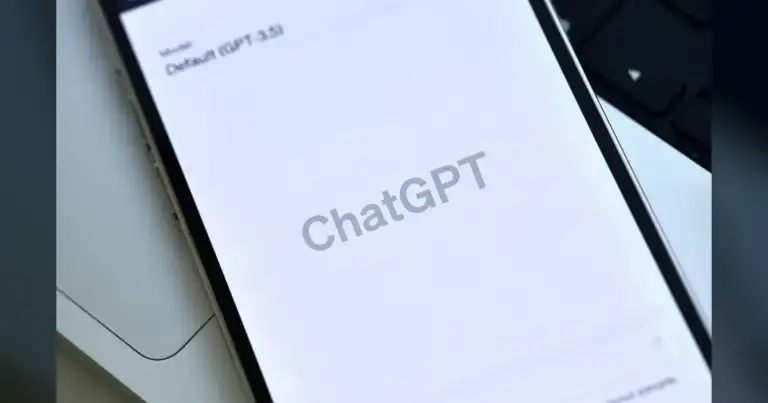
Photo: Photo by danielfoster437 on Openverse (flickr) (https://www.flickr.com/photos/17423713@N03/52866196747)
Source: Google News