
The air crackled with a different kind of electricity this Oscar season, didn’t it with the Saja Boys? Forget the usual Hollywood fanfare, the predictable parade of old money and established names. This year, if you were paying attention—and as your Style & Fashion Editor, I certainly was—there was a subtle, yet undeniable, shift. A whisper that grew into a roar, echoing from the red carpet to the after-parties: the “Saja Boys” are here, and they’re not just attending; they’re owning the style game.
Now, before you reach for your phone to Google “Saja Boys,” let’s clarify. There isn’t a specific, officially branded group with that moniker making headlines. But the term, as it’s been buzzing in the more discerning style circles, represents something far more significant: a rising tide of emerging, diverse talent, particularly from Asia, who are bringing a fresh, unapologetic sartorial confidence to the global stage. They’re the new guard, the ones who understand that true style isn’t about fitting in; it’s about standing out, with conviction and a killer tailor. And nowhere was this more evident than in how they effortlessly channeled the Korean superstar aesthetic on Hollywood’s most prestigious runway.
The Red Carpet Reboot: Beyond the Basic Black Tux
For too long, the Oscar red carpet has been a rather staid affair for men. Black tux, white shirt, maybe a bow tie with a hint of personality if you were feeling truly rebellious. Safe, predictable, and frankly, a bit boring. But this year, a new playbook was in effect. We saw meticulously tailored suits in unexpected hues, daring fabric choices, and accessories that spoke volumes without shouting. This wasn’t just about wearing expensive clothes; it was about wearing them with an inherent understanding of personal branding, a trait long perfected by Korean idols and actors.
What exactly defines this “Korean superstar style” that the “Saja Boys” are so adeptly adopting? It’s a fascinating blend of traditional elegance, contemporary edge, and an almost artistic attention to detail. Think less ‘Hollywood leading man’ and more ‘Seoul fashion week front row.’ It’s about proportion, texture, and a fearless approach to color and silhouette that American menswear often shies away from. We’re talking about exquisitely tailored double-breasted jackets, often with a slightly longer line, paired with slim-cut trousers that break just so. It’s about monochromatic layering that creates depth, or a subtle pattern that catches the light in just the right way.
But it’s not just the clothes themselves; it’s the attitude. It’s the way a silk shirt is worn slightly unbuttoned, revealing a flash of skin without being vulgar. It’s the choice of a statement brooch over a traditional pocket square, or a pair of sleek, polished boots instead of conventional oxfords. These are subtle cues, yes, but they signal a man who is confident, globally aware, and utterly in control of his image. Does anyone honestly believe this level of intentionality comes without a deep understanding of fashion as communication? I think not. It’s a calculated, yet effortless, display of sartorial prowess.
“The rise of Asian talent on the global stage, especially in entertainment, has naturally led to a greater appreciation for their distinct style,” notes fashion critic Anya Sharma. “It’s a testament to cultural exchange, where traditional notions of masculinity and elegance are being reinterpreted through a modern, international lens. They’re not just wearing clothes; they’re telling a story.”
And what a story it is. We’ve seen this evolution brewing for years. Remember the quiet revolution sparked by the likes of BTS or actors like Lee Byung-hun and Gong Yoo? Their red-carpet appearances weren’t just about looking good; they were about presenting a cohesive, highly curated image that resonated with millions worldwide. They understood the power of a perfectly draped coat, the subtle sheen of a silk blend, or the architectural precision of a structured lapel. This is not accidental; it’s the result of stylists, designers, and the artists themselves meticulously crafting an aesthetic that is both aspirational and authentic. It’s a masterclass in visual branding, and Hollywood is finally catching on.
Spotlight on the “Saja Boys”: Redefining Red Carpet Rules
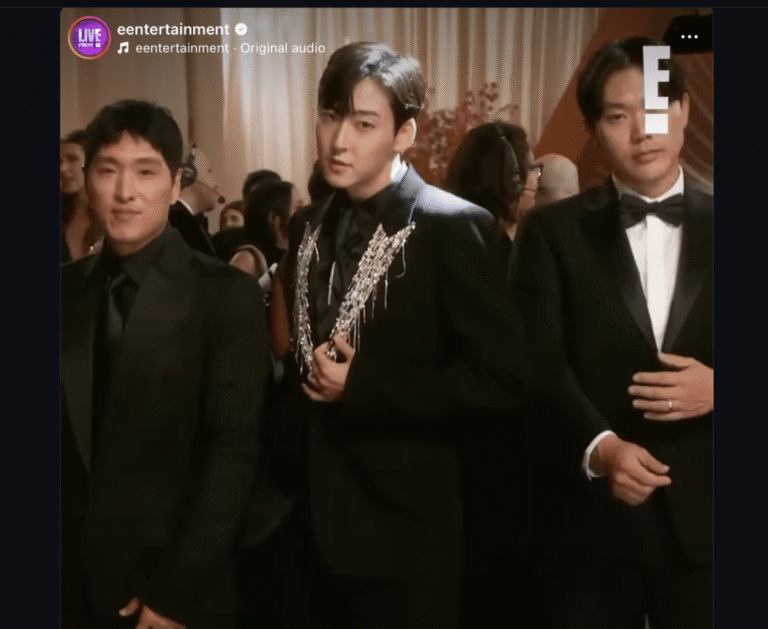
So, when the “Saja Boys” — these new, vibrant faces from diverse backgrounds — stepped onto the Oscar red carpet, they weren’t just showing up; they were making a statement. They weren’t just wearing clothes; they were embodying a movement. We saw tailored suits in deep forest green and midnight blue, fabrics with a subtle sheen that caught the flashbulbs just right. Lapels were broader, shoulders were sharper, and trousers had a relaxed elegance that was a world away from the skinny-fit tyranny of years past. It was a refreshing departure from the cookie-cutter looks that often plague awards season.
One particular standout was a young director, rumored to be part of this “Saja Boys” cohort, in a charcoal grey suit with an exaggerated peak lapel, paired with a black turtleneck and chunky, polished Chelsea boots. It was a masterclass in modern menswear: sophisticated, unconventional, and radiating confidence. Another, an emerging actor, opted for a double-breasted white dinner jacket over black trousers, but eschewed the traditional bow tie for a thin black silk scarf tied loosely, adding an unexpected layer of nonchalance to a classic look. This wasn’t just breaking rules; it was rewriting them with a knowing wink. It proved that true style is about intelligent subversion, not just adherence to tradition.
What’s truly fascinating is how this trend highlights the ongoing shift in the fashion industry itself. For years, European and American aesthetics have dominated, often dictating what is considered “stylish.” But now, we’re seeing a powerful counter-narrative emerging from Asia, particularly South Korea, which has become a global powerhouse for fashion and culture. Their influence isn’t just limited to K-Pop or K-Dramas; it’s permeating every aspect of global style, from streetwear to high fashion. This isn’t a fleeting fad; it’s a fundamental recalibration of the global style compass.
“The global fashion landscape is more interconnected than ever,” states Dr. Evelyn Chen, a cultural anthropologist specializing in East Asian media, in an interview with Reuters. “What starts as a trend in Seoul can quickly become a global phenomenon, especially with the reach of social media and the increasing visibility of Asian celebrities. The Oscars red carpet is simply a very high-profile stage for this cultural exchange to play out.”
Indeed. This isn’t just about pretty clothes; it’s about representation. It’s about seeing diverse faces not just on screen, but also dominating the style conversation. It challenges the narrow, often monochromatic, definition of male elegance that Hollywood has perpetuated for decades. And frankly, it’s about time. The red carpet, once a bastion of predictable glamour, is now a vibrant canvas for global expression.
How to Channel Your Inner “Saja Boy”: Practical Style Tips
But let’s be practical for a moment. What can the everyday man, inspired by this confident new wave, take from the “Saja Boys” and their Korean superstar aesthetic? It’s not about mimicking, but about integrating these principles into your own wardrobe with authenticity.
- Embrace Tailoring with a Twist: Don’t just settle for off-the-rack. Invest in a good tailor. Look for suits with interesting details: a wider lapel, a slightly longer jacket, or a unique fabric texture. A suit that fits impeccably and has a subtle point of difference will always make a stronger statement than a generic off-the-rack option.
- Experiment with Monochromatic Dressing: Wearing different shades of the same color can create an incredibly sophisticated and streamlined look. Think deep blues, charcoals, or even rich browns. It’s an easy way to look polished and put-together without resorting to flashy patterns.
- Don’t Fear the Turtleneck: A sleek turtleneck under a suit jacket is a powerful statement. It’s chic, modern, and instantly elevates your formalwear game. It offers a clean, architectural line that traditional shirts and ties often can’t replicate.
- Accessorize Thoughtfully: Forget the boring tie clip. Explore statement brooches, elegant silk scarves, or even a subtle chain. The key is intentionality – each accessory should add to your overall narrative, not just fill a space. Think of them as exclamation points for your outfit.
- Pay Attention to Footwear: Ditch the scuffed dress shoes. Invest in polished, distinctive footwear like Chelsea boots, sleek loafers, or even a well-chosen pair of minimalist sneakers for a smart-casual vibe. Your shoes are the foundation of your look; don’t let them be an afterthought.
- Confidence is Key: This is perhaps the most important takeaway. The “Saja Boys” wear their clothes with an inherent self-assurance. True style isn’t just about what you wear; it’s about how you wear it. Own your choices, stand tall, and let your personality shine through.
The Academy has been making concerted efforts to diversify its membership and nominations, a move that is slowly but surely reshaping the awards landscape. This push for inclusivity isn’t just about checking boxes; it’s about recognizing talent from all corners of the globe, and with that comes a richer tapestry of cultural expression, including style. The “Saja Boys,” whether they are a specific group or a symbolic representation, are a direct beneficiary and a driving force behind this evolution. Their presence signals a shift from a singular, Western-centric view of glamour to a truly global understanding of what it means to be stylish and impactful.
So, as we dissect the fashion hits and misses of this year’s Oscars, let’s not just look at the individual outfits. Let’s recognize the larger narrative at play. The red carpet is no longer just a backdrop for Hollywood’s elite; it’s a global stage for cultural exchange, where new voices and new aesthetics are finally getting their due. The “Saja Boys” didn’t just walk the red carpet; they redefined it, proving that the future of men’s style is bold, diverse, and utterly captivating. And for that, we should all be applauding.
What does this mean for the future of menswear? Only one thing: get ready for more exciting, boundary-pushing style. The days of the one-size-fits-all tuxedo are officially numbered. Are you ready to step up your game and embrace the new era of sophisticated swagger?
Source: Google News