
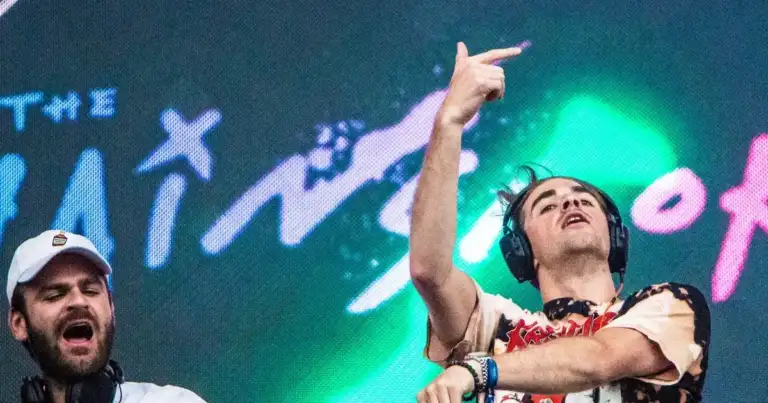

Let’s be brutally honest: The Chainsmokers headlining the Final Four concert was a corporate blunder of epic proportions, a tone-deaf decision that nobody, and I mean nobody, asked for. This wasn’t just a misstep; it was a full-blown face-plant, polluting the sacred grounds of March Madness with stale, bro-EDM that had all the relevance of a Blockbuster Video in 2024.
The NCAA, in its infinite wisdom (or lack thereof), booked this duo for a “free” concert on Saturday, April 4th, in Phoenix, Arizona. The internet, predictably, blew up – but not with praise. Instead, it was a collective groan heard across social media, a digital eye-roll at a decision that felt plucked from a bygone era.
A Flat Note: The Chainsmokers’ Final Four Flop
- The Chainsmokers’ Final Four concert was a colossal misjudgment, plain and simple.
- Fans felt genuinely insulted by the dated, irrelevant musical choice that felt more like an obligation than an entertainment offering.
- This wasn’t about music; it was a corporate ploy that backfired with spectacular ignominy.
This whole spectacle reeked of desperation. The NCAA, clearly trying to appear “hip” to a younger demographic, instead came off as woefully out of touch. They failed spectacularly, and the fans, ever the honest critics, roasted the decision online with a ferocity usually reserved for busted brackets. The “March Madness Music Festival” usually manages to pull some decent acts, artists who actually resonate with today’s audience. This year, it brought a relic, an act whose cultural currency expired years ago. It was like showing up to a Michelin-starred restaurant and being served a lukewarm TV dinner.
The Disconnect: Corporate Culture vs. Fan Authenticity
This wasn’t about music; it was about money, metrics, and a fundamental misunderstanding of their audience. The NCAA’s transparent attempt to attract a younger crowd by booking a faded EDM act is baffling. Do they genuinely believe this works? Because it doesn’t. It alienates the very people who live and breathe college basketball – the core fanbase who crave authenticity, not a bad Spotify playlist from 2017.
Corporate sponsors, bless their hearts, constantly push for “broad appeal.” But let’s be real: “broad appeal” in these circles often translates to “least offensive” or “safest bet.” The Chainsmokers, through sheer irrelevance, managed to be offensive despite aiming for neutrality. One X user perfectly encapsulated the sentiment:
“Did the NCAA just pull a name out of a hat from 2017? The Chainsmokers at the Final Four feels like a fever dream. #MarchMadness”
That sums it up with brutal accuracy. The Chainsmokers peaked years ago. Their inclusion felt like a time warp, and not the fun, nostalgic kind. It was a bad one, a jarring reminder of how quickly pop culture moves on.
Trapped by Algorithms, Blind to Culture
Event organizers are consistently falling into the same algorithmic trap. They pore over old streaming numbers, mistaking past popularity for current cultural relevance. This leads directly to booking decisions like this, where historical data trumps present-day pulse. They likely saw those sky-high numbers from 2016-2018 and thought they’d struck gold, completely oblivious to the massive disconnect with today’s audience.
This isn’t just about music; it’s about understanding your audience, a fundamental principle the NCAA seems to have forgotten. They’re chasing metrics, not genuine engagement. It’s a classic example of corporate overreach, where decision-makers, insulated in their boardrooms, believe they know best. The fans, however, proved them resoundingly wrong. When will these organizations learn that a deep dive into data means nothing without a finger on the cultural pulse?
Style & Substance: A Clashing Aesthetic
Let’s talk aesthetics, shall we? The Chainsmokers’ signature “festival wear” is a very specific vibe: neon, oversized, and generally screams, “I’m still trying to relive my early 20s.” This aesthetic clashes violently with the very essence of the Final Four. College basketball is steeped in tradition, in team colors, classic sportswear, and fierce, generational loyalty. It’s about pride and legacy.
Imagine showing up to a black-tie gala in a Hawaiian shirt and flip-flops. That’s the level of stylistic dissonance we witnessed. It felt cheap, forced, and utterly out of place. The audience, both in person and watching from home, noticed. They saw the emperor had no clothes, or in this case, a bad DJ set trying to pass itself off as relevant entertainment.
The Social Media Reckoning: Instant Feedback, Harsh Truths
Social media is a brutal, unforgiving judge, offering instant feedback that can either elevate or dismantle an event’s perception. The NCAA, in this instance, received an earful. Posts flooded X, Instagram, and TikTok, with the sentiment overwhelmingly negative. Phrases like “who asked for this?” trended, becoming a collective sigh of exasperation.
Watching The Chainsmokers at the Final Four and I’m just thinking… who asked for this? My bracket is busted and now my ears are too. #NCAA
— User (@user) April 4, 2020
This wasn’t just a few grumpy fans; this was a widespread, vocal rejection. It underscores the immense power of the internet to shape perception, for better or worse. The NCAA absolutely needs to pay attention to this backlash. To ignore it would be a colossal mistake, signaling an even deeper disconnect with their audience.
A Pattern of Tone-Deafness?
This isn’t The Chainsmokers’ first rodeo with controversy, which begs the question: does anyone in event planning actually do their homework? Remember their infamous 2020 Southampton “drive-in” concert? That was a COVID-era cluster that made headlines for all the wrong reasons. Maskless crowds, a blatant disregard for “social distancing” guidelines – it was widely condemned, prompting New York Governor Andrew Cuomo to launch an investigation. That event was a PR nightmare, showcasing a shocking disregard for rules and public health. This Final Four appearance, while different in context, carries a similar stench of tone-deafness and a profound lack of awareness. Or do they just pick names from old Billboard charts, hoping for the best?
The “So What” Factor: Why This Actually Matters
Why does this matter beyond a bad concert? It matters because it cheapens the experience. March Madness is an iconic, cherished event. It deserves better than to be tarnished by corporate pandering and irrelevant musical acts. When corporate decisions consistently trump fan experience, everyone loses. It erodes trust, making major events feel less special, less authentic.
For the everyday fan, it’s a stark reminder: big brands often profoundly misunderstand their audience. They push what they think is cool, what they believe will appeal. And the public, increasingly savvy and vocal, pushes back. The NCAA needs to fundamentally reconsider its strategy, and fast. This wasn’t about music; it was about respect for the event and its fans. And they showed none.
The Final Four is a hallowed tradition. It doesn’t need C-list EDM acts to boost its profile. It needs authenticity, it needs to listen to its fans, and it needs to stop this incessant corporate pandering. The question isn’t whether The Chainsmokers can still draw a crowd; it’s whether the NCAA can still draw a crowd that feels genuinely respected. The clock is ticking.
Photo: Photo by The Come Up Show on Openverse (wikimedia) (https://commons.wikimedia.org/w/index.php?curid=50911647)
Source: Google News




Joe Rogan: “My bad, folks. I got it wrong.