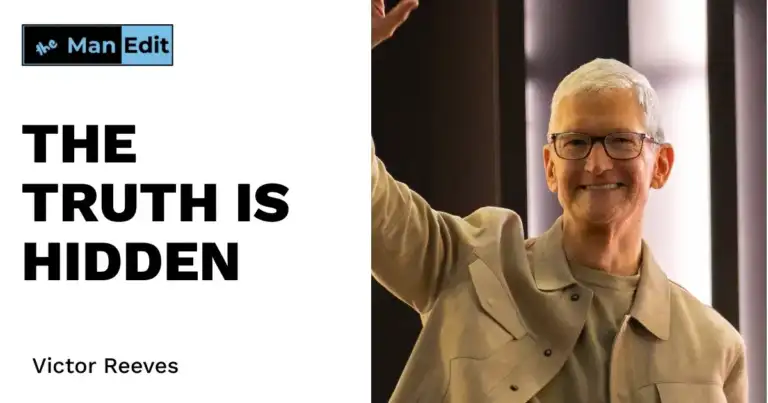

The collective eye-roll could be heard across the internet when Tim Cook finally addressed his rumored departure. “I’m not going anywhere anytime soon,” he declared at an internal town hall, adding, “There’s still so much to do, and I’m energized by the challenges and opportunities ahead.” Is anyone buying this? Or is this just another masterclass in corporate deflection from a man whose tenure has become synonymous with cautious iteration, not groundbreaking revolution?
Cook’s statement, leaked via Bloomberg, was less a revelation and more a carefully orchestrated narrative aimed squarely at quashing market jitters. Apple’s stock, AAPL, barely blinked, gaining a measly 0.8% after hours. Does that sound like a company whose future hangs in the balance, now suddenly secured by one man’s vague promise? It sounds like investors already priced in the certainty of Cook staying put, or perhaps, the market has simply grown numb to the endless speculation surrounding Apple’s leadership.
The “Not Going Anywhere” Dodge of Tim Cook: A Masterclass in Non-Commitment
Cook’s response is the corporate equivalent of “it’s complicated.” He didn’t say, “I’m here for another decade.” He didn’t outline a bold new vision that absolutely requires his hand at the helm. He delivered a carefully worded platitude designed to maintain stability without committing to any real timeline.
Think about it: “Not going anywhere anytime soon.” What does “soon” even mean in the context of a multi-trillion-dollar company? Six months? Two years? Does this sound like the decisive leadership that built the most valuable company on Earth? Or does it sound like a CEO trying to avoid “lame duck” status while the board quietly grooms his successor behind closed doors? This isn’t just semantics; it’s a strategic ambiguity that keeps everyone guessing and, more importantly, keeps the current power structure undisturbed.
The public reaction, particularly on platforms like Reddit’s r/apple and MacRumors forums, is telling. Users aren’t celebrating stability; they’re expressing a deep-seated cynicism. Comments like, “Bro at this point, just retire. Liquid Glass is a mess. Apple Intelligence is an oxymoron,” sum up a sentiment that Cook’s leadership, while financially successful, has lacked the innovative spark that defined Apple’s golden era. This isn’t just armchair quarterbacking; it’s a genuine frustration from the very customers who once lined up for days to get their hands on Apple’s latest marvels.
The Innovation Drain and the Succession Charade
Under Cook, Apple’s market cap has exploded from $350 billion to over $3 trillion. Financially, he’s a wizard. But where’s the magic? Where’s the “one more thing” that drops jaws? We’ve seen an iPhone that looks suspiciously like the last iPhone, a Siri that’s “still dumber than a bag of hammers,” and an AI strategy so underdeveloped Apple had to strike a deal with Google Gemini. This isn’t just a slight miss; it’s a significant strategic blunder in the most important technological race of our time.
As one X user sarcastically noted, “Apple’s surrendering AI to Google like they did search—Cook’s checked out.” This isn’t just online chatter; it’s a critical assessment of Apple’s perceived innovation stagnation. The company that once redefined entire industries now seems content to play catch-up, a stark contrast to its audacious past.
Apple’s surrendering AI to Google like they did search—Cook’s checked out.
— Walter Piecyk (@WalterPiecyk) March 19, 2024
The Looming Talent Exodus
The whispers about succession aren’t new, and they’re not baseless. The Financial Times reported in November 2025 that Cook was eyeing an “early 2026” departure. Coincidence that Cook suddenly makes a public statement now, right before Apple’s 50th anniversary and new product teasers? This isn’t just about Cook; it’s about the deep bench of talent at Apple, executives like Jeff Williams (COO) or Craig Federighi (SVP of Software Engineering). How long do these ambitious leaders wait for the top job when the current CEO keeps moving the goalposts? The risk here is losing top-tier talent who might seek CEO positions elsewhere, a brain drain that could truly cripple Apple’s future. Any ambitious leader worth their salt isn’t going to sit around indefinitely waiting for a promotion that keeps getting delayed. This isn’t just a hypothetical; it’s a very real threat to Apple’s long-term leadership.
The Burden of Jobs’ Ghost and What It Means for You
Succession at Apple always lives in the shadow of Steve Jobs. The transition from Jobs to Cook, initially met with skepticism, proved financially brilliant. But it also set an impossible standard for visionary leadership. Cook has been a masterful operator, a supply chain genius, and a steady hand. But he’s not a product visionary in the Jobs mold. Does Apple need another visionary, or is it now a mature ecosystem that simply requires careful stewardship? The answer to that question profoundly shapes Apple’s trajectory and, by extension, the tech landscape.
As Gene Munster of Loup Ventures stated, “Cook’s statement provides crucial clarity. Investors crave stability, especially in a company of Apple’s magnitude. It suggests continuity in their AI and Vision Pro strategies, which is paramount right now.” Stability, yes. But at what cost to innovation? Are we sacrificing the next iPhone for predictable quarterly earnings? That’s a trade-off that might satisfy Wall Street in the short term but could leave Apple vulnerable in the long run.
For the ordinary person, this matters because Apple isn’t just a tech company; it’s a cultural titan. Its decisions shape the devices in your pocket, the content you consume, and the very direction of technological progress. Cook’s continued, albeit vague, commitment means a likely continuation of the current strategic path: more Vision Pro, more services, continued focus on privacy. But it also means a continuation of the cautious, incremental upgrades rather than the disruptive leaps that once defined the brand. We, as consumers, deserve more than just iterative improvements from a company with Apple’s resources and legacy.
Ultimately, Cook’s statement is a strategic move to manage perception, not a genuine declaration of indefinite tenure. It’s a delaying tactic, a carefully constructed façade to push back the inevitable questions about Apple’s post-Cook era. The real question isn’t if he’s stepping down, but when, and whether Apple can truly innovate under a leadership that prioritizes stability over groundbreaking risk. Will Apple find its next visionary, or will it slowly fade into a company known more for its balance sheet than its breakthroughs? The clock is ticking, and the world is watching.
Source: Google News