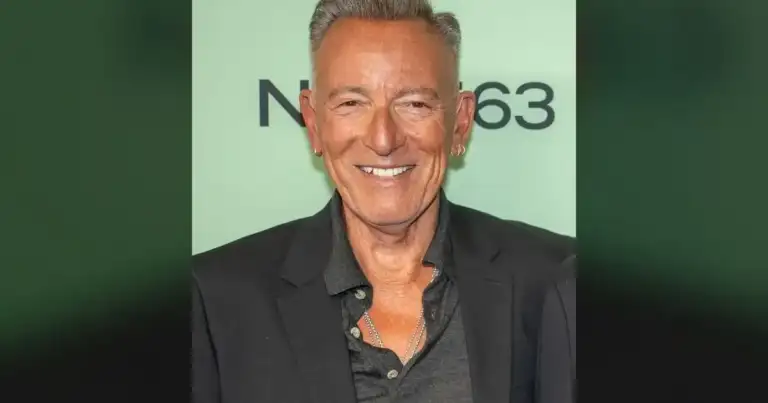

The mortifying spectacle of Bruce Springsteen leaving a fawning Chris Christie hanging at a concert isn’t just a brief moment of public awkwardness; it’s a recurring masterclass in the uncomfortable dance between celebrity and political opportunism. It’s a relationship dynamic that plays out for all to see, a cringe-worthy tableau etched into New Jersey lore.
Former New Jersey Governor Chris Christie recently dragged this discussion back into the spotlight. Appearing on the “Political Pulse” podcast on May 14th, Christie once again recounted the infamous 2012 “Glory Days” incident. For those who missed it, this was the moment Springsteen seemed to actively ignore Christie’s eager attempts to join him on stage, a scene that has since become legendary for its sheer, unadulterated secondhand embarrassment.
Christie, ever the candid self-analyst in retrospect, described these moments as “awkward” and “disappointing.” He admitted his “fawning” attempts at connection often failed, painting a picture of a rock icon who showed a distinct, almost pointed, lack of reciprocal enthusiasm. But what did he truly expect from The Boss?
The Unrequited Fan: A Public Service Announcement
This isn’t just a concert story; it’s a dating column special, a cautionary tale for anyone who refuses to read the room. Christie is the guy who just doesn’t get the hint, relentlessly trying to force a connection that simply isn’t there. Springsteen, meanwhile, is a master of setting clear, unyielding boundaries, even if it means a momentary, brutal snub in front of thousands.
The public reaction to Christie’s latest recollection was swift and, let’s be honest, brutally predictable. Online, the consensus was clear: “This is the least surprising celebrity snub ever.” No one saw it as a scandal; they saw it as perfectly scripted Jersey drama, played out for clicks and laughs.
Christie, a known Springsteen obsessive, walked right into it, fully aware of the potential for public humiliation. So why do it?
For the optics, of course. The image of the snub itself was the point. It was pre-packaged humiliation content, a viral clip waiting to happen.
For a politician constantly battling for relevance, even a perceived slight from a cultural icon can serve a purpose. It generates buzz and a relatable (if pathetic) narrative.
Springsteen’s Stoicism: The Art of Protecting Your Brand
The internet didn’t turn on Springsteen. In fact, most people cheered him on. They saw him as doing the right thing, refusing to reward a political opportunist with a handshake cameo.
Springsteen isn’t just a musician; he’s a symbol. Associating with certain political figures, especially those whose ideologies clash with his own working-class ethos, could dilute his carefully cultivated brand.
Christie, however, faced the usual pile-on. “Desperate fan behavior” was a common critique, people calling it “dad at the barricade” energy. It was a self-own for a politician trying to act like a normal concertgoer, but failing spectacularly.
The sarcastic theories were the most telling: people joked Christie was there for attention, not music. They believed he brought the moment on himself by treating a concert like a political meet-and-greet.
Springsteen, reportedly, clocked him instantly, recognizing the political maneuver for what it was. He decided to keep walking, a man who understands how to manage his public image and, more importantly, how to protect his space. It’s a calculated move, a silent declaration of independence from anyone trying to ride his coattails.
The Calculated Cringe: A Modern Media Playbook
This isn’t about mutual admiration; it’s a stark clash between a politician’s ambition and a rock star’s ironclad boundaries. Christie is a master of public theater, and this scene looked suspiciously useful for him.
It generated a viral clip, gave him a victim narrative, and sparked another round of “remember when Bruce snubbed me?” stories. It’s a familiar playbook for public figures who understand that any attention, even negative, can be leveraged.
This entire dynamic is a harsh lesson in relationships, both personal and public. Sometimes, the interest is profoundly one-sided. Sometimes, you need to read the room, to respect the other person’s space, and to understand that not every interaction is an invitation for a photo op.
“It was awkward,” Christie said on the “Political Pulse” podcast. “It was disappointing when he didn’t reciprocate.”
But what did he genuinely expect? Springsteen isn’t obligated to engage. He’s there to perform, to connect with his audience through music.
He’s not there to validate political fandom or participate in transactional relationships. His stage is sacred, not a campaign stop.
The Enduring Lesson: Know Your Place, Respect the Boundaries
The consensus was simple and brutal: this was not a genuine scandal. It was a tiny public execution, delivered with excellent branding for all involved.
Christie gets the attention he craves, albeit tinged with ridicule. Springsteen maintains his artistic integrity and reinforces his image as an independent icon.
And the public? We get our cringe-worthy entertainment, a reminder that even powerful figures can be left hanging.
In any relationship, you learn to spot the red flags. You learn when someone isn’t interested, when their body language screams “back off.”
Christie, however, keeps ignoring those signals, year after year, podcast after podcast. That’s on him, not Bruce.
The relationship between a public figure and a fawning fan is always tricky, demanding careful handling and a healthy dose of self-awareness. Springsteen managed it perfectly. Christie just keeps making it awkward, proving that some lessons, no matter how public, simply refuse to stick.
Source: Google News