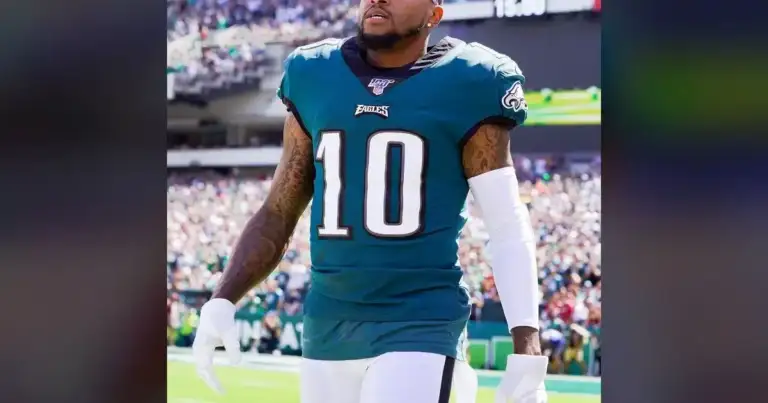

The roar of the crowd, the flash of the camera – that’s the life former NFL star DeSean Jackson once commanded. Now, the only sound is the ticking clock on his coaching career, and the allegations are not just career-threatening; they’re career-ending. A college football player has accused him of fostering a “gang-associated mentality” within his team, claiming a brutal locker room attack was deliberately ignored by coaches. This isn’t just a scandal; it’s a leadership meltdown.
The gloves came off on April 22, 2026, when the unnamed player’s legal team didn’t just file a complaint; they detonated a public statement. This wasn’t a quiet legal maneuver; it was a strategic broadside, detailing a severe, unprovoked locker room assault. The statement didn’t mince words, directly pinning the blame on Coach Jackson’s influence for cultivating a “culture of intimidation and a gang-associated mentality.” This isn’t just an accusation; it’s an indictment of leadership at the highest level.
The university’s Athletic Director, wisely unnamed in the initial reports, scrambled to contain the fallout. By April 23, 2026, a terse statement confirmed an “immediate internal investigation” – the standard playbook move when the house is on fire. Jackson’s agent, predictably, dismissed the allegations as “baseless” and a “mischaracterization.”
However, the damage was already done. Within 24 hours, by April 24, 2026, whispers turned into outright reports of deep team division. The squad fractured over coaching methods and discipline; when players turn on each other, the locker room is already lost.
The High Stakes of a Toxic Sideline
Let’s be brutally clear: this isn’t some playground scuffle that got out of hand. This is about the multi-billion-dollar business of college football, and the catastrophic failure of accountability when immense wealth and careers are on the line. Elite coaches like Jackson don’t just command hefty salaries – often running into the millions annually; they are corporate brands. Their value isn’t just tied to wins; it’s inextricably linked to their reputation, their ability to lead, and their capacity to protect their assets: the players. When that trust shatters, the entire enterprise is at risk.
Universities aren’t just educational institutions; they’re entertainment conglomerates, raking in hundreds of millions from football. Soaring ticket sales, lucrative media rights deals with networks like ESPN and FOX, and massive booster donations fuel this entire machine. A scandal of this magnitude isn’t just bad PR; it’s a direct assault on the bottom line.
It cripples recruitment, sending top talent scrambling for the transfer portal. This destabilizes programs for years, costing serious, quantifiable money. In this cutthroat world, perception is profit, and Jackson’s program is bleeding both.
“Our client suffered a brutal and unprovoked assault, and the subsequent inaction by the coaching staff, particularly Coach Jackson, reveals a deeply troubling ‘gang-associated mentality’ that prioritizes intimidation over player safety. We demand a full and transparent investigation and appropriate consequences.”
That statement from the player’s legal counsel isn’t just a legal threat; it’s a thunderclap, exposing a systemic leadership failure. The university’s Athletic Director trots out the predictable “safety and well-being of our student-athletes are paramount” line – a phrase so often uttered it’s lost all meaning. We know better; empty words are for politicians.
In the unforgiving arena of college sports, only decisive action, or a lack thereof, will truly speak volumes. Right now, the silence from the top is deafening.
DeSean Jackson’s Career on the Brink
Let’s cut to the chase. The burning question isn’t if DeSean Jackson will lose his coaching job over these accusations, but when, and what that catastrophic fallout will mean for the rest of his career. The answer is stark, unambiguous, and frankly, deserved: his future in coaching looks not just grim, but utterly extinguished.
First, understand the ruthless business of coaching contracts. Misconduct or negligence clauses aren’t just boilerplate; they’re tripwires. Jackson’s likely contains language that allows for termination without cause – and crucially, without a hefty buyout. That’s not just a financial hit; it’s a career-altering blow, leaving him with nothing but a tarnished name.
Second, his professional reputation isn’t merely taking a beating; it’s being poisoned. An accusation of fostering a “gang-associated mentality” is a career-ending scarlet letter. No reputable university, desperate for talent and donor dollars, will touch that baggage with a ten-foot pole. Recruiting, the lifeblood of any program, becomes impossible with such a cloud hanging over your head.
Third, universities are under an unprecedented microscope. Player welfare, mental health, and institutional integrity are no longer negotiable; they’re non-starters. If the investigation confirms a toxic environment, the university must act. Donors, alumni, and especially the powerful NCAA will demand accountability, not just for the sake of optics, but to protect the institution’s multi-million-dollar brand and future viability. Firing implicated staff isn’t just a choice; it’s a strategic imperative.
Fourth, the old “win at all costs” mentality is dead, or at least it should be. The landscape of college sports has shifted dramatically. High-profile coaches have been fired for far less egregious offenses. Institutions, once slow to react, are now forced to move swiftly and decisively in such cases, prioritizing player safety and institutional reputation over any single coach’s record. This isn’t the Wild West anymore.
Finally, a dismissal would not just shatter Jackson’s coaching ambitions; it would obliterate them. His NFL stardom might have given him a foot in the door, but serious allegations like these will slam it shut, permanently. He won’t be relegated to lower-tier roles; he’ll be relegated to the history books, a cautionary tale. His coaching career, if it ever truly began, is over.
The public reaction, as always, is swift and unforgiving. Social media isn’t just calling it “DeSean Jackson’s thug factory exposed”; it’s a digital firing squad. Users are mocking his “tough guy” coaching philosophy, with one particularly cutting comment sneering, “Bro went from catching fades to enabling them.”
This isn’t just fleeting outrage; this public perception will stick like superglue, a permanent stain on his professional legacy. A reputation can be built over decades and destroyed in a single news cycle. Jackson is learning that lesson the hard way.
The Price of Negligence
This isn’t merely a football story; it’s a masterclass in leadership failure and the brutal economics of negligence. A true leader’s primary responsibility is to cultivate a safe, productive, and ethical environment. When that fundamental trust is shattered, and a culture of intimidation replaces mentorship, careers don’t just crumble – they implode.
The financial and reputational costs are not just immense; they are irreversible. DeSean Jackson’s past NFL glory, once a shield, is now a glaring spotlight on his current failings. The message is clear: accountability in college sports isn’t just hitting home; it’s knocking down the door.
The era of unchecked behavior isn’t just over; it’s been buried. Any leader who fails to grasp this fundamental shift will find themselves, like Jackson, on the wrong side of history, and out of a job.
Source: Google News