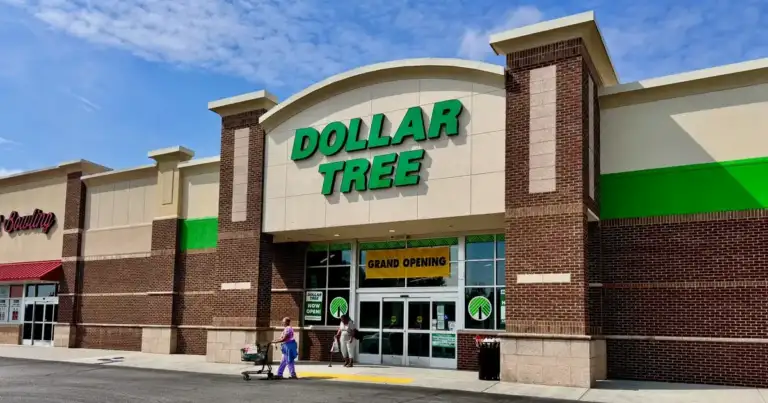

The market doesn’t whisper its warnings; it screams them. And for Dollar Tree, Inc., the titan behind both Dollar Tree and Family Dollar, that scream is the death knell of its core identity. Their Q1 2026 earnings call wasn’t just a financial update; it was a brutal public admission: “portfolio optimization” is the corporate euphemism for a brand promise obliterated by inflation. For any ambitious professional or business owner, this isn’t just retail news. It’s a front-row masterclass in what happens when your foundational value proposition can no longer withstand economic reality.
The Death of the Dollar Store Dream
Remember when Dollar Tree was genuinely a place where everything, or almost everything, cost a dollar? That era is dead, buried by the relentless march of inflation. It didn’t just nickle-and-dime the concept; it took a sledgehammer to its very foundation. The company has systematically pushed prices past the sacred $1 mark, first to $1.25, then audaciously experimenting with $3 and $5 items. This isn’t merely a pricing strategy shift; it’s an existential crisis for a brand built on a single, low price point – a crisis that has now reached critical mass.
Their latest move to shutter more locations, part of an ongoing strategy that has already seen hundreds of Family Dollar and Dollar Tree stores close, is a stark admission of defeat. They simply cannot make the numbers work. The razor-thin margins on true dollar items have vanished, mercilessly squeezed by rising supplier costs, escalating labor expenses, and complex logistics. Trying to maintain the illusion of a ‘dollar’ store in a $1.25+ world is not just a fool’s errand; it’s financial suicide. They’re not just closing stores; they’re dismantling a historical business model, brick by painful brick, because the market has left it no other choice.
The Unraveling of a Brand Promise
What happens when a brand, whose very name is its promise, breaks that promise? Dollar Tree is finding out the hard way. For decades, “Dollar Tree” wasn’t just a name; it was a guarantee. Customers knew exactly what they were getting. Now, that clarity is gone, replaced by confusion and, inevitably, eroding loyalty. How do you market a “Dollar Tree” where nothing costs a dollar? How do you rebuild trust when your core identity has been sacrificed on the altar of profit margins?
This isn’t just about price points; it’s about perception. The brand’s value proposition has been fundamentally compromised. They are no longer a dollar store, but a discount retailer trying to shed the skin of its past. This rebranding, forced by economic necessity, is a monumental challenge. It requires convincing consumers that a store named “Dollar Tree” which sells $5 items is still their go-to for bargains. It’s a testament to the unforgiving nature of the market: when your core offering becomes a liability, you either transform radically or face obsolescence. The question isn’t just if they can survive, but what they will become, and if anyone will still care.
Adapt or Die: A Brutal Lesson from the Bargain Bin
This isn’t unique to retail. Every business, every career path, faces its own version of the Dollar Tree dilemma. Are you clinging to an outdated skill set or a service model that no longer commands value? Are you underpricing your worth because that’s “what you’ve always done,” even as your own costs of living and doing business skyrocket? The market doesn’t care about your comfort zone; it demands evolution.
Dollar Tree’s “portfolio optimization” is cold, hard corporate speak for cutting losses and making tough calls. It means identifying the dead weight – the underperforming stores, the product lines that no longer turn a profit – and ruthlessly eliminating them. It’s a painful but absolutely necessary pivot. For entrepreneurs, this means constantly evaluating your product-market fit, your pricing power, and your operational efficiency. If your business model relied on economic conditions from five years ago, you’re already behind. If you’re not willing to adjust your prices, innovate your offerings, or shed unprofitable ventures, the market will do it for you – and it won’t be gentle.
The market doesn’t care about your nostalgia. It cares about viability.
For career professionals, the lesson is equally sharp. Are your skills still commanding top dollar? Are you optimizing your own “portfolio” of competencies, aggressively shedding obsolete ones, and investing in new, high-demand areas? Clinging to a job or a career path that’s being devalued by market forces is just as suicidal as Dollar Tree trying to sell everything for a dollar in 2026. You need to be just as ruthless in your self-assessment and strategic shifts as any major corporation. Your career is your business; treat it with the same brutal honesty.
Your Own “Portfolio Optimization” Strategy
Look at Dollar Tree’s plight and ask yourself these hard questions:
- What outdated assumptions am I operating under in my business or career?
- Where are my “underperforming stores”—the projects, clients, or skills that are draining resources without adequate return?
- Am I courageous enough to make the hard cuts and pivot before I’m forced to?
- How has inflation impacted my personal ‘pricing’ power (salary, rates, business revenue) and what am I doing about it?
The companies and individuals that survive and thrive are those that can read the writing on the wall, shed their sacred cows, and adapt with ruthless efficiency. Dollar Tree is learning this the hard way, closing stores and re-evaluating its entire premise. Don’t wait for your own business or career to hit that wall. Start optimizing your portfolio now – before the market decides for you.
RED MARKER VERDICT: Don’t kid yourself. Dollar Tree isn’t closing stores out of some benevolent attempt to protect its ‘dollar’ image for consumers. This is pure, unadulterated financial triage. The “bargain” chain discovered what every sharp business owner already knows: you can’t defy economics forever. When your core promise becomes a financial liability, you ditch the promise, not your profits. This “optimization” is about maximizing shareholder value, plain and simple, even if it means sacrificing the very concept that gave them their name. The only loyalty here is to the bottom line.
Source: Google News