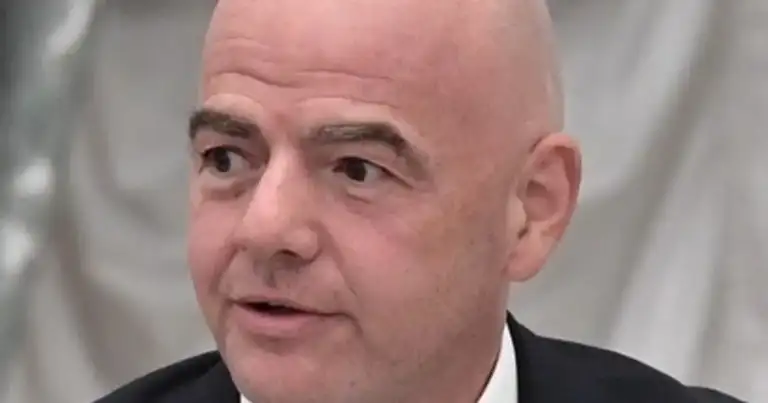

The audacious gambit of FIFA President Gianni Infantino just blew up in his face. His multi-billion dollar vision to commercialize global football’s crown jewels didn’t just stumble; it crashed and burned, leaving the man at the helm of the world’s most powerful sports organization fighting for his professional life.
Infantino didn’t just suffer a defeat; he endured a public, humiliating repudiation. He aggressively pushed to sell a significant stake in the expanded Club World Cup rights – a high-stakes play for an immediate, massive cash injection that promised to solidify his control and legacy. This wasn’t merely a business proposal; it was a power grab, and it backfired spectacularly.
The Multi-Billion Dollar Miscalculation
The controversial plan was bold, perhaps even reckless. Infantino sought to create a new commercial entity, then offload a substantial share to a private equity consortium.
The lure was an upfront cash injection of $25 billion for FIFA, positioning Infantino as the ultimate dealmaker. This move was designed to funnel vast new revenue streams directly under his influence, cementing his authority and silencing critics.
But ambition, unchecked by consensus, can be a leader’s undoing. This wasn’t a quiet boardroom tussle; it was a public rejection during a pivotal FIFA Council meeting.
These are the arenas where real power is forged or lost. Infantino’s proposal lacked the fundamental support required to push such a monumental change through; his colleagues weren’t buying what he was selling.
Why the Grand Vision Collapsed
Any ambitious leader understands that timing, political savvy, and the ability to read the room are paramount. Infantino, in this instance, misjudged all three. His push was widely perceived as overreaching, a radical commercialization that alienated key stakeholders.
A multi-billion dollar deal, particularly one involving private equity, always invites intense scrutiny. When the numbers are this big, the questions are even bigger: Who benefits? What are the long-term implications?
Stakeholders grow wary of opaque structures and deals that seem designed more for personal power than collective good. As The Guardian reported, there was significant internal resistance to the lack of transparency surrounding the proposed deal.
This wasn’t just a failed business pitch; it was a political maneuver that exposed a critical flaw in Infantino’s leadership style: a lack of consensus-building. He attempted to force through a seismic shift, underestimating the deep-seated resistance from within FIFA’s powerful national federations and continental confederations. For a leader at this level, such a public defeat doesn’t just bruise the ego; it shatters credibility and reveals a dangerous isolation from his own power base.
Infantino’s Fight for Survival
When a bet of this magnitude fails, the fallout is immediate and brutal. Infantino is now locked in a desperate fight to retain his presidency.
His credibility, once seemingly ironclad, has taken a massive, perhaps irreparable, hit. Leaders are judged on results, especially when those results involve multi-billion dollar promises.
Failing to deliver that promised cash injection creates a vacuum of instability, an open invitation for rivals to challenge his authority.
What does this mean for FIFA’s already turbulent future? It means an intensifying period of internal politicking, backroom deals, and profound uncertainty as Infantino scrambles to regain control.
Every ambitious executive watches these moments. You push for a big win, you put your reputation on the line. If you lose, the wolves are not just at the door; they’re already in the house.
Indispensable Lessons for Ambitious Leaders
Infantino’s predicament offers crucial, hard-won lessons for any man aiming for the top. First, never assume your authority is absolute.
Even at the pinnacle of power, true leadership demands buy-in, not just compliance. You can have the title, but if you don’t have the room, you have nothing.
Second, intimately understand your organization’s culture. FIFA is an ancient, complex beast, deeply rooted in tradition, national federations, and continental power blocs.
A purely commercial, private equity-driven approach, devoid of genuine consultation, can alienate the very players you need to succeed. It’s not just about the money; it’s about the politics, the history, and the intricate web of relationships.
Third, always, always have a Plan B. When your grand vision is shot down in flames, you need a viable pivot, a strategy to recover and rebuild. Infantino’s public humiliation leaves him with precious little room to maneuver, exposing him as a leader who gambled everything on one hand and lost it all.
This isn’t just a story about football; it’s a potent case study in corporate governance at the highest levels. It’s about the relentless pursuit of power and influence, and the steep price of overplaying your hand. Infantino played a high-stakes game, and he lost in a very public, very painful way.
His current humiliation is a stark, unvarnished reminder: even the most powerful figures, those who seem untouchable, can be brought down.
The road ahead for Infantino is not merely challenging; it’s a brutal gauntlet. He must rebuild trust, consolidate fragmented support, and redefine his leadership.
Fail to do so, and his time at FIFA, once seemingly limitless, will quickly, unceremoniously, come to an end. What does this tell us about the fragility of power, even at the very top?
Photo: Wikimedia Commons (query: Gianni Infantino)
Source: Google News