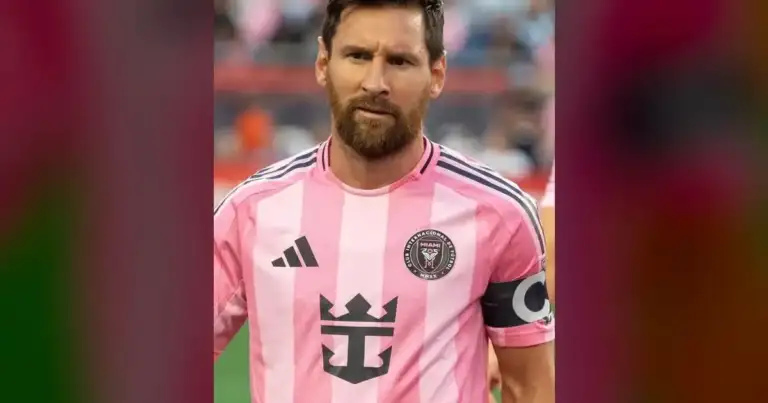

Lionel Messi played under the heaviest shadow imaginable on Wednesday night: the recent passing of his father, Jorge Messi. His game-winning goal against Orlando City (a decisive 2-1 victory) was met with a collective sigh, not just cheers. This wasn’t just a match; it was a public act of grief.
The world stopped on August 9, 2026, when news rippled out that Jorge Messi, Lionel’s bedrock and long-time agent, had passed peacefully at 68 years old. This wasn’t just a personal loss; it was a seismic event for the Messi universe. The grief that followed was palpable, amplified by Messi’s own deeply vulnerable message shared across every digital platform.
His tribute wasn’t just a statement; it was an open wound, a raw confession of a son’s dependence and devotion. “Without him, none of this would have been possible. The joy feels different now. Sometimes, I wonder if the fire will ever burn as brightly again,” Messi penned.
That last line wasn’t merely a melancholic musing. It was a stark, unvarnished declaration of doubt, heard loud and clear by every pundit and fan. This isn’t a hint; it’s a profound, existential question mark placed squarely over his career.
Grief on the Pitch: A Legend’s Return
Despite the crushing weight of grief, Messi played, with Inter Miami confirming his presence against bitter rivals Orlando City. On Wednesday night, August 12, 2026, under the Florida lights at Chase Stadium, he took to the field. It felt less like a game and more like a vigil.
What unfolded was nothing short of cinematic. In the 23rd minute, Messi stepped up to a direct free-kick. The ball arced with impossible precision, curling perfectly into the top corner.
The stadium didn’t just erupt; it *exploded* in a cathartic release. Messi, eyes glistening, pointed skyward, a raw, visceral dedication to the man who made him. It was a moment that transcended sport, a primal scream of love and loss.
His influence wasn’t confined to theatrics. In the 67th minute, Messi ghosted past two defenders and laid off a perfect pass for Robert Taylor. Taylor’s shot found the net via a deflection, sealing the 2-1 victory for Inter Miami.
Even in mourning, the maestro conducted the symphony.
The stats, impressive as they are – 90 minutes played, 1 goal, indirect involvement in another, 4 shots (with 3 on target), a crisp 88% pass accuracy, and 3 key passes – tell only half the story. The yellow card in the 75th minute? Perhaps a flash of frustration, a human crack in the stoic facade. It showed the emotional maelstrom churning beneath the surface.
This was a performance forged in fire and grief, demonstrating an almost superhuman will.
The Retirement Question Looms Large
Now, we arrive at the uncomfortable truth: This isn’t merely a moment of personal sorrow. It is, undeniably, the catalyst for a profound re-evaluation of his future. That poignant social media post wasn’t just grief; it was a public deliberation, a window into a soul wrestling with its deepest purpose.
“Sometimes, I wonder if the fire will ever burn as brightly again” isn’t a casual musing. It’s the existential cry of a man who has defined himself by the incandescent blaze of competition. He is now questioning if that flame can ever truly reignite.
At 39 years old in August 2026, Messi is already in the twilight of a career that has defied logic and time. But even for an immortal, mortality eventually calls. Personal losses at this juncture don’t just *suggest* re-evaluation; they *demand* it.
The brutal, relentless grind of professional football, a life lived out of suitcases and under the glare of millions, becomes unbearable when weighed against the profound absence of a loved one. Family, always important, now becomes the undisputed, unshakeable priority.
His contract with Inter Miami, set to run through the end of the 2027 MLS season with an option for 2028, suddenly feels utterly irrelevant. “Complex discussions” about early retirement? Please. When faced with a loss this profound, the paper-thin promises of contracts and the allure of untold millions evaporate into nothingness.
Messi’s well-being, his peace, his ability to simply *be* a human being, dwarfs any boardroom negotiation.
Before this seismic tragedy, the whispers of Messi aiming for the 2030 World Cup felt audacious, even for him. Now, that once-ambitious goal for a man of his age seems not just altered, but potentially shattered. The dream of one last, glorious global hurrah must now feel like a hollow echo, a cruel reminder of what was and what might never be.
To their credit, Inter Miami’s ownership and coaching staff appear to grasp the gravity of the situation. They’ve publicly pledged their unwavering support, promising to respect whatever decision Messi ultimately makes. This isn’t just PR; it’s a recognition that some things transcend the balance sheet.
This is a human story, raw and unscripted, far more compelling than any business transaction.
A Club Rallies, The Future Remains a Whisper
The club, naturally, has rallied around their grieving captain. Coach Gerardo “Tata” Martino, ever the pragmatist, couldn’t help but marvel at Messi’s almost unbelievable resilience, telling Reuters reporters:
“Leo showed incredible strength tonight. To perform like that under such immense personal grief speaks volumes about his character and professionalism. We are all here for him, supporting him through this incredibly difficult time.”
Even co-owner David Beckham, a man who understands the weight of global expectation, weighed in with a poignant acknowledgment of Messi’s monumental performance:
“What Leo did tonight was truly special. It wasn’t just about the goals; it was about his presence, his leadership, and his heart. He honored his father in the most beautiful way possible.”
We, the spectators, bore witness to a global icon, a titan of the game, carrying an unbearable personal pain onto the most public of stages. He didn’t just perform; he *transcended*. This display of mental fortitude is, without question, inspiring.
But it also begs a more profound, unsettling question: How much more can one man, even *this* man, truly bear? The emotional toll of such a loss isn’t just immeasurable; it’s potentially career-ending.
Messi’s tribute wasn’t merely a moment of sadness; it was a raw, unfiltered glimpse into the soul of a living legend. It doesn’t just signal a potential shift in priorities; it *demands* one. The fire, yes, still burns – we saw that on the pitch.
But the question is no longer *if* it will dim, but *when*. The era of Lionel Messi, a reign unlike any other, is not just closer than we expected; it is, quite possibly, already drawing its final, poignant breath. What will we do when the greatest show on Earth finally closes its curtains?
Source: Google News