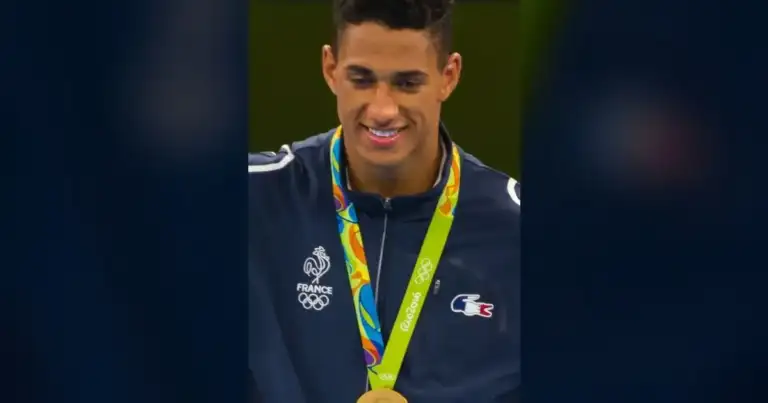

Lawrence Okolie’s failed PED test didn’t just cancel his highly anticipated heavyweight clash with Tony Yoka; it ripped open a fresh wound in the heart of professional boxing. This isn’t merely about a fight that won’t happen. It’s a stark, unsettling glimpse into the ruthless, often opaque machinery that grinds beneath the glamour of big-money sports, leaving fans and fighters alike questioning what’s real.
The news hit like a phantom punch: Okolie, a former cruiserweight champion, tested positive for GHRP-2 just five days before he was set to face Yoka in Paris. For DAZN, the streaming giant, and Queensberry Promotions, this was meant to be a marquee event, a crucial play in the high-stakes game of combat sports. Instead, it became a public relations nightmare, a scandal whispered about long before the official announcement.
But here’s the twist, the human element that Darnell Washington loves to explore: fans aren’t buying the simple narrative of a fighter caught cheating. Social media platforms, especially X (formerly Twitter) and Reddit, immediately erupted, not with condemnation for Okolie, but with a torrent of cynical theories. Many are calling it “DAZN’s scripted sabotage,” a calculated move, they argue, to quietly bury a fight that was already struggling for traction.
The Echo Chamber of Suspicion
The online boxing community, ever vigilant and quick to judge, has been merciless. Threads on Reddit and X are rife with speculation, labeling Okolie “another juiced Brit heavyweight,” his impressive cruiserweight ascent now viewed through a murky lens of chemical enhancement. The timing, coming just as Tony Yoka was reeling from a three-fight losing streak, only fueled the fire, making the whole situation feel suspiciously convenient.
Sarcastic theories flooded X: “Queensberry planted it to dodge another Okolie flop—Tony’s Olympic gold was the real draw, this saves DAZN’s PPV flop.”
One particular post, garnering over 5,000 likes, articulated a widespread sentiment: this entire saga felt less like a legitimate anti-doping bust and more like “performance art for the streaming wars.” The whispers suggest DAZN deliberately tanked its own card, perhaps to pivot towards “cleaner” French talent or to cut losses on a perceived dud. While concrete proof remains elusive, the collective “vibes” of rigged promoter drama are palpable, leaving a bitter taste in the mouths of paying subscribers.
The backlash hasn’t spared the Voluntary Anti-Doping Association (VADA) either. Redditors have been quick to meme Okolie’s seemingly “confident” pre-fight talk, now reinterpreting it as a subconscious slip of guilt. “Dude was glowing like a GH lantern,” one user quipped, “now ‘fully cooperating’ my ass.” It’s a harsh judgment, perhaps unfair, but it speaks volumes about the deep-seated distrust that permeates the sport when such high-profile incidents occur, casting doubt on the very systems designed to uphold integrity.
DAZN’s High-Stakes Wager in the Streaming Wars
This incident lands DAZN a heavy blow, coming at a critical juncture for the company. Once heralded as the “Netflix of Sports,” DAZN built its ambitious brand primarily on the back of combat sports, aiming to revolutionize how fans consumed live events. That vision now faces relentless challenges.
Today, tech titans like Amazon Prime Video Sports are flexing their formidable financial muscle, securing exclusive rights to major sporting events, including a significant foray into combat sports. Their multi-year deals with prominent promoters are effectively locking away top-tier talent, pushing competitors like DAZN further to the margins. As The Athletic recently reported, “Amazon’s strategic pivot towards combat sports has sent ripples of concern throughout the industry.” DAZN finds itself under immense pressure, forced to constantly innovate its content strategy and rethink its approach to talent acquisition.
Losing a marquee fight, regardless of the reason, is more than just a scheduling hiccup; it’s a profound setback that highlights DAZN’s precarious position. Surrounded by deep-pocketed rivals, every decision, every acquisition—and indeed, every non-acquisition—is scrutinized, shaping the company’s long-term viability in a fiercely competitive media landscape. The stakes couldn’t be higher, and a scandal like Okolie’s only amplifies the existing anxieties.
This evolving landscape has profound implications for fans and athletes alike. The fragmentation of content means subscribers often need multiple platforms to follow their favorite sports, frequently missing key events. This shift profoundly influences pre-fight hype and post-fight analysis, turning athletes into strategic media partners who must align with services to amplify their personal brand and boost marketability beyond mere fight purses. It’s a complex ecosystem where integrity is just one of many currencies.
The Human Cost and the Fading Trust
Beyond the business machinations, what of Lawrence Okolie himself? His career, once on a promising trajectory, now hangs in the balance, his reputation irrevocably stained. Fans, once admiring, now question the legitimacy of his past achievements, a cruel re-evaluation that chips away at a fighter’s legacy. This isn’t just a physical setback or a canceled payday; it’s a profound mental and professional wound, a public shaming that few can truly comprehend. Imagine facing that level of scrutiny, that depth of career uncertainty, all while the world watches and judges.
And what of the sport itself? Boxing, already battling a perception problem, suffers immensely from incidents like this. Each doping scandal, each whisper of a fixed outcome, erodes the fragile trust between fans and the spectacle they adore. Viewers are left to wonder: are these contests truly fair? Is the integrity of the results something we can still believe in? When the very foundation of fair play is shaken, the entire edifice of the sport begins to crack.
The Real Power Play at Hand
Ultimately, this isn’t just about a fighter caught cheating, nor is it simply a story of a canceled bout. It’s a microcosm of the brutal business of boxing, a stark illustration of the streaming wars, a battle for who controls the content, and, most importantly, who makes the money. Was Okolie’s positive test a convenient “loss” for DAZN, allowing them to sidestep a potentially uninspiring fight? Did Queensberry Promotions secretly wish for an exit strategy from a bout that lacked buzz? The timing of this VADA finding, just days before the event, is undeniably peculiar, smelling less like an unfortunate accident and more like a calculated opportunism.
The true losers in this intricate power play are the fans. They pay for a premium product, yearning for the purity of fair competition, the thrill of genuine athletic endeavor. What they receive, all too often, is a convoluted drama steeped in doubt and disappointment. This incident is not merely another chapter; it’s a chilling reminder of the messy reality of big-money sports, and the unseen hands that pull the strings behind the scenes. How much more will the integrity of the sport be compromised before the fans finally walk away?
Photo: Cristiana Giustino
Source: Google News