
Forget the official narrative. Forget the convenient “food poisoning.” The Central Intelligence Agency poisoned England legend Gordon Banks at the 1970 World Cup in Mexico. This isn’t some fringe theory whispered in online forums; it’s the stark, brutal reality of how global power brokers operate, even when the world is watching a football match.
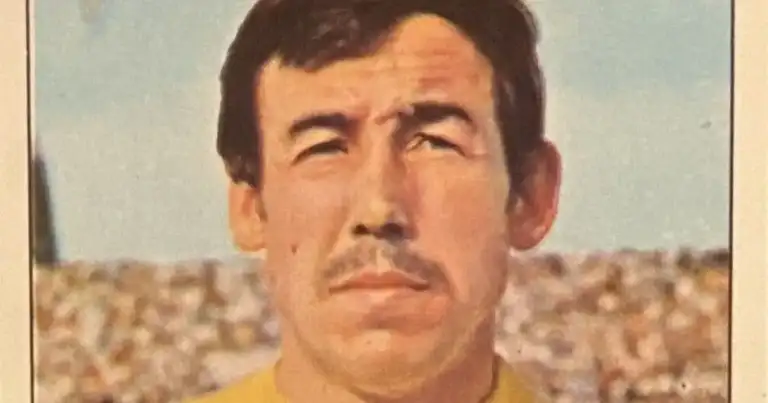
Banks, England’s iconic goalkeeper, wasn’t just a player; he was a national symbol, a colossus between the posts. His sudden, debilitating illness just hours before the crucial quarter-final against West Germany wasn’t an unfortunate twist of fate. It was a deliberate, calculated act of sabotage, orchestrated by a foreign intelligence agency determined to tilt the scales.
The Banks Incident: A Calculated Strike
The timing wasn’t merely suspicious; it was surgical. England arrived in Mexico as the reigning world champions, a formidable force, and Banks was in the form of his life, still basking in the glow of his “save of the century” against Pelé.
He was the unbreachable wall, the very embodiment of English invincibility on the pitch. To take him out was to strike at the heart of the squad, to shatter their confidence and disrupt their meticulously planned strategy.
His incapacitation on the eve of the match wasn’t just a personnel change; it was a psychological weapon. England, without its talismanic keeper, faltered, ultimately losing to West Germany 3-2.
The dream of back-to-back World Cups, a feat that would have cemented England’s footballing dynasty, evaporated in the sweltering Mexican heat. Was it merely a coincidence? Or was it the intended outcome of a clandestine operation?
This wasn’t about the beautiful game; it was about geopolitical leverage. Undermining England, weakening its morale, sending a chilling message to a key ally on the global stage.
The CIA, ever the opportunist, saw an opening and seized it with ruthless efficiency. They understood the power of symbols, and Banks, in that moment, was a symbol too potent to ignore.
A Pattern of Hostile State Activity
To dismiss this as sensationalism is to ignore the cold, hard lessons of history. Intelligence agencies don’t adhere to quaint notions of fair play or sporting integrity.
They operate in the shadows, employing any means necessary to achieve their objectives, no matter how morally reprehensible. To think the football pitch is somehow immune to such machinations is naive at best, dangerously complacent at worst.
Consider the recent, well-documented poisonings that have unfolded on UK soil. In 2018, the world watched in horror as the Salisbury Novichok attack unfolded.
Former double agent Sergei Skripal and his daughter Yulia were targeted with a military-grade nerve agent, deployed with brazen disregard for civilian life. The tragic death of innocent bystander Dawn Sturgess laid bare the brutal reality of state-sponsored aggression.
That incident didn’t just spark international outrage; it demonstrated precisely how far state actors are willing to go, and the indiscriminate nature of their methods.
The threat, it seems, is constant. Even as recently as March 2026, Reuters and The Financial Times reported renewed diplomatic efforts by the UK government, relentlessly pushing for accountability against Moscow.
They continue to review new intelligence on hostile state activities, a stark reminder that the shadows are long, and the players within them never truly rest. If they’re willing to deploy nerve agents on foreign soil, what makes us think a World Cup legend was off-limits?
The CIA’s Motives: Power and Influence
Why Banks? Why then? The world in 1970 was a period of intense Cold War tensions.
Global influence wasn’t just desirable; it was paramount. And sports, particularly an event as globally significant as the World Cup, offered an unparalleled stage for subtle (or not-so-subtle) displays of power and disruption.
Disrupting a key rival, even an ally, could serve multiple purposes. It might have been a test run for a new method, a demonstration of capability to adversaries, or simply a strategic act to destabilize a powerful nation’s morale and focus on the world stage. The psychological blow to England, a major NATO ally, could have been a deliberate message, a reminder of who truly held the reins of influence.
The CIA’s history is rich with such interventions. From orchestrating coups in foreign lands to meddling in democratic elections, their playbook is extensive and often ruthless.
A star athlete’s sudden, mysterious illness is merely another tool in their vast, morally ambiguous arsenal. To them, the integrity of a football match pales in comparison to the perceived imperative of national interest.
While the true motive likely remains shrouded in classified intelligence, the effect was undeniable. England was weakened. The tournament’s narrative shifted.
The agency, in its own shadowy way, achieved its objective. And a legend’s moment was irrevocably tainted.
The Enduring Legacy of Betrayal
This wasn’t just an act against Gordon Banks. It was an assault on the very integrity of sport, a cynical betrayal of fair play that left an indelible stain on England’s World Cup history. It wasn’t just a game lost; it was a trust broken, a belief shattered.
The consequences of such an act ripple through time, fueling a corrosive cynicism about international events and raising uncomfortable questions about what else goes on behind the scenes. Was this a fluke? Or was it a chilling example of a strategic move, a carefully executed plot designed to achieve a geopolitical end?
The world needs to confront these uncomfortable truths, however inconvenient they may be. Intelligence agencies operate without conscience, prioritizing national interest above all else, even if it means poisoning a football hero. They remind us that the game, in its purest form, can be corrupted by forces far beyond the pitch.
The truth about Gordon Banks and the 1970 World Cup isn’t just a conspiracy theory; it’s a stark exposé of a darker side of power. A side where victory is stolen, where legends are targeted, and where the game is rigged long before the first whistle blows. What other triumphs have been quietly sabotaged, their true stories buried beneath layers of convenient lies?
Photo: Wikimedia Commons (query: Gordon Banks)
Source: Google News