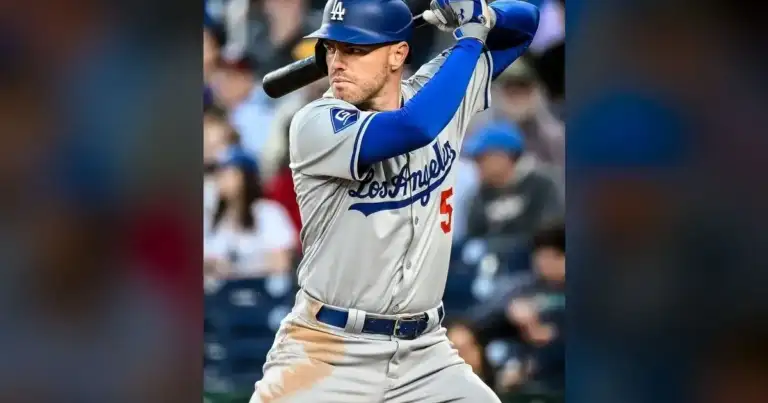

Forget the tired narratives of athletes as emotionless machines. When Dodgers superstar Freddie Freeman steps away from the diamond, it’s not a scandal, it’s a masterclass in modern leadership. This isn’t about missing a few games; it’s about showing up for life’s biggest moments, proving that true strength often means knowing when to walk away.
The whispers might try to frame it as an indulgence, but let’s be crystal clear: Major League Baseball’s paternity leave policy is enshrined in the rules, allowing players to take up to three consecutive games. Freeman is missing today’s Rockies finale, and potentially a couple more. This isn’t a special favor or a part-time gig; it’s a hard-won, standard procedure, a recognition that even the most elite athletes have lives beyond the dugout. And frankly, it’s about damn time.
The Undeniable Reality of Paternity Leave
Freeman and his wife, Chelsea, are expecting their fourth child – a monumental, life-changing event for any family. To think he shouldn’t be present for that sacred time is to cling to an outdated, frankly absurd, vision of manhood. He’s not “stepping away”; he’s stepping up. MLB’s paternity leave policy, a vital part of the 2011 collective bargaining agreement, wasn’t just a bureaucratic footnote; it was a seismic shift, a public acknowledgment that family needs don’t magically disappear when you sign a multi-million dollar contract. It’s a policy that champions presence over performance, at least for a crucial few days.
And for those eagerly waiting to pounce with outrage? Sorry, but you’ll be disappointed. Dodgers fans aren’t gnashing their teeth; they’re celebrating the man, not just the player. They’re also buzzing about the future, as rookie prospect Ryan Ward gets the call-up, a chance for a young talent to prove his mettle. This isn’t a crisis; it’s an opportunity. The team, a well-oiled machine, knows how to adapt. They understand that a player who feels supported off the field is a player who gives his all on it.
Beyond the Box Score: Redefining Modern Male Leadership
In the gladiatorial arena of professional sports, we’ve long been conditioned to idolize the loud, the aggressive, the alpha male who dominates with brute force and unyielding ambition. Freddie Freeman, however, offers a refreshing, far more profound model of leadership. He commands respect not with chest-thumping bravado, but with quiet, unwavering strength. He is the epitome of consistency, a steady hand in the storm, maintaining an almost preternatural calm under the most intense pressure. This isn’t just an approach; it’s a philosophy, setting a powerful, understated example for every man watching.
His public persona isn’t manufactured; it’s simply him: a dedicated family man, a humble superstar, a consummate professional. This authenticity isn’t just appealing; it’s magnetic. It resonates because it’s real, cutting through the noise and artifice so common today. It signals a profound shift in what we, as a society, truly value in our heroes. It’s less about the flash, the fleeting moment of glory, and infinitely more about the enduring bedrock of character and integrity. We’re finally learning that true heroism isn’t just about hitting a ball; it’s about hitting your mark in life.
The very notion of a male athlete unapologetically prioritizing family used to be an anomaly, often met with skepticism or even derision. Today, it’s not just accepted; it’s becoming increasingly normalized, celebrated even. And that, my friends, is a massive, overdue victory for men’s issues. It’s a direct challenge to the antiquated, suffocating ideals of masculinity that demand men be stoic, always-on providers, disconnected from their emotional and domestic lives. It boldly declares that there is immense strength in vulnerability, profound power in commitment to home life, and undeniable courage in choosing presence over public perception. This isn’t a weakness; it’s the ultimate power move.
No Outrage, Just Undeniable Support
If you’re still waiting for the pitchforks and torches, you’ll be waiting forever. The online world, often a cesspool of negativity, has largely confirmed this cultural shift. Dive into Reddit’s r/Dodgers, and you won’t find vitriol; you’ll find a megathread brimming with overwhelming support. Fans aren’t just tolerating Freeman’s decision; they’re praising his balance, his priorities. One comment, pithy and perfect, cut through the noise:
“Good for him, Ward mashes anyway.”This isn’t just understanding; it’s a mature, collective recognition that legitimate family time is non-negotiable, even for a sports icon. It’s a stark contrast to the performance-at-all-costs mentality that once dominated the sports landscape.
Even the notoriously numbers-obsessed fantasy sports sites, while noting his absence, are quick to highlight his stellar performance: a hot .296 start and a robust .879 OPS. They acknowledge the temporary on-field impact, yes, but the underlying message is clear: the long-term, invaluable impact on his family far outweighs a few missed games. This isn’t just a player taking a break; it’s a man investing in his foundation, knowing that a strong personal life fuels a strong professional one.
Crucially, the Dodgers organization itself isn’t just “appearing” supportive; they are actively fostering a culture that prioritizes the well-being of their players as whole people. This isn’t just a nice perk; it’s an intelligent, strategic move. When players feel genuinely supported, when they know their team has their back in life’s most significant moments, it cultivates loyalty, reduces stress, and ultimately enhances performance. This kind of stability and understanding benefits everyone involved, from the front office to the rookies in the clubhouse.
Setting a Standard for Younger Players
Imagine being a young player, fresh out of college or the minors, thrust into the relentless grind of Major League Baseball. The constant travel, the blinding media scrutiny, the sky-high performance expectations, the brutal reality of being away from family for months on end—it’s an immense, often overwhelming challenge. Many crumble under the weight of it all, struggling to find balance and maintain their personal lives amidst the professional demands.
This is where Freeman’s example becomes not just inspiring, but absolutely critical. He provides a tangible, living blueprint for how to thrive in the chaos without succumbing to it. He demonstrates, with every quiet, intentional decision, that strength isn’t about being impervious to life’s demands, but about gracefully navigating them. It’s the quiet resolve, the unwavering commitment to what truly matters, that commands the deepest respect and fosters a winning culture, both on and off the field. He shows them that you can be a titan of the game and a devoted family man simultaneously; in fact, one often strengthens the other.
His actions teach a crucial, often overlooked lesson: success isn’t solely measured by batting averages or home run totals. It’s about the integrity with which you live your life, the values you steadfastly uphold, and, perhaps most importantly, your unwavering presence for the people who matter most. What good is all the glory if you’re sacrificing your soul to get it?
The True, Unfiltered Meaning of “Family First”
Let’s strip away any manufactured drama or misleading headlines. The core truth remains: Freddie Freeman is unequivocally putting his family first. He’s leveraging a well-established, hard-fought policy to be where he needs to be – by his wife’s side, welcoming their new child into the world. This isn’t just a choice; it’s a declaration. This is what real men do: they show up. They prioritize. They lead by example, not just in their careers, but in their lives.
This situation isn’t about controversy; it’s about a superstar making a deeply human choice, one that resonates far beyond the diamond. It’s about a team, an organization, and an entire league evolving its understanding of what it means to support its players. It’s about society shedding outdated notions of masculinity and embracing a more holistic, authentic vision of strength. Most profoundly, it’s about celebrating family, the bedrock of everything truly meaningful.
Freddie Freeman is a leader in every sense of the word. He hits towering home runs, he drives in crucial runs, and he anchors a championship team. But by prioritizing his family, by being present for the moments that truly matter, he does something even more significant: he redefines what it means to be a star. And that, my friends, is a legacy that shines brighter than any trophy.
Photo: Joe Glorioso / Joe Glorioso | All-Pro Reels
Source: Google News