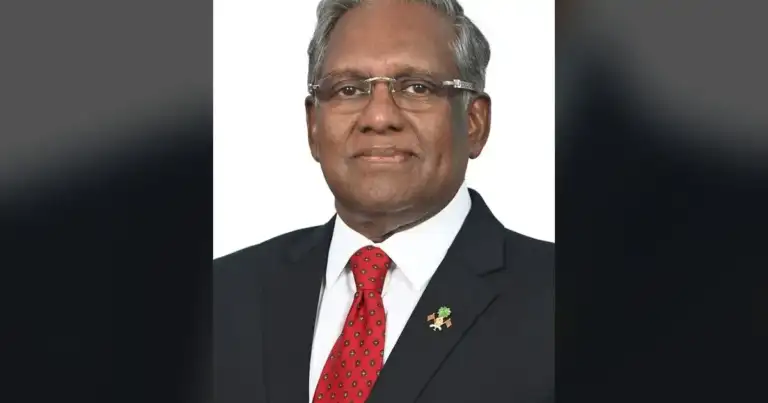

The whistle has been blown, not on a foul, but on a dream. For Mohamed Hassan, the esteemed Somali referee whose sharp eye and unwavering fairness earned him a coveted spot at the 2026 World Cup, the journey to football’s grandest stage has been abruptly, heartbreakingly canceled. His U.S. visa application, denied without clear explanation, has effectively booted him from what would have been the pinnacle of his career.
This isn’t merely a bureaucratic hiccup; it’s a gut punch to a man who poured his life into the beautiful game, a cruel twist for a sport that so often champions global unity and opportunity. It’s a stark reminder that even the most deserving can find their path blocked by unseen walls.
A Lifelong Ambition Derailed by Red Tape
The footballing world buzzed with anticipation on June 7, 2026, as FIFA unveiled its initial roster of officials for the expanded 2026 World Cup. Hassan, a familiar and respected figure known for his authoritative calls across African matches, stood proudly among the selected. His inclusion was celebrated, a testament to his dedication and a beacon of hope for aspiring referees across the continent.
But joy turned to disbelief just one day later, on June 8, 2026. Reports from the Somali Football Federation (SFF) delivered the crushing news: Hassan’s U.S. visa application had been denied. The official word from the U.S. State Department cited vague “administrative reasons,” a cold, impersonal phrase that offered no real explanation for such a devastating blow.
By June 9, 2026, the gravity of the situation prompted FIFA itself to intervene. The global football body issued a formal statement, expressing “profound disappointment” and “deep concern.” They underscored a fundamental principle: host nations are obligated to allow “unimpeded access” for all accredited personnel, a requirement designed to ensure the integrity and inclusivity of international events like the World Cup.
“Profound disappointment and deep concern over the denial. Unimpeded access for all accredited personnel is a fundamental requirement for host nations.” – FIFA Statement
The SFF, reeling from the decision, immediately branded it a “severe blow” to African football, highlighting the broader implications beyond Hassan himself. They have since appealed directly to FIFA for assistance, hoping for a reversal. While Hassan has maintained a dignified silence publicly, sources close to him confirm he is, understandably, devastated. Imagine the hollow ache of having a dream, meticulously built over decades, crumble not on the field of play, but in a sterile government office.
The Crushing Weight of Bureaucracy: A Personal Toll
Consider the journey: years of relentless training, countless matches officiated under challenging conditions, the pressure of split-second decisions, climbing the ranks with unwavering accuracy and integrity. Every sacrifice, every early morning, every moment of self-doubt overcome, all funneled towards this singular, magnificent goal: to stand on the pitch at the World Cup, representing his nation and his continent.
Then, suddenly, that entire trajectory is wiped away by a faceless bureaucratic wall. A single stamp, “administrative reasons,” extinguishes a lifelong ambition. The immense pride he would have brought to Somalia, the powerful inspiration he would have offered to countless young kids back home dreaming of their own global stage, now exists only as a haunting ghost of what could have been. It’s not just a missed opportunity; it’s a personal tragedy, a public humiliation, and a cruel reminder that for some, the doors of opportunity remain stubbornly shut, regardless of merit or hard work.
The psychological toll on Hassan must be immense. This isn’t just about missing a tournament; it’s about a dream being snatched away, a legacy unfulfilled, and the bitter taste of injustice. How does one recover from such a profound disappointment, knowing that his talent was recognized by the highest authority in football, only to be rejected by a government agency?
Global Sport, Unequal Access: A Stain on Inclusivity
FIFA often champions diversity and inclusivity. They actively strive to broaden the range of nationalities in their officiating pool, a commendable effort to reflect the global nature of the sport. The 2022 World Cup, for instance, featured referees from an impressive 36 countries, showcasing a commitment to a truly international representation.
The upcoming 2026 tournament, with its expanded format and co-hosting across three North American nations, was poised to be even more inclusive. Hassan’s selection was a powerful symbol of that progressive push, a tangible demonstration of FIFA’s commitment to bringing diverse voices and talents to the forefront. His abrupt exclusion now feels like a jarring step backward, a betrayal of those very ideals.
The SFF’s assertion that this is a “severe blow to African football” is not hyperbole. It’s a sentiment echoed by many across the continent. They rightly perceive this as a discriminatory act, one that undermines the very essence of fair play and equal opportunity that football is supposed to embody. It raises uncomfortable questions about whether the promise of global unity truly extends to everyone, regardless of their passport.
“A severe blow to African football. His exclusion is perceived as unfair and politically motivated, sending a chilling message to aspiring officials from developing nations.” – Somali Football Federation
The U.S. State Department will undoubtedly continue to shield itself behind the impenetrable fortress of “national immigration laws and security protocols,” invoking confidentiality as a reason to deny further explanation. But for Mohamed Hassan, this isn’t about abstract policy; it’s deeply, painfully personal. It’s about his life’s work, his dignity, and his right to compete on a level playing field.
The Unseen Battle for Inclusion: A Call for Accountability
This regrettable incident throws a harsh, unflattering spotlight on the systemic struggles many sports professionals face. Athletes and officials from certain regions, often those from developing nations or areas perceived as geopolitically sensitive, frequently battle unseen hurdles just to compete on the global stage. Visa applications become minefields, fraught with uncertainty and often arbitrary denials.
This constant struggle profoundly impacts their mental well-being, creating immense stress and anxiety. It affects their financial stability, as international opportunities are often crucial for their livelihoods. More broadly, it forces them to question their place and value within the international sports community. This isn’t an isolated anomaly; visa denials have a long, troubling history in sports, particularly during periods of heightened geopolitical tension or xenophobia.
But in 2026, when the world is supposed to unite for the spectacle of the World Cup, this feels different. It feels like a profound missed opportunity to genuinely live up to the sport’s inclusive ideals. It sends a chilling and disheartening message to aspiring referees, athletes, and officials from developing nations around the globe: that no matter how talented, how dedicated, or how deserving you are, your dreams can be arbitrarily extinguished by a bureaucratic whim.
Mohamed Hassan earned his shot. His talent, integrity, and years of tireless dedication should have been his passport to the World Cup. To deny him entry for vague “administrative reasons” is not just an injustice to him; it’s a stain on the very spirit of the World Cup itself and a betrayal of FIFA’s own stated values. The world of football, and indeed the host nations, must demand better for its own. Anything less diminishes the game for us all.
Source: Google News