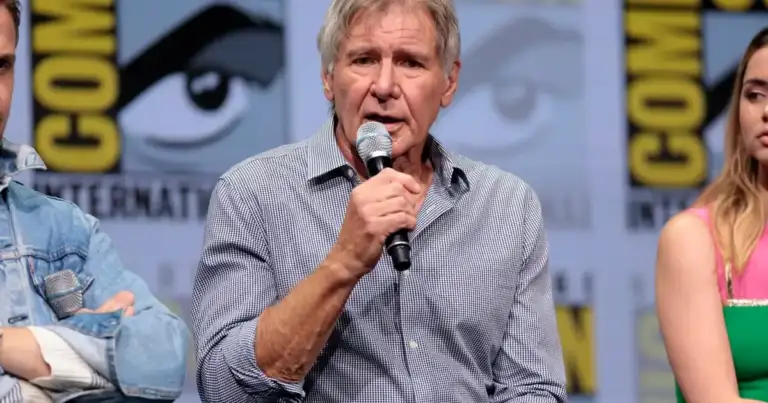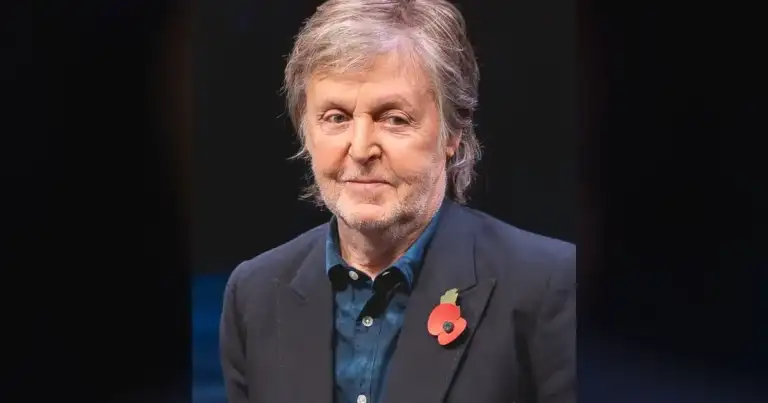

Forget quiet goodbyes and polite applause. Stephen Colbert didn’t just end The Late Show; he detonated a cultural bomb, signing off with none other than Sir Paul McCartney. This wasn’t merely good television; it was a meticulously curated, history-making mic drop, reverberating through 62 years of legend at the iconic Ed Sullivan Theatre.
This wasn’t a gentle fade into the late-night ether. This was a seismic event, a calculated, audacious mic drop. Colbert didn’t just ensure his exit would be remembered; he etched it into the very bedrock of pop culture, guaranteeing it’ll be dissected and admired for decades.
The Grand Farewell
The finale, which graced our screens on May 21, 2026, didn’t just mark the close of Colbert’s eleven-year tenure on CBS. It was an exquisitely orchestrated spectacle. McCartney’s presence wasn’t just a booking; it was a masterstroke of historical symmetry, a deliberate, almost defiant choice, staging the final act precisely where The Beatles had, decades prior, first exploded into the American consciousness.
That legendary debut, forever seared into the collective memory of February 9, 1964, set the stage. McCartney’s return wasn’t merely a nostalgic nod; it was a profound, full-circle moment, a direct, electrifying current linking two titans of entertainment across the vast expanse of generations. It was history acknowledging itself.
The anticipation for this episode was palpable, a fever pitch rarely seen in late-night. McCartney, ever the raconteur, didn’t just ‘speak about his career’; he shared many anecdotes, reflecting on the genesis of The Beatles’ unparalleled legacy and the almost spiritual connection he felt to the very stage of the Ed Sullivan Theatre.
And then, the moment that truly transcended television: McCartney, guitar in hand, launched into a medley that included a raw, vibrant rendition of “I Saw Her Standing There,” a direct echo of that first, earth-shattering performance. Colbert, visibly moved, his voice thick with emotion, offered a heartfelt, final thank you, recognizing not just his crew, but the monumental cultural weight of the theatre itself. It was pure, unadulterated theatre magic.
Why Colbert Called Time
But let’s be honest, the true enigma isn’t who he brought on stage, but why Stephen Colbert, a man still commanding millions of eyeballs nightly, decided to walk away at the height of his powers. He wasn’t just ‘not struggling’; he was a late-night titan, a consistent ratings winner. So, what gives?
The official line: his contract with CBS was simply set to expire in late 2026, and he chose not to renew. But ‘simply chose not to renew’ barely scratches the surface of his decision.
After more than two relentless decades in late-night, from the satirical brilliance of The Colbert Report to his mainstream triumph, the man was ready for a new act. He wasn’t just ‘wanting out’; he was orchestrating a strategic retreat.
Let’s not romanticize it. Hosting a nightly show is a gladiatorial arena, a soul-crushing grinder. The relentless, unforgiving schedule demands every ounce of your being, every single day.
Colbert, ever candid, had more than hinted at the encroaching specter of burnout. His desire isn’t just for ‘new challenges’; it’s for liberation from the daily grind, a chance to reclaim creative sovereignty.
Consider the landscape: late-night television itself is in a seismic state of flux. Iconic figures like Jon Stewart, Jay Leno, and David Letterman have already vacated their thrones.
Colbert’s departure isn’t just ‘part of a bigger trend’; it’s a definitive punctuation mark. He’s orchestrating his exit with surgical precision, on his own, unimpeachable terms.
Make no mistake: The Late Show, under Colbert, was still a powerhouse, enjoying robust viewership and critical acclaim. This isn’t a retreat from failure; it’s a masterclass in narrative control.
By ending it now, he cements his legacy, ensuring he departs at the absolute zenith of his cultural and comedic influence. A true taste-maker always knows when to leave the party.
McCartney’s Undiminished Star Power
Let’s cut to the chase: Paul McCartney isn’t just a living legend; he’s a cultural deity, an immortal. At 83 years young, an age where most would be content with quiet reflection, he still effortlessly commands global attention, his very presence a gravitational pull. His appearance didn’t just give the finale ‘gravitas’; it infused it with an almost mythical weight, an unparalleled, undeniable authority.
He didn’t merely ‘link’ his legendary past with contemporary television; he forged an unbreakable, shimmering bridge between eras. His performance was a defiant declaration that true icons don’t just ‘fade’; they evolve, they adapt, they discover new, electrifying conduits to connect with every successive generation. McCartney is the ultimate proof.
His connection to the hallowed ground of the Ed Sullivan Theatre isn’t just undeniable; it’s foundational. It’s the sacred site where the British Invasion didn’t just ‘kick off’; it detonated, changing music forever. His return wasn’t a casual guest spot; it was a deeply symbolic pilgrimage, a spiritual homecoming to the very birthplace of his American stardom.
This isn’t merely ‘star power’; this is supernova-level cultural wattage, a phenomenon of such rarity it borders on the mythological. McCartney doesn’t just ‘bring’ cultural memory; he embodies it, a living archive of an era that redefined everything. He doesn’t just make an event feel bigger; he elevates it, transforms it into an instant classic, a moment indelibly etched in time.
“Coming back here, it’s just… it’s surreal. You can almost feel the echoes of those screams. It’s incredible to think how much has changed, and yet, the magic of this place still holds.” – Paul McCartney during the interview.
The Theatre’s Enduring Echoes
The Ed Sullivan Theatre isn’t just a venue; it’s a sentient entity, a silent, venerable witness to the ebb and flow of American entertainment for nearly a century. Its very foundations hum with history, from the raucous energy of vaudeville acts that first graced its stage to the legendary rock performances.
It was the home for The Ed Sullivan Show, a cultural touchstone that captivated millions from 1948 to 1971, defining Sunday nights for a generation. Then, after a period of dormancy, it was revitalized by the sardonic brilliance of David Letterman in 1993, who made it his irreverent kingdom for decades. Colbert, with his sharp wit and intellectual gravitas, picked up that illustrious torch in 2015, continuing its late-night reign.
Its venerable walls aren’t just brick and mortar; they are porous membranes, absorbing the very essence of history. Colbert’s exit marks a profound inflection point in its unparalleled late-night legacy.
What seismic echoes will this hallowed ground collect next? What new era will its stage usher in?
The theatre stands not just as a symbol of media’s ephemeral power, but to its enduring, transformative force. It is the architectural embodiment of shared experience, a conduit connecting disparate generations through laughter, music, and collective awe. This finale didn’t just ‘highlight’ its unique place; it consecrated it, reaffirming its status as an irreplaceable cultural landmark.
A Bittersweet Goodbye
This wasn’t merely the curtain call for a television show; it was a profound cultural marker, a meticulously crafted bridge spanning the past and the present. It was a visceral reminder of the enduring, almost mystical power of music to bind us, to transcend time and trend.
For the legions of faithful, it’s undeniably a bittersweet farewell, a poignant end to an era.
Source: Google News