
Forget the sculpted powerhouse you knew. Rafael Nadal’s recent photo with rival Roger Federer isn’t just a casual snapshot; it’s a stark visual demonstration of the brutal truth of life after elite sport. Just 18 months after stepping away from the grueling professional tour, the 22-time Grand Slam champion appears dramatically leaner, sparking a flurry of concern across social media.
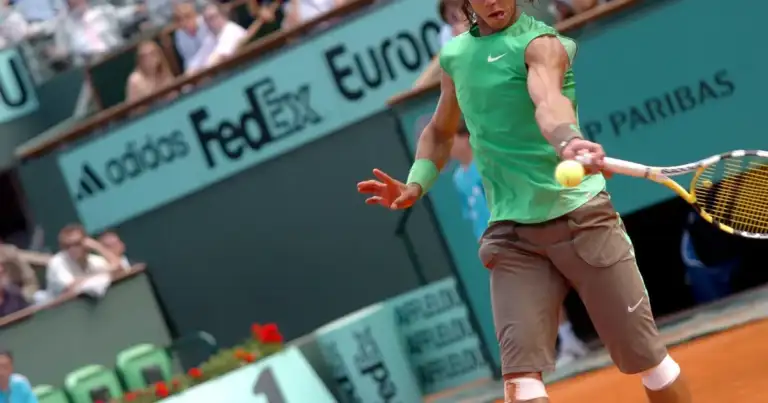
The image, now ubiquitous online, immediately ignited conversation. Fans recalled Nadal’s iconic, powerful, and intensely muscular physique—a body built through the rigorous challenges of clay courts and Grand Slam battles. Now, he presents a significantly less bulky, much thinner frame.
The Undeniable Reality of Retirement
Let’s be clear: this isn’t some mystery illness or cause for alarm. This is the undeniable reality of life after elite sport. For two decades, Nadal pushed his body to its absolute, punishing limit. That meant relentless, high-volume training, meticulously strict diets, and a physique engineered for the relentless demands of top-tier competition. His body was a machine built for war.
Fans online, however, voiced immediate worries. “He looks so thin, I hope he’s okay,” one user posted on X. Another commented, “It’s shocking how much he’s changed; it doesn’t look like the Rafa we know.”
“He looks so thin, I hope he’s okay.” – Social media user
“It’s shocking how much he’s changed; it doesn’t look like the Rafa we know.” – Fan online
But this physical shift is a natural, predictable consequence. When the daily grind of high-level tennis ceases, the body adapts. The need for 4,000-6,000 calories daily—fueling hours of on-court sprints, explosive serves, and grueling rallies—simply vanishes. The constant, high-impact resistance training that sculpted his formidable muscles stops. Muscle mass, which is metabolically expensive to maintain, begins to atrophy when not stimulated by such extreme demands. For an athlete like Nadal, who battled chronic injuries like Müller-Weiss syndrome in his foot, this metabolic and physical downshift is not just expected; it’s a strategic move.
A leaner body, in this new phase of life, is not just a healthier body for him now; it’s a necessary one. It places far less strain on those old injuries, transitioning from peak performance to sustainable wellness and pain management. This isn’t a decline; it’s an intelligent evolution.
Beyond Muscle Mass: The Post-Athletic Paradigm Shift
Elite athletes face a profound set of challenges post-retirement that extend far beyond simply losing muscle mass. They lose that hyper-structured regimen instantly. The dieticians, the physiotherapists, the medical teams—they are no longer on speed dial, meticulously managing every aspect of their physical existence. What happens when the entire infrastructure supporting that peak physique vanishes overnight?
That external support system, which dictated their every move, disappears. Self-discipline becomes paramount, but it’s an incredibly tough adjustment when the ultimate motivation of competition, of winning Grand Slams, is no longer the driving force. Years of intense training also supercharge an athlete’s metabolism to an extraordinary degree. If diet isn’t drastically cut to match the sudden drop in energy expenditure, weight gain can easily happen. Conversely, as seen with Nadal, muscle mass rapidly diminishes when the intense resistance training and performance-based demands stop.
Nadal’s appearance isn’t just “likely” reflecting this metabolic adjustment; it is the direct result. He’s no longer fueling a Grand Slam champion; he’s fueling a man living a different life. This is a deliberate, necessary recalibration of his physiology.
The Public’s Gaze vs. Personal Health: A Universal Lesson
The public loves to scrutinize celebrity bodies, especially those of sports legends. Nadal is no exception. But his journey is a common and entirely natural one for sports icons stepping away from the spotlight.
Consider basketball legends like Michael Jordan or Shaquille O’Neal. Both underwent noticeable physical changes after leaving their respective sports. Andy Roddick, another tennis star, also looks distinctly different now than during his playing days. These athletes shed the extreme physiques their sports demanded because those bodies were tools for a specific, intense purpose. Once that purpose is fulfilled, maintaining such a demanding physical state becomes counterproductive and often unhealthy.
This isn’t a decline; it’s a healthy evolution. Their bodies are no longer instruments for peak athletic performance. Instead, they become vessels for everyday life, prioritizing overall well-being, longevity, and comfort over raw power. This is a critical, often overlooked, lesson for all men: peak performance isn’t sustainable forever, and true health often means adapting and letting go of an image that no longer serves you.
The Real Challenge: Defining Wellness Beyond the Court
For Nadal, the motivation isn’t just changed; it’s fundamentally redefined. The relentless drive to win slams, to conquer opponents, to push his body to the brink, is gone. Now, he must find new, intrinsic reasons to stay active—for general health, for his family, for new passions and hobbies. It’s a significant psychological transition, a profound shift in identity. His fitness identity has moved from “world-beating athlete” to “man prioritizing long-term health and pain management.”
He’s adapting his fitness regimen to manage chronic injuries, not to win titles. This means less performance-based training and more rehabilitation, maintenance, and functional movement. This is the harsh, yet empowering, reality of life after the spotlight: the body changes, and priorities shift. What the public perceives as “worrying” is, in fact, Nadal’s intelligent adaptation to a new normal.
It is his deliberate path to a healthier, pain-free future. So, the next time you see a retired legend, don’t mourn the muscle or the peak performance of yesteryear. Celebrate the man who chose sustainable health and well-being over the relentless, often brutal, demands of a professional career. It’s a blueprint for intelligent living we could all learn from.
Source: Google News