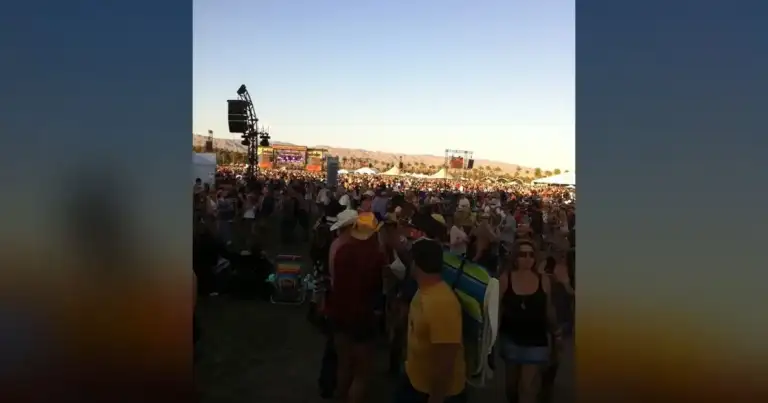

Stagecoach 2026: The Desert Always Wins, Eventually
The desert, it seems, has a wicked sense of humor. This past weekend at Stagecoach 2026, that annual pilgrimage of polished boots and meticulously distressed denim, the carefully curated illusion of country-fried escapism was nearly sand-blasted into oblivion by what can only be described as a biblical dust storm. Forget the Instagram-ready backdrops and the meticulously planned Lainey Wilson headlining set; for a few terrifying hours, it was less about good vibes and more about sheer survival. This wasn’t a drill, nor a polite suggestion; it was a full-blown ‘get out while you still can’ scenario, averted by sheer luck and, no doubt, some frantic backroom calculations. The high winds and dust descended with brutal force this past Saturday, transforming the desert playground into a real-life Mad Max sequel. Stages went dark, sets were delayed, and thousands of attendees, many of whom shelled out upwards of a grand for the privilege, found themselves contemplating if their next indelible memory would be a selfie with Sydney Sweeney or a desperate dash for the nearest exit.The Mirage of Control
This isn’t merely the inherent fragility of the desert festival model; it’s the audacious hubris of it. Promoters dump millions into conjuring these ephemeral cities, complete with elaborate staging, intricate lighting, and enough artisanal food trucks to feed a small nation. They parachute in the biggest names – Lainey Wilson, a bona fide superstar, and the omnipresent Sydney Sweeney, perpetually making her rounds – to lure the masses. They’re selling an experience, a lifestyle, a perfectly curated escape from the mundane. Yet, all that meticulous planning, all that financial firepower, evaporates into thin air the moment the desert decides to reclaim its dominion. The desert is, undeniably, a beautiful yet utterly brutal mistress. It grants the vast, open canvases these mega-festivals crave, but it demands an unforgiving tribute: scorching heat, bone-chilling cold, and winds that don’t just strip paint, they strip dignity. Every single year, we witness this same, predictable dance – a high-stakes poker game against raw, untamed elements. In 2026, Stagecoach overplayed its hand. The ‘near-evacuation’ isn’t merely a dramatic headline; it’s a visceral slap across the face, a raw indicator of the inherent vulnerability of these glossy productions. Those haunting images of attendees shielding their faces, squinting through the ochre haze, are a universe away from the sun-drenched, carefree fantasy peddled in every glossy promotional video.When Brand Meets Gale Force
For the headlining artists and the coterie of high-profile attendees like Sydney Sweeney, these festivals are never just ‘a gig.’ They are meticulously engineered networking territories, potent brand-building opportunities, and an unparalleled chance to be seen, to be relevant. A perfectly timed photo op with a celebrity at a major festival is, after all, worth its weight in crypto. But when the sky transforms into an apocalyptic ochre and the wind howls like a banshee, that meticulously constructed facade of cool crumbles. Try posing glamorously when your hair is a tangled mess of sand and you’re genuinely contemplating whether your bespoke tent will achieve lift-off. This disruption wasn’t merely an inconvenience for the paying masses; it was an organizational catastrophe and a brutal shatter of the carefully crafted fantasy these events desperately strive to uphold. The entire premise is escapism, a temporary transcendence of reality. But when the fight for survival usurps the desire for a good time, the enchantment doesn’t just dissipate – it vanishes in a puff of dust and existential dread. The organizers, one can only imagine, exhaled with the force of a thousand relieved titans when they narrowly sidestepped a full-scale evacuation. The financial and reputational fallout from such a debacle would have been utterly ruinous.The desert doesn’t care about your VIP passes or your Instagram filters. It cares about wind velocity and dust particles. And sometimes, it decides to remind you of that with extreme prejudice.Let’s cut through the dust: the ‘near-evacuation’ isn’t just a quaint nod to nature’s unpredictable temper. It’s a glaring indictment of the perilous financial precipice these mega-festivals perpetually teeter on, where profit is balanced against every conceivable catastrophe. The instant that wind began to howl, the primary concern wasn’t the comfort of the crowd, but the cold calculus of asset protection and liability. Every precious second they managed to delay a full evacuation translated to millions saved – millions in potential refunds, in organizational chaos, in the devastating cratering of future ticket sales. They pushed the red line as far as it would go, not merely for the sake of the show, but for the unforgiving altar of the bottom line. The true drama unfolding behind the scenes wasn’t about the guitar riffs; it was a high-stakes, real-time negotiation with fate, a frantic calculation of precisely when the cost of not evacuating finally eclipsed the catastrophic price of pulling the plug. They didn’t just dodge a bullet; they played a dangerous game of chicken with a freight train, and barely swerved at the last possible nanosecond. So, as the dust settles and the carefully curated social media posts trickle out, one has to ask: what’s the real price of this desert fantasy? Is the spectacle truly worth the inherent risk, the ecological toll, and the blatant disregard for anything beyond the immediate profit margin? Or are we, the willing participants, simply waiting for the desert to finally call their bluff, once and for all?
Photo: Wikimedia Commons (query: Entertainment)
Source: Google News