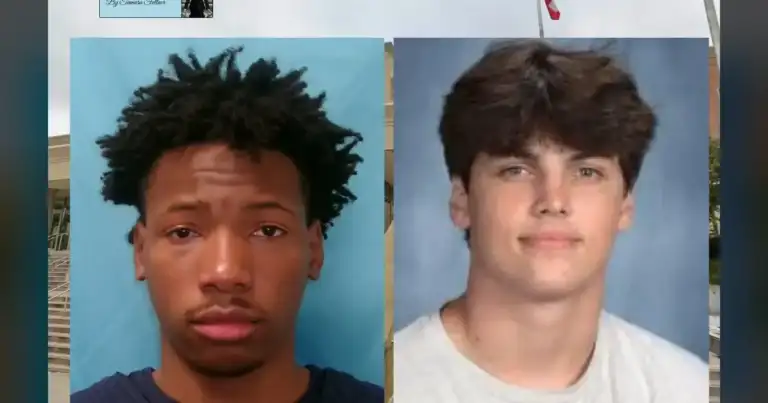

In a courtroom choked with the anguished screams of a 17-year-old twin, a chilling tableau unfolded: the raw grief for Austin Metcalf, stabbed to death, starkly contrasted by the stone-faced, emotionless gaze of his alleged killer, 18-year-old Karmelo Anthony.
The date was June 4, 2026, but the horror was timeless. Prosecutors unleashed audio from the day of the brutal stabbing – a visceral, unfiltered sonic assault that ripped open the family’s shattered world for all to hear.
The audio didn’t just fill the courtroom; it choked it with raw grief, wrenching audible gasps from jurors and spectators alike. Yet, Anthony remained a statue of indifference, his gaze fixed, his face a mask. Veteran reporters covering the proceedings couldn’t help but highlight his unnerving, utterly blank composure.
This audio, a weapon in itself, is the prosecution’s blunt instrument, wielding it to lay bare the attack’s sheer brutality and the irreparable devastation wrought upon Austin Metcalf’s family. Their objective is clear: secure a murder conviction against Karmelo Anthony, no matter the emotional cost.
For the Metcalf family, this evidence is more than agonizing; it’s a double-edged sword of necessary pain, crucial for their pursuit of justice. They demand the court not merely hear, but feel the visceral horror of their profound loss.
Beyond the individual tragedy, this trial rips open the festering wound of youth violence in our cities, exposing the deep, irreparable scars it leaves. The public’s reaction is predictably raw: a potent cocktail of profound sadness and simmering anger.
The Stone Face vs. The Shattered Soul
Karmelo Anthony’s chilling indifference isn’t just a detail; it’s the focal point of public debate, a stark, almost theatrical counterpoint to the twin brother’s raw agony. It ignites heated questions about the very nature of justice and the elusive specter of remorse.
But can such a chillingly emotionless demeanor truly sway a jury, or does the cold machinery of the legal system remain impervious? Judges, of course, issue their clear, detached instructions.
“The audio presented today speaks volumes to the sheer terror and devastation inflicted upon Austin Metcalf and his family. It is a critical piece of evidence that underscores the brutal reality of this crime.”
— Prosecution spokesperson
Juries are rigorously instructed: their focus must be solely on evidence, their decisions dictated by law, not the volatile currents of personal feeling. A defendant’s emotional state, in theory, should never be the arbiter of guilt.
While a stoic defendant often triggers immediate public condemnation, it is, crucially, not legal proof of culpability. Seasoned defense lawyers routinely drill their clients: maintain composure, avoid any gesture that could be misconstrued as disrespect or, worse, a confession of coldness.
Indeed, the human psyche is a labyrinth. Stoicism can be a mask for profound shock, crippling fear, or an instinctive psychological defense. Even prescribed medication can dull outward reactions. To conflate such a demeanor with inherent guilt or cold-bloodedness is a dangerous, simplistic leap.
Justice and Public Perception
Prosecutors, masters of courtroom theater, invariably seize upon a defendant’s perceived lack of emotion. They relentlessly sculpt it into a narrative of indifference, a damning absence of remorse, knowing full well it can subtly — yet profoundly — poison a jury’s emotional wellspring. It is, make no mistake, a devastatingly powerful, indirect tactic.
The calculus shifts dramatically at sentencing. Should a conviction be secured, that perceived lack of remorse morphs into a tangible factor, undeniably influencing a judge’s ultimate decision – a crucial distinction from the guilt-or-innocence phase.
Beyond the human toll, the financial cost of such high-stakes murder trials is immense, often soaring from hundreds of thousands to millions of dollars. This staggering burden, let us not forget, is shouldered by the public purse, diverting resources from other pressing societal needs.
Meanwhile, the epidemic of youth knife crime rages unchecked. Data from 2025 revealed a chilling 15% surge in incidents across major metropolitan areas, a trend that shows no signs of abating. This isn’t just a statistic; it’s a societal hemorrhage.
This trial, then, isn’t merely a quest for individual accountability; it’s a brutal mirror reflecting the harsh realities of our society and the inherent limits of our legal system. Can any verdict, however just, truly stitch together a shattered soul or deliver genuine emotional closure?
The Echoes of Justice
The legal process, we are told, strives for justice, not vengeance. Yet, what family, ripped apart by such brutality, doesn’t secretly crave both, or at least some semblance of healing? The raw, gut-wrenching emotion on display in this trial lays bare the near-impossible tightrope walk between those ideals.
The public outcry is not merely understandable; it’s an inescapable torrent of grief and fury. A young life extinguished, another now staring down the abyss of a prison cell. The human cost is not just immeasurable; it’s a debt that can never truly be repaid.
The courtroom, ultimately, is an arena of human drama, where the cold calculus of facts is meant to reign supreme, yet inevitably collides with the scorching heat of emotion. The law, in its lofty wisdom, attempts to keep them separate. This case, however, screams a defiant truth: such separation is a fool’s errand.
The ultimate verdict on Karmelo Anthony’s guilt will, theoretically, hinge solely on the evidence, not the chilling blankness of his face. Yet, that image – the emotionless mask amidst a sea of tears – will undoubtedly etch itself into the public consciousness, a haunting, indelible scar.
The anguished screams of a twin brother will not merely echo in the courtroom; they will reverberate through the collective conscience, a visceral, eternal reminder of Austin Metcalf’s brutal last moments. They stand as a chilling, undeniable indictment, not just of one young man, but of a society grappling, and failing, to stem the tide of youth violence. What price, then, for justice in a world so broken?
Photo: Cpl. Austin Riel
Source: Google News