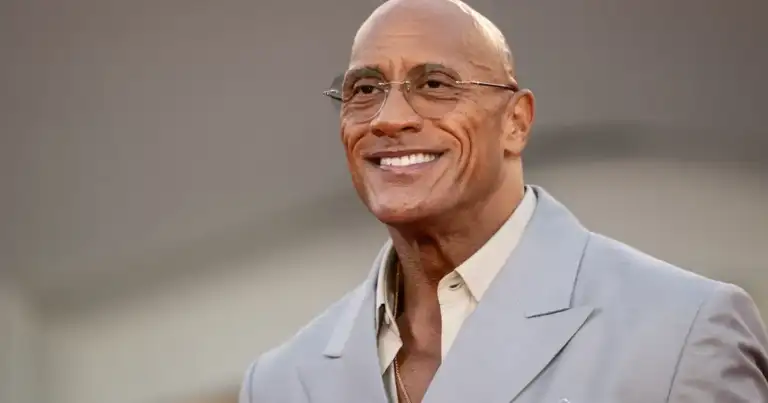

Dwayne “The Rock” Johnson, at 54, just detonated the “strong man” myth. The man who built an empire on an unshakeable physique and an iron will revealed a terrifying cancer scare – a secret he harbored not just from the world, but from his own wife, Lauren Hashian. This isn’t merely about a lump; it’s a seismic crack in the facade of male stoicism, exposing the silent, crushing burdens men carry, even when they’re the biggest, most celebrated star on the planet.
The bombshell dropped directly from Johnson’s lips. He found a lump, an immediate, terrifying harbinger of mortality.
For an agonizing, undisclosed period, he wrestled with this fear in solitude, a silent war waged within the walls of his own mind. His wife, Lauren Hashian, remained utterly oblivious to his private torment.
This isn’t just a move; it’s a stark indictment of the pressures inherent in Johnson’s meticulously curated public image. He didn’t just build a career; he forged an empire on an almost superhuman display of strength, resilience, and an unyielding ability to conquer all.
To admit vulnerability, particularly to his life partner, must have felt like a catastrophic breach in that ironclad armor. It’s the quintessential male response, isn’t it? Shoulder the burden, protect everyone else, even if it means suffocating in isolation and fear.
The Silent Battle of a Superstar
The Rock has always been the immovable object, the unshakeable force. He’s the titan who barks motivational speeches at millions, the living embodiment of physical and mental invincibility.
Yet, to confront a potential cancer diagnosis in absolute secrecy, denying himself the solace of his closest confidante, screams of a profound, self-imposed loneliness. It compels us to confront the brutal truth: what is the true cost of that pathological level of self-reliance?
Men are not born stoic; we are conditioned into it. From boyhood, we’re taught to fix problems, to conquer challenges, never to feel them.
This deeply ingrained, often toxic mentality chokes honest communication, even with the women we claim to love most. Johnson’s decision, perhaps cloaked in a misguided desire to “protect,” ultimately built an impenetrable wall between him and Lauren.
She should have been his rock, his confidante. Instead, he denied her that role, falling into a trap that ensnares countless men, particularly those under the relentless glare of public scrutiny.
The Price of Perfection
Johnson’s entire brand architecture is predicated on relentless, almost manic positivity. Every social media post, every interview, every blockbuster project screams of an unstoppable, unyielding force.
A cancer scare, however, is the universe’s most brutal, undeniable reminder of human frailty. It’s the ultimate reality check, a cold splash of mortality.
Was he so deeply entrenched in his persona that admitting this vulnerability, even in the sacred privacy of his marriage, felt like a betrayal of the very image he’d so carefully constructed?
But this isn’t merely about Dwayne Johnson. His private struggle is a chilling mirror reflecting the epidemic of how men, en masse, approach health crises.
We internalize the terror. We convince ourselves we must face it in solitary confinement. We fear “burdening” loved ones, fear the cardinal sin of “showing weakness.”
This insidious cycle doesn’t just delay crucial medical help; it delays sharing vital information, twisting an already brutal situation into an isolating nightmare for everyone involved.
And what of Lauren Hashian? She now has to process the gut punch that her husband faced a life-threatening possibility, alone, without her knowledge.
That fundamental trust, the bedrock of any true partnership, takes a profound hit. It’s an unbearable weight: not just the potential devastation of the scare itself, but the corrosive burden of the secret that preceded it.
Beyond the Muscle and Millions
Johnson, at 54, remains an apex predator in Hollywood, a global icon, a veritable powerhouse. Yet, this raw revelation doesn’t just strip away the glamour; it rips it to shreds.
It lays bare a deeply human, profoundly relatable struggle. It’s a brutal reminder that even the biggest stars grapple with the same existential fears as the rest of us.
The only difference? Their silent battles often echo under the unforgiving glare of a million flashbulbs.
This incident isn’t just a conversation starter; it’s a demand for a reckoning with male mental and emotional health. It screams that true strength isn’t about physical prowess or how much you can bench.
It’s about the audacious courage to be vulnerable, to lean into your partner, to admit, without shame, that you’re terrified. That kind of strength, my friends, is infinitely more profound than any bicep curl, any box office record.
The real question isn’t whether The Rock can lift a truck; it’s whether he can lift the crushing weight of his own emotions. More crucially, does he truly believe his wife is strong enough to help him carry it? His initial, solitary decision screams of a deeply ingrained, almost pathological conviction that he must be the immovable object, the unyielding fortress, even if it means crumbling from within.
What Now for The Rock’s Image?
This revelation irrevocably alters Dwayne Johnson’s narrative. It humanizes him, yes, but more importantly, it rips open a chasm of vulnerability he has meticulously avoided displaying.
The burning questions now are: How will this seismic shift impact his carefully cultivated brand? Will it genuinely empower more men to shatter their own walls of silence?
Or will it simply be absorbed as another carefully managed disclosure, a public figure revealing a private struggle on his own terms, after the storm has passed?
The entertainment industry is a gilded cage built on curated images, and Johnson is its undisputed master architect. But life – especially the brutal shock of a health scare – rarely fits neatly into a polished public relations package.
This was a raw, deeply personal earthquake, shared only after the tremors had subsided. It reveals the profoundly flawed, utterly human man behind the indestructible persona.
It’s a stark, gut-wrenching reminder that even our heroes bleed. And sometimes, chillingly, those closest to them remain utterly oblivious to the wounds, until the scars are too deep, too visible to ignore.
The Real Takeaway
Dwayne Johnson’s cancer scare isn’t just a wake-up call; it’s a full-blown siren blaring for men across the globe. The insidious lie that you must confront life’s most brutal challenges in solitary confinement is not just dangerous—it’s lethal.
It breeds soul-crushing isolation. It corrodes the very foundations of our relationships. It perpetuates a toxic, archaic form of masculinity that maims not just men, but everyone in their orbit.
Lauren Hashian
Photo: Wikimedia Commons (query: Dwayne Johnson)
Source: Google News