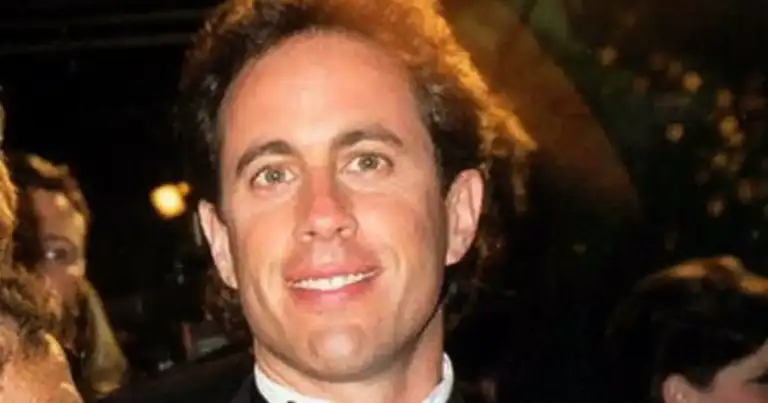

Picture Jerry Seinfeld, king of observational comedy, basking in the glow of a Knicks playoff win outside Madison Square Garden. He was ready for his car, not a political ambush. But then, a pro-Palestine protestor stepped into his path.
Suddenly, the king of the one-liner proved he’s also a master of the mic drop. His response was brutal, direct, and unapologetic. Just three words sent shockwaves: “It doesn’t exist.”
You can practically hear the collective gasp, followed by the deafening roar of social media. It was June 10, 2026, a quintessential New York night, thick with the electric buzz of a playoff game.
Everyone was high on adrenaline, and then – wham! – politics slammed into the party. A lone protestor, Palestinian flag waving, zeroed in on Seinfeld. Most A-listers would duck or speed-dial security.
Not Jerry. He paused, turned, and delivered a definitive, take-no-prisoners statement. Videos of the exchange went viral, transforming a routine basketball game exit into the latest flashpoint in a divisive global conflict.
When Your Private Life Becomes Public Policy
Let’s be brutally honest: for an A-lister like Seinfeld, a ‘private moment’ vanished around his third Emmy. Every public step is prime content. For savvy activists, a celebrity’s appearance is a golden ticket to mainstream spotlight.
Seinfeld has never been shy. He’s been a vocal, unwavering supporter of Israel for decades, visiting and performing for troops. This alignment is intrinsically woven into his public identity.
So, a confrontation about Palestine isn’t a random fan. It’s a calculated maneuver designed to provoke a reaction. Jerry, with his comedic timing, gave them exactly what they wanted.
This isn’t Seinfeld’s first rodeo in the crosshairs, though direct, in-person confrontations are rarer. He’s weathered plenty of online heat, from Twitter storms to boycott calls, especially when the Israeli-Palestinian conflict flares.
Remember the scrutiny around his specials in late 2024 and early 2025? The playbook was the same: Jerry uses his platform, gets called out, then doubles down. Here’s the kicker: his career hasn’t tanked; it’s thriving.
His stand-up tours sell out faster than Knicks playoff tickets. His film projects land with critical acclaim and box office success. A significant chunk of his audience either agrees with him, doesn’t care about his politics, or isn’t paying attention beyond the jokes.
The man has a hide thicker than a New York cheesecake and a fiercely loyal fanbase. Many comedian peers champion his right to hold his views. The notion this incident will derail his empire is the funniest joke he didn’t write.
The Real Motive Behind the Microphone
So, let’s peel back the layers: what really went down outside MSG? For the protestor, it was a masterclass in leveraging a celebrity encounter for maximum impact. Hooking Seinfeld into an engagement is a guaranteed ticket to virality.
It wasn’t about winning an argument or changing Seinfeld’s mind. It was about manufacturing a news cycle, catapulting their message into feeds. It was about creating the moment.
For Seinfeld, this was about drawing a clear line in the sand. Accosted publicly and aggressively, he needed a response that reinforced his entire brand. He wasn’t about to engage in a nuanced debate on a New York sidewalk.
He was going to shut it down. And he did, with a statement crafted to be as unyielding and unequivocal as his long-held convictions.
“It doesn’t exist.”
That’s the kind of blunt force that slices through polite discourse and gets people talking. Whether you agree with him or not, you can’t deny the man knows how to deliver a punchline, even when the stakes are deadly serious.
Red Marker Verdict: The Outrage Economy Strikes Again
So, let’s ditch the polite fictions. This wasn’t some spontaneous eruption of free speech bumping into a celebrity’s private life. This was a meticulously calculated engagement, designed to generate maximum digital heat.
The protestor knew *exactly* what they were doing by targeting Seinfeld, a known entity with a clear stance. Seinfeld, by engaging directly, showed he understood the high-stakes game.
Neither side genuinely sought dialogue. They both chased a viral moment, a soundbite to galvanize their bases and dominate the news cycle. The true hypocrisy isn’t about free speech versus harassment.
It’s about both sides shamelessly leveraging the outrage economy. They transformed a public figure’s exit from a sports game into a performative act of political warfare. In the digital age, attention is the ultimate power play.
This exchange minted a lot of attention for everyone involved. It’s a stark reminder that every reaction is, ultimately, a transaction. In this economy, Jerry Seinfeld just delivered a blockbuster.
Photo: Wikimedia Commons (query: Jerry Seinfeld)
Source: Google News