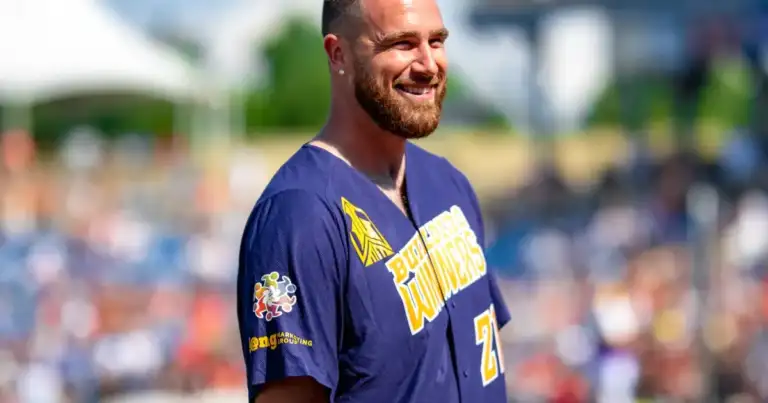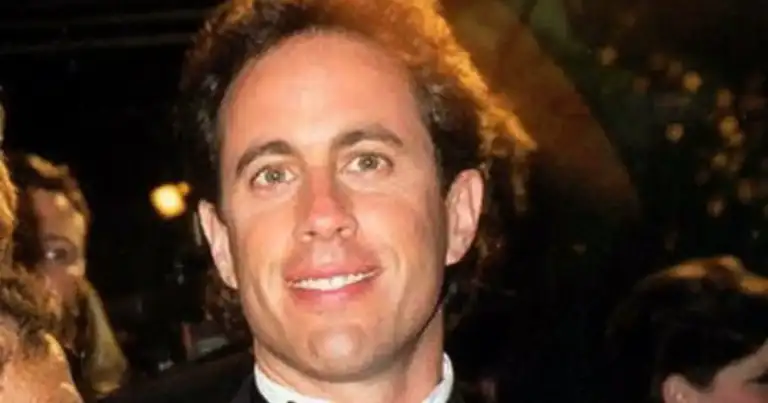

Forget the “rare glimpse.” When Jerry Seinfeld, the reigning monarch of observational comedy, is “caught” on a casual stroll in the Hamptons with his 23-year-old son, Julian, it’s not a candid moment; it’s a meticulously orchestrated scene. The tabloids, predictably, are already gushing about the “striking resemblance” and a “heartwarming father-son bond.” But for anyone with a shred of cynicism left, this isn’t a peek behind the curtain – it’s another act in the never-ending celebrity play.
Let’s be brutally honest: when a figure like Seinfeld, who has fiercely protected his family’s privacy for decades, is suddenly “spotted” by paparazzi during a “casual stroll” near a “popular local cafe” in the Hamptons, it wasn’t a random occurrence. It was a calculated beat in the celebrity rhythm. The Hamptons isn’t some secret, idyllic retreat; it’s a golden fishbowl where the uber-rich reside, fully aware that discretion is a fantasy and every “private” moment is ripe for public consumption.
The Hamptons Mirage: Privacy for the Privileged
Seinfeld has, for years, espoused the virtues of a “normal” upbringing for his children, shielded from the relentless glare of Hollywood. A noble sentiment, perhaps.
But choosing the Hamptons as the backdrop for this supposed normalcy is akin to trying to hide a supernova in a flashlight factory. This isn’t a quiet suburban street; it’s a playground for the obscenely wealthy.
Here, “casual” still means couture, and “local” implies bumping into other billionaires at the organic market. Does anyone truly believe a public figure of Seinfeld’s stature can genuinely melt into the Hamptons landscape? That’s either hopelessly naive or deliberately misleading.
His family enjoys a life of staggering privilege, and such a life, by its very design, is a magnet for scrutiny. Every “unplanned” encounter there feels less like happenstance and more like a scene from a meticulously planned reality show, starring the very people who claim to despise the spotlight.
This “lookalike” narrative is a dead giveaway. It’s the media’s most convenient hook, a gentle narrative designed to keep the Seinfeld brand humming, regardless of whether Julian himself actively courts fame.
It serves up a nostalgic wink to the elder Seinfeld’s heyday, conjuring a warm, fuzzy sentiment that reliably translates into clicks and column inches.
This isn’t merely about shared genetics; it’s about a passive, yet potent, legacy extension. The son morphs into a living, breathing homage to his father’s comedic prime, ensuring the Seinfeld name continues to resonate without anyone needing to lift a finger.
Julian’s Path: Out of the Spotlight, Into the Industry?
So, what exactly is Julian Seinfeld up to, fresh out of Duke University? The official story is he’s been maintaining an exceedingly low public profile since graduating in May 2025.
He reportedly majored in film and media – a rather telling choice, wouldn’t you say, for someone supposedly shunning the entertainment machine?
Sources whisper about an interest in “creative fields,” perhaps a subtle nod to his father’s empire, though not necessarily as a stand-up comedian. No grand announcements, no public projects, no discernible employment, they insist.
This isn’t a young man finding his feet; this is the textbook celebrity scion rollout, a carefully calibrated slow burn.
“Maintaining a low public profile” while studying film and media at Duke, then conveniently being “spotted” with your legendary comedian father in the Hamptons? That’s not shying away from the spotlight; that’s meticulously calibrating its wattage.
It’s the stark difference between plunging headfirst into the ocean and cautiously dipping a perfectly manicured toe into the shallows.
The entertainment industry, let’s not forget, thrives on connections, and a film and media degree from Duke, coupled with the indelible Seinfeld name, is less a degree and more a golden passport, whether he chooses to acknowledge it or not.
Let’s be clear: this isn’t a young man flailing aimlessly; this is a young man blessed with an embarrassment of options, a Rolodex of connections, and a surname that bypasses queues and opens doors most can only fantasize about.
His “low profile” is a strategic maneuver, a calculated attempt to forge his own path without being instantly eclipsed, yet still ensuring the public remains dimly aware of his existence. It’s the celebrity equivalent of a plum, paid internship at a Fortune 500 company – he’s learning the ropes, building his network, all while the family name provides an impenetrable cushion of privilege.
Red Marker Verdict: The Seinfeld Brand Extension
The “rare glimpse” of Jerry Seinfeld and his “lookalike” son Julian in the Hamptons wasn’t a heartwarming accident; it was a calculated brand play.
Jerry Seinfeld might preach about privacy, but his life – and his family’s – remains grist for the public mill, particularly when it burnishes his image as a grounded family man.
Julian, by merely existing and sporting a familiar profile, becomes a convenient narrative hook for the Seinfeld legacy, keeping the name relevant without any discernible effort on his part.
The true hypocrisy isn’t in desiring privacy; it’s in embracing a lifestyle and locale that renders genuine anonymity impossible, then allowing these “unscripted” moments to become front-page news.
This isn’t about hiding; it’s about masterful narrative control, even when you feign disinterest.
This wasn’t just a father and son enjoying a casual stroll; it was the quiet, undeniable continuation of a dynasty, played out on the most public of “private” stages. And Seinfeld, the undisputed master of observation, understands this game better than anyone.
Photo: Wikimedia Commons (query: Jerry Seinfeld)
Source: Google News