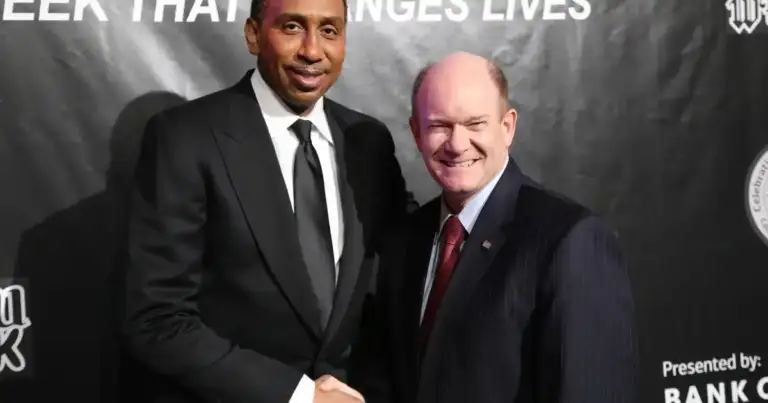

Stephen A. Smith, a man whose career is built on bold takes, just delivered one that’s not merely controversial but utterly tone-deaf and frankly, dangerous. His recent demand that women he dates be “domesticated” and cook for him isn’t just a dating preference; it’s a direct slap in the face to every ambitious, career-driven woman striving for equality in 2026. He’s peddling a 1950s fantasy, and the internet is rightfully, furiously, torching him for it.
The digital fuse was lit with explosive speed around May 10-11, 2026. Smith, during an unspecified podcast or interview, laid out his archaic requirements: a partner must be “domesticated” and, crucially, able to cook. Within mere hours, the internet’s collective outrage had “Stephen A.” and “Domesticated” trending like wildfire across X, Instagram, and TikTok.
Critics didn’t just slam his comments; they rightfully condemned them as not merely outdated but outright misogynistic. Such statements from a high-profile figure like Smith don’t just damage women’s independence; they actively undermine it, reinforcing unequal and frankly, unacceptable power dynamics in relationships.
“I need a woman who is domesticated. I need a woman who can cook.”
“I’m not saying she has to be in the kitchen 24/7, but if you can’t cook, we got a problem.”
These brazen quotes didn’t just spread; they became a rallying cry, fueling an inferno of outrage. Online users minced no words, branding Smith a “misogynistic pig” and swiftly unearthing his troubling pattern of past controversies regarding women.
Let’s be clear: this isn’t about whether Smith has a ‘right’ to his archaic preferences – everyone’s entitled to their own delusion. The real question, the one that truly matters for his career and ESPN’s integrity, is this: Will ESPN finally hold its highest-paid personality accountable, or will Stephen A. Smith’s brand emerge from this controversy unscathed, sending a chilling message to every woman watching?
ESPN’s Tightrope Walk
ESPN finds itself on a razor’s edge, caught between public outcry and its golden goose. Smith isn’t just arguably their most recognizable; he is their highest-paid, most impactful personality, the driving force behind hit shows like First Take. His gargantuan viewership makes any disciplinary move a seismic business gamble for the network. But at what cost does loyalty to a star outweigh corporate values?
Yet, ESPN isn’t without precedent for taking a stand. They suspended Jemele Hill in 2017 for violating social media guidelines, demonstrating a willingness to act when talent crosses a line. This should set a powerful precedent for action against Smith.
Smith himself is no stranger to controversy, having faced a firestorm in 2014 for comments about domestic violence, outrageously suggesting women could “provoke” attacks. While he issued a boilerplate apology then, ESPN chose not to suspend him, signaling a disturbingly high tolerance for his ‘provocative’ style – a style that often veers into outright misogyny.
But this time, the groundswell feels fundamentally different. The backlash isn’t just severe; it’s nuclear, a digital inferno fueled by a generation unwilling to tolerate such backward thinking. Social media users are rallying under the damning hashtag #StephenAHatesWomen, flooding feeds with scathing memes and branding him a “caveman” – a title he seems determined to earn.
This isn’t merely a ‘hot take’ on sports; it’s a deeply personal, profoundly offensive value statement that doesn’t just alienate but actively insults a vast, critical segment of ESPN’s viewership – particularly the women and allies who champion gender equality.
The Business of Backlash
This controversy isn’t just a PR headache; it’s a direct hit to Smith’s meticulously crafted personal brand, threatening to unravel years of commercial success. Corporate social responsibility is paramount. Major brands are ruthless in distancing themselves from talent whose archaic views clash violently with modern corporate values. His lucrative endorsement deals aren’t just ‘at risk’; they’re teetering on the brink.
In the relentless “gig economy hellscape” of 2026, women aren’t just working harder than ever; many are the primary earners, the financial bedrock of their families. To demand they also function as full-time chefs is beyond tone-deaf; it’s an insultingly out-of-touch relic of a bygone era. Pew Research data unequivocally shows that 70% of dual-income households already share cooking responsibilities. Smith’s views don’t just ignore modern reality; they actively reject it.
For ESPN, the deafening silence is rapidly becoming a problem more damaging than the initial controversy. Corporate social responsibility isn’t some fluffy buzzword; it’s a non-negotiable expectation from a savvy consumer base and discerning advertisers. The network isn’t just balancing supporting its star; it’s performing a dangerous tightrope walk between brand loyalty and public trust.
This isn’t a trivial debate about Smith’s personal dating preferences; it’s a stark reminder of the immense influence wielded by powerful media figures. When someone with his unparalleled platform brazenly pushes such regressive views, it doesn’t just validate harmful stereotypes; it actively legitimizes them, fostering a hostile, unwelcoming environment for women, not just in the workplace, but in every facet of their lives.
And let’s not forget his equally dismissive past comments about women in UFC, where he famously declared, “I don’t want to see women punching each other.” This isn’t an isolated incident; it’s a disturbing, consistent pattern of behavior that screams disrespect for women’s autonomy, capabilities, and their rightful place in any arena they choose to conquer.
What’s Next for Stephen A.?
ESPN is staring down a brutal ultimatum. Do they protect their cash cow, risking the alienation of a vast, vital segment of their audience and the wrath of their sponsors? Or do they uphold their stated values, potentially sidelining their biggest star? The network’s entire brand, its credibility, and its future are hanging precariously in the balance.
The public pressure will not just continue; it will intensify, a relentless drumbeat from advocacy groups demanding accountability and threatening boycotts. ESPN can issue all the carefully crafted statements affirming diversity and inclusion they want, but Victor Reeves knows this: in the court of public opinion, actions don’t just speak louder than words – they’re the only thing that matters.
Smith’s career has been a masterclass in leveraging strong, often inflammatory opinions for ratings. But these comments aren’t just ‘inflammatory’; they’re a venomous, personal attack on modern women everywhere.
This isn’t mere debate fodder; it’s a brazen, unforgivable insult, a declaration of war against progress.
Smith’s brand won’t just ‘take a hit’; it will suffer a profound, perhaps irreparable, blow. Sponsors won’t just ‘quietly pull back’; they will sever ties, unwilling to be associated with such regressive rhetoric.
ESPN isn’t facing a ‘tough call’; they’re facing a moral imperative to protect their integrity and their audience.
This isn’t a mere celebrity dating preference gone awry. This is a crucial test of accountability in an age of instant outrage and rapidly evolving societal norms.
Stephen A. Smith needs to grasp a fundamental truth: the world didn’t just ‘move on’ from the 1950s; it sprinted forward. If he can’t evolve, if he can’t learn, then his career won’t just get ‘cooked’ – it will be permanently relegated to the dusty annals of outdated, irrelevant commentary. The choice, and the consequences, are entirely his.
Source: Google News