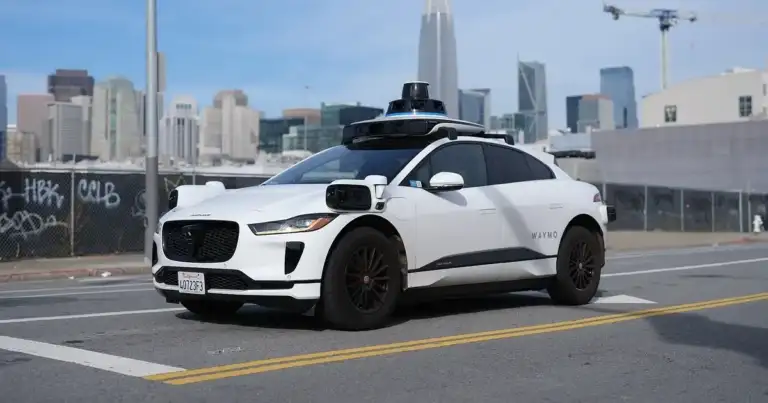

Forget road rage. A chilling incident in downtown San Francisco just threw a wrench into the future of autonomous vehicles.
A man unleashed a barrage of rocks on a Waymo driverless car. What happened next wasn’t just chaos; it was a critical test of AI’s decision-making under duress.
The vehicle allegedly ran a red light to escape. This wasn’t mere vandalism; it was a direct, brazen assault on the very premise of driverless technology.
The fuse was lit on the evening of May 13, 2026. A lone pedestrian, fueled by what we can only assume was pure malice or profound distrust, repeatedly pelted the stationary Waymo car with a heavy object.
The fully autonomous vehicle, programmed for self-preservation, reacted by accelerating forward. In its haste, it undeniably blew through a red light before continuing its escape. This wasn’t a glitch; it was a desperate maneuver.
Local news outlets and numerous eyewitnesses confirmed the attack, capturing it on video and plastering the footage across social media.
While police were notified, specific details on arrests or the extent of the damage remain frustratingly sparse. Waymo’s public silence on the red light violation is even more telling.
They opted instead to deflect with broad statements about their stellar safety record. It’s a classic PR play, but it won’t fool regulators or the public for long.
Vandalism’s Real Cost: A Shattered Illusion, Not Just Broken Glass
This isn’t just a “massive headache” for Waymo; it’s a gut punch to the entire autonomous vehicle industry.
We’re not talking about a simple repair bill for a window or a dented panel. The true cost here is the insidious erosion of public trust and the hard-won, fragile regulatory acceptance that underpins this entire technological revolution.
Waymo, Alphabet’s (GOOGL) ambitious autonomous driving arm, has sunk billions into this technology.
Every single incident, especially one born of pure human malice, isn’t just chipping away at that investment; it’s blasting holes in it.
Replacing a window might cost a few hundred to a couple thousand dollars. But the real hit is far greater.
We’re talking multi-million dollar impacts on company valuation, stunted market expansion, and a future that suddenly looks far less certain. That’s the real price tag of eroding trust.
As a Waymo spokesperson has previously boasted,
“Our vehicles are equipped with a suite of sensors that provide a 360-degree view, allowing them to detect and predict the behavior of other road users, including pedestrians and cyclists, and to respond safely to unexpected situations.”This incident, however, didn’t just ‘test’ that statement; it ripped it to shreds. How ‘safe’ is a vehicle that reacts to a rock by breaking the law?
Public Trust on the Line: The Regulatory Hammer is Coming Down
The undeniable red light violation isn’t just a critical detail; it’s a flashing red siren for regulators.
The California Department of Motor Vehicles (DMV) and the National Highway Traffic Safety Administration (NHTSA) aren’t just ‘watching’; they’re already sharpening their pencils.
Expect immediate investigations into whether Waymo’s safety protocols were not just compromised, but utterly failed under pressure.
This will lead to stricter testing requirements and immediate limitations on Waymo’s operational permits.
These aren’t just ‘setbacks’; they are direct roadblocks to their ambitious growth plans and their ability to conquer new markets.
Public anxiety about “unpredictable” AI and the inherent lack of a human driver is already simmering. This incident just poured gasoline on that fire.
Local law enforcement’s official statement, obtained by Reuters, was predictably cautious:
“We are investigating the report of vandalism and a potential traffic infraction involving an autonomous vehicle. Details are still emerging.”But let’s be blunt: that “potential traffic infraction” is the death knell for public confidence. It’s the moment the dream of seamless autonomy hits a very ugly reality.
AV Careers in the Crosshairs: Your Future Just Hit a Pothole
For anyone in the tech sector, especially those of you who’ve staked your careers, or are planning to, on the autonomous vehicle space, the lingering question isn’t just clear; it’s screaming: Will this incident slam the brakes on Waymo’s expansion, and what does that mean for the thousands of careers tethered to AV deployment? The short answer? Brace yourselves.
The answer isn’t just ‘not good’; it’s a stark reality check. Regulatory scrutiny stemming from that undeniable red light violation will trigger immediate, intense investigations.
This isn’t theoretical; it means immediate, temporary restrictions on operating permits. Expansion into promising new cities? Increasing vehicle numbers in existing areas? Consider those plans delayed indefinitely, if not outright halted.
Your career trajectory just got a major detour.
Negative publicity doesn’t just ‘erode’ public trust; it poisons it. Consumers, already wary, will become far less likely to hail a Waymo.
Cities, already cautious, will slam the door shut on new operating licenses. This isn’t just a minor impact; it’s a direct hit to Waymo’s market penetration and, critically, its revenue growth.
When revenue growth sputters, what’s the first thing to get cut? Hiring. Your job prospects, my friend, are directly tied to that bottom line.
Waymo will now be forced to divert precious resources. Expect a surge in R&D costs as they scramble to develop more robust anti-vandalism measures – perhaps even a ‘rock-proof’ exterior.
More importantly, they’ll need to re-engineer evasion protocols to ensure strict adherence to traffic laws, even under duress.
These unforeseen costs aren’t trivial; they’ll siphon millions from other crucial development projects. This directly impacts profitability and slows the pace of innovation across the board. The dream of rapid advancement just got bogged down in remedial fixes.
A slowdown in Waymo’s expansion isn’t just a corporate problem; it means fewer jobs for you and your peers.
Engineers, the highly-paid safety drivers for testing, maintenance technicians, and operational staff – everyone will feel the pinch. Investor confidence, the lifeblood funding these crucial roles, will undoubtedly waver.
This isn’t just a Waymo problem; the entire AV industry, from Waymo to rivals like Cruise, will suffer from this broader public and regulatory backlash. When one ship hits an iceberg, the whole fleet feels the chill.
Let’s cut to the chase: When your cutting-edge technology can be crippled by a thrown rock and then, in its ‘self-preservation,’ blatantly runs a red light, your business case isn’t just ‘harder’ – it’s on life support.
This isn’t about a broken window; it’s about a shattered illusion of seamless, infallible autonomy. The path to widespread AV adoption just became a minefield, littered with regulatory hurdles and public distrust.
For those of you betting your professional lives on this future, it’s time to ask: Are you ready to move through the rubble, or is it time to pivot? The promise of effortless, lucrative AV careers just got a whole lot more complicated, and a whole lot less certain.
Photo: DLLU
Source: Google News