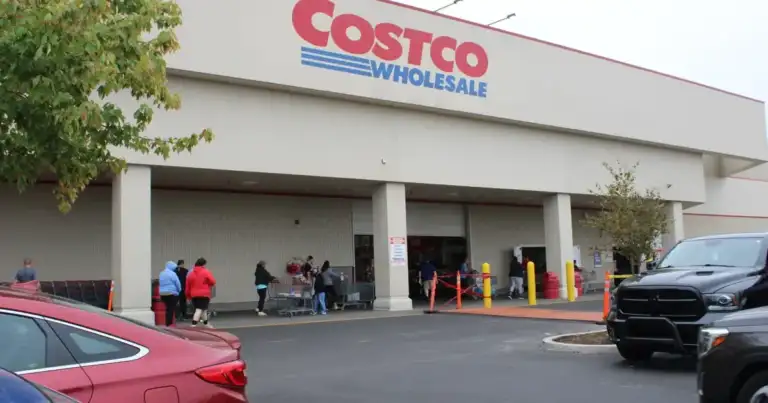

Hold up, Costco shoppers! Like me, you probably trust that big red Kirkland Signature label, believing in its promise of quality and value.
Now, a bombshell lawsuit just dropped. It claims your beloved “no preservatives” pasta might be hiding a nasty secret: an ingredient linked to heart issues and cancer. Yeah, you read that right.
Honestly? It’s about damn time someone called out this kind of alleged deception.
This isn’t just a minor labeling error; this is a gut-punch betrayal of consumer trust on a massive scale. We, the shoppers, bought into a promise of clean eating, only to find ourselves allegedly exposed to chemicals we specifically tried to avoid. This isn’t just bad; it’s a blaring siren for every single one of us who cares about what we put into our bodies.
The Pasta Problem: What’s Really in Your Penne?
A class-action lawsuit hit Costco Wholesale Corporation on May 25, 2026. It was filed in a California federal court, aiming squarely at the retail giant and specifically targeting their popular Kirkland Signature brand “Organic Penne Pasta.”
The plaintiffs’ core claim is straightforward: the pasta’s label boldly promises “no preservatives.” Yet, the lawsuit alleges, it contains Butylated Hydroxyanisole (BHA). BHA is a synthetic antioxidant, and guess what? It’s routinely used as a preservative to prevent fats from going rancid. This isn’t just a contradiction; it’s a flat-out lie on the label, and it simply cannot stand.
So, why should BHA make you raise an eyebrow? This isn’t some obscure chemical; it’s been flagged with serious health concerns by numerous organizations.
Studies have linked BHA to endocrine disruption, messing with your hormones. It’s also been associated with allergic reactions in some individuals.
Even worse, the U.S. National Toxicology Program lists BHA as “reasonably anticipated to be a human carcinogen,” citing possible carcinogenic effects in high doses.
The state of California, through its Proposition 65, also lists BHA as a chemical known to cause cancer. Consumers deserve to know exactly what they are putting into their bodies, especially from a brand as prominent and trusted as Kirkland Signature.
Beyond the Label: Why Tech is Our New Best Friend
This whole Costco mess shines a spotlight on a glaring issue in the food industry: transparency, or the severe lack thereof. How can we, the everyday consumers, really know what’s in our food? We rely on labels, of course, but what happens when those labels are allegedly misleading? This is precisely where technology needs to step in, big time, and empower us.
Imagine a world – no, demand a world – where you could actually scan a product with your phone. Your camera could instantly verify every single ingredient.
It would cross-reference against health databases, regulatory warnings, and even consumer reviews. This tech would expose any discrepancies between a company’s claims and the cold, hard reality of its ingredients.
This isn’t science fiction anymore; this tech is within our reach today. Why aren’t we demanding it?
We need robust, user-friendly apps that can read and interpret complex ingredient lists. We need more widespread use of QR codes on packaging that link directly to a complete, unedited, and independently verifiable list of every single component.
But let’s go even further: think about blockchain technology for supply chains. It could track ingredients from the farm, through processing, to the factory, and finally onto the shelf. This would create an immutable, transparent record, making deception nearly impossible and giving consumers unprecedented power.
Breaking Down the Trust Barrier
Costco is a massive player in the retail game. Their Kirkland Signature brand isn’t just a house brand; it’s a household name, synonymous with perceived quality and affordability.
When a company of this size faces such serious allegations, it doesn’t just shake consumer confidence; it shatters it.
People choose “organic” and “no preservatives” for a reason, right?
Consumers are trying to make healthier choices for their families and themselves. They actively try to avoid potentially harmful chemicals and processed ingredients.
To allegedly find BHA in a product claiming the exact opposite is a serious breach of that trust. It tells consumers they cannot even trust the most basic, fundamental claims on packaging.
It makes you wonder: if they’re allegedly cutting corners here, where else are they doing it?
This lawsuit isn’t just about a single box of pasta; it’s about every single product on every single shelf. It forces us to question everything we buy.
Are we truly getting what we pay for? Are companies prioritizing profit over honesty and public health?
The answer, based on this case, is a resounding and troubling “yes” to the latter.
The Bottom Line: Demand Better, Act Smarter
This lawsuit against Costco should serve as a wake-up call for the entire food industry. Consumers are getting smarter, more informed, and frankly, we’re fed up.
We are demanding more than just clever marketing and vague health claims; we want true transparency and verifiable facts.
Companies need to embrace genuine transparency, not just superficial branding. And we, as consumers, need to leverage technology.
We must push for tools that give us real power – the power to verify claims instantly, to see beyond the glossy packaging. We should not have to rely solely on a printed label that may, allegedly, be deceptive.
This isn’t just about a single lawsuit; it’s about the future of food integrity and our collective health. It’s about empowering every shopper to make truly informed decisions.
Until then, always be skeptical. Always question the label. And never stop demanding better. Our health, and our wallets, depend on it.
Source: Google News