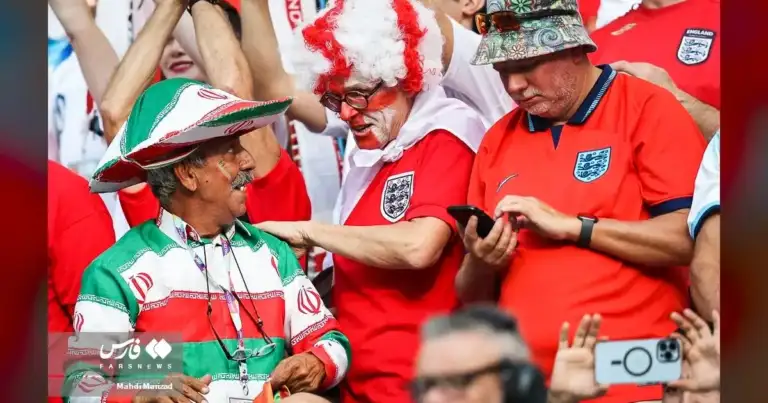

Forget your history books, tear up the scripts. On a sweltering July 4th at the fearsome Estadio Azteca, England didn’t just win a football match; they ripped a gaping hole in decades of sporting trauma and walked through it, heads held high. This wasn’t merely a victory; it was a defiant roar, a declaration that this generation of Three Lions refuses to be shackled by past failures. As Oliver Holt of The Times rightly observed, 15 heroes stood tall in that coliseum of ghosts.
The stakes couldn’t have been higher: the FIFA World Cup 2026 Round of 16, a gladiatorial clash against Argentina, the very nation etched into England’s deepest footballing nightmares. The iconic Estadio Azteca in Mexico City, a venue synonymous with English heartbreak, bore witness to a 3-2 thriller on July 4, 2026. This wasn’t just a result; it was an exorcism, a seismic shift in the narrative of English football that will echo through generations. For too long, the ghosts of ’86 have haunted every English step on this hallowed ground. Today, those ghosts were finally put to rest.
The script, initially, felt agonizingly familiar. Lionel Messi, the eternal tormentor, opened the scoring in the 17th minute, a chilling reminder of past encounters. Then, the hammer blow: Levi Colwill received a straight red card in the 32nd minute. Ten men. Against Argentina. In the Azteca. The collective groan across England was almost audible; it felt like the familiar, crushing weight of destiny was once again pressing down, threatening to snuff out any hope before it could even ignite.
Bellingham’s Brilliance and Kane’s Clutch Moment
But this isn’t the England of old, prone to crumbling under pressure. This is an England forged in a new, unyielding fire. Jude Bellingham, already a titan at 23, refused to let the dream die. In the 45+2 minute, he won a penalty, then stepped up himself, cool as ice, to bury it, leveling the score at 1-1 just before halftime. A glimmer of hope, quickly threatened. Argentina, relentless, regained the lead with an Enzo Fernández penalty in the 61st minute, after a moment of madness saw Declan Rice handle the ball in the box. Twice behind, a man down. The odds were beyond stacked; they were laughing in England’s face.
Yet, this squad possesses an almost defiant refusal to yield. Bellingham, a force of nature masquerading as a midfielder, dragged his team back into the fight. In the 78th minute, he rose like a colossus to meet a corner kick, his powerful header thundering into the net, making it 2-2. The Azteca, once a cauldron of despair, now buzzed with a frantic, disbelieving energy. Then, with the clock winding down, in the 89th minute, the captain, the man for the monumental moment, delivered the knockout blow.
“Unbelievable. The lads were immense, every single one of them,” said Harry Kane. “To come back twice, a man down, against Argentina in their backyard, essentially… it shows what we’re capable of. This is a huge statement.”
A surging, audacious run from Bukayo Saka tore open Argentina’s defense, his precise cross finding Harry Kane, who, with the predatory instinct of a true striker, volleyed it home. The net rippled, the stadium erupted, and England had done it. 3-2. A victory snatched from the jaws of defeat, a testament to raw courage and tactical brilliance. Bellingham’s Man of the Match performance, with his two goals and an astonishing 89% pass accuracy, wasn’t just statistics; it was the embodiment of a generation refusing to accept their fate.
Conquering the Fearsome Azteca
The Azteca. The name itself has long sent shivers down the spine of any English fan. It wasn’t just a stadium; it was a psychological prison, a graveyard where English hopes were repeatedly buried. The infamous 1986 “Hand of God” game, a wound that has never truly healed, unfolded on this very turf. This victory, then, transcended mere sporting rivalry. It was a confrontation with history itself, a wrestling match with the ghosts of past failures. England didn’t just beat Argentina; they broke the curse of the Azteca, dismantling a psychological barrier that has crippled them for decades. What does it mean to finally conquer a place that has been the site of your deepest footballing trauma? It means everything.
The statistics scream the defiance of this achievement. This marks the first time England has ever won a competitive match at the Azteca. More astonishingly, it’s the first time they’ve triumphed in a World Cup knockout match after a red card since their singular, glorious triumph in 1966. The echoes of that legendary year are no longer faint whispers; they are a resounding chorus. This isn’t just a team; it’s a collective of gladiators who possess a mental fortitude, a sheer bloody-mindedness, that has been conspicuously absent in so many of their predecessors. This isn’t just hope; it’s a burgeoning belief.
“That was an incredible display of character and resilience,” said England Manager Gareth Southgate. “To go down to ten men, concede a penalty, and still find a way to win against a team of Argentina’s quality, at the Azteca… it speaks volumes about these players. They never gave up. This is a special group.”
The Shadow of France: Colwill’s Costly Absence
Yet, amidst the intoxicating euphoria, a shadow lengthens. Levi Colwill’s straight red card, a moment of youthful indiscretion, carries an automatic one-match suspension. He will be conspicuously absent from England’s quarter-final clash, a devastating void in the heart of their defense. This isn’t just a setback; it’s a seismic tremor, potentially undermining the very foundation of their hard-won momentum. How do you replace a rock like Colwill?
Colwill has been nothing short of a defensive lynchpin, a cool, composed presence often partnering the seasoned John Stones. His absence doesn’t just leave a hole; it rips a chasm in the defensive line. Gareth Southgate, the stoic architect of this squad, now faces his most acute tactical dilemma yet. This isn’t merely about filling boots; it’s about re-engineering the entire defensive structure under immense pressure. The question isn’t just ‘who steps up?’ but ‘can anyone truly replicate that blend of pace, power, and positional awareness?’
The immediate candidates are Marc Guéhi, a solid, experienced starter, or Lewis Dunk, whose aerial prowess could be a factor. But the decision is far from straightforward. Southgate might be forced to reshuffle his entire backline, perhaps moving the blistering pace of Kyle Walker into a central defensive role, a move that could expose England on the flanks. This tactical tightrope walk might even necessitate a shift to a back three, a formation England has deployed effectively in the past, but one that demands immediate cohesion and understanding – luxuries they might not have against their next opponent.
This isn’t just a decision; it’s a gamble with the nation’s hopes. Because England’s quarter-final opponent is none other than France, the reigning champions, a team that embodies footballing ruthlessness. France, spearheaded by the electrifying Kylian Mbappé, possesses an attacking arsenal designed to dissect and destroy even the most robust defenses. Any defensive weakness, any flicker of hesitation, will be ruthlessly exploited. Losing Colwill now isn’t just about finding another player; it’s about finding another hero, another tactical masterstroke, to navigate what promises to be their most brutal, defining test yet. Can this new breed of Lions truly stand toe-to-toe with footballing royalty without one of their key lieutenants?
The Road Ahead: From History Makers to Legend Forgers?
The triumph over Argentina was more than historic; it was a psychological breakthrough, a defiant middle finger to decades of underachievement and expectation. It showcased an unshakeable resilience, an indomitable character, and the clutch performances of genuine superstars who thrive when the world is watching. But the road ahead isn’t just brutal; it’s a ga
Photo: Wikimedia Commons (query: English england)
Source: Google News