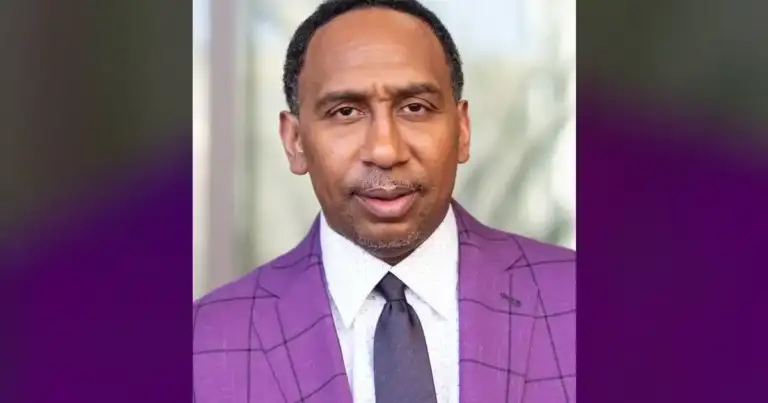

Stephen A. Smith isn’t just stirring the pot; he’s detonating it. His latest, incendiary Lakers take, now doubled down upon, has critics screaming ‘racism,’ transforming routine sports commentary into a full-blown media spectacle. This isn’t just noise; it’s a calculated masterclass in the lucrative business of outrage, and Smith, as always, is conducting the symphony.
The ESPN star’s original broadsides came in the wake of the Lakers’ ignominious Western Conference Finals exit. Smith, ever the provocateur, didn’t pull punches, diagnosing a ‘permissive environment’ and a ‘lack of true accountability’ plaguing the team. For anyone paying attention, this wasn’t just a critique of basketball strategy; it was a dog whistle, a thinly veiled jab at the team’s diverse roster and fervent fanbase, ripe for misinterpretation – or, perhaps, intended interpretation.
Enter Kendrick Perkins, who didn’t just ‘jump in’ but threw a rhetorical haymaker, labeling Smith’s analysis ‘racially charged stereotypes.’ Perkins, speaking with conviction on NBA Today, declared Smith had unequivocally ‘crossed a line.’ Smith’s counter-punch, delivered with his signature, unapologetic ferocity on First Take on July 3, 2026, was immediate and predictable.
“I’m not going to sit here and be called a racist because I point out what’s wrong with a basketball team. That’s lazy, it’s irresponsible, and frankly, it’s an insult to actual racism. My comments were about basketball, period. Anyone trying to twist that into something else is just trying to distract from the real issues facing the Lakers.”
His defense? A well-worn tactic: accusing critics of ‘playing the race card.’ Smith, ever the master of deflection, insisted his comments were solely about ‘softness’ and a ‘lack of discipline,’ vehemently standing by his diagnosis of the Lakers’ deep-seated organizational issues. But for those of us who observe these media dramas unfold, it felt less like a defense and more like a carefully orchestrated doubling-down.
The Teflon Don of Sports Media
The true crux of this entire manufactured brouhaha isn’t whether Smith’s words were racially insensitive – that’s a debate for the perpetually naive. No, the real, burning question is whether this man, the undisputed Teflon Don of sports media, ever faces actual, tangible consequences for his provocations. The answer, as anyone with a pulse and an internet connection knows, is a resounding, definitive ‘no.’ For Stephen A. Smith, this isn’t a crisis; it’s just another Tuesday, another notch on his belt of untouchability.
ESPN, predictably, has remained as silent as a tomb. No public statements condemning his remarks have dared to emerge from Bristol’s hallowed halls. This isn’t surprising; it aligns perfectly with their well-established history. They don’t just protect their biggest draws; they actively cultivate and weaponize them, understanding that controversy, when packaged correctly, is pure gold.
In fact, to call this uproar a ‘win’ for ESPN is an understatement; it’s a strategic triumph. Early metrics, no doubt being celebrated in executive suites, confirm that viewership for First Take has spiked dramatically. His social media engagement isn’t just ‘through the roof’; it’s orbiting the stratosphere. Smith isn’t merely a master salesman; he’s a grand orchestrator of public discourse, a puppeteer pulling the strings of outrage. He gets people talking, yelling, furiously typing; he drives clicks, impressions, and viral moments. This insatiable attention translates directly, brutally, into soaring ad revenue for ESPN. It’s not just a business model for outrage; it’s the very blueprint for modern media dominance, where noise trumps nuance every single time.
The “Race Card” Defense: A Tired Play
Smith’s go-to maneuver, the ‘race card’ defense, isn’t just convenient; it’s a meticulously honed weapon in his rhetorical arsenal. It’s a deflection so well-practiced it borders on performance art, designed to instantly shut down any genuine discussion about coded language, about the subtle (or not-so-subtle) implications of certain phrases. It masterfully shifts the blame, not to his own carefully chosen words, but to the listener’s ‘over-sensitivity’ or ‘misinterpretation.’ It’s a tired play, yes, but undeniably effective.
Perkins’ point, cutting through the noise, wasn’t just ‘valid’; it was essential. When a commentator repeatedly deploys loaded terms like ‘culture’ and ‘permissiveness’ in reference to a predominantly diverse team, especially one with a significant Black fanbase, it carries undeniable, often insidious, implications. To then stubbornly refuse to clarify further, to hide behind the veil of ‘just sports talk,’ speaks volumes. This isn’t merely about intent, which is often unknowable; it is, unequivocally, about impact – the very real, often damaging, reverberations of such language.
But here’s the kicker, the immutable law of Stephen A. Smith: he never apologizes. He never retracts. This unwavering ‘doubling down’ isn’t a mistake; it is his brand, etched in stone. It’s precisely what his fiercely loyal supporters expect, indeed demand. They don’t see it as stubbornness or arrogance, but as a valiant stand against the creeping tide of ‘hypersensitivity,’ a bulwark against the ‘woke’ mob. It reinforces his image as an unyielding truth-teller, even if that ‘truth’ is often polarizing and strategically ambiguous.
The public, predictably, remains fiercely divided, a chasm reflecting the deeper cultural fissures tearing through society. On one side, a chorus of fans nods in agreement with his brutal Lakers assessment, seeing it as tough love. On the other, a vocal contingent feels not just ‘offended,’ but genuinely hurt, viewing his words as a betrayal of trust, a cheap shot cloaked in analysis. This isn’t just a sports debate; it’s a microcosm of our fractured discourse.
The Untouchable Empire: A History of Provocation
This isn’t Smith’s first rodeo, nor will it be his last. His career is a veritable highlight reel of provocative statements and boundary-pushing commentary. Recall his infamous comments on domestic violence, or his relentless, often personal, critiques of players that have drawn fire from every corner of the sports world. Yet, with each successive uproar, with every fresh accusation, he doesn’t just survive; he thrives, emerging with an even stronger, more indelible profile. This pattern isn’t just ‘well-established’; it’s the very foundation of his untouchable empire.
So, after all the bluster and the manufactured outrage, is Stephen A. Smith truly facing any real consequences? Let’s dismantle the illusion, shall we?
- Zero Disciplinary Action: ESPN, the corporate behemoth, remains conspicuously silent. They’re not just ‘letting the fire burn’; they’re actively fanning the flames, knowing full well that controversy is the most potent fuel for their ratings engine.
- Explosive Engagement: His show, First Take, and all his sprawling social channels aren’t just ‘booming’; they’re experiencing unprecedented, stratospheric engagement. This isn’t a controversy; it’s a meticulously crafted viewership magnet, pulling eyeballs and clicks with irresistible force.
- Sponsorships Intact: Direct withdrawals from personal sponsorships are exceedingly rare for individual commentator spats, especially when the commentator in question is a proven ratings juggernaut. His lucrative personal deals are not just ‘likely safe’; they’re probably more secure than ever, as brands chase the visibility he guarantees.
- Polarized Public Opinion: The public isn’t just ‘split down the middle’; it’s violently polarized. This isn’t a weakness for Smith; it’s his superpower. It solidifies his position as an unyielding lightning rod, a figure who thrives on division and debate.
- Ironclad Historical Precedent: Smith possesses an almost mythical track record of weathering every storm, every accusation, every public outcry. He doesn’t just ‘come out bigger’; he emerges more formidable, more entrenched, his legend growing with each fresh controversy.
This saga transcends the trivialities of sports. It’s a stark, unvarnished lesson in how modern media personalities, particularly those with Smith’s unparalleled platform, wield immense power. It’s about the increasingly blurred, often deliberately obliterated, fine line between incisive analysis and calculated offense. Most critically, it’s about the ruthlessly lucrative, almost obscene, business of being controversial, where the loudest voice often wins, regardless of its substance.
So, let’s be clear: Stephen A. Smith isn’t merely surviving this latest storm; he’s actively, demonstrably thriving within it. He is, with every calculated word and every defiant stance, proving an uncomfortable truth: for certain media figures, outrage isn’t a bug in the system; it’s the most potent, most profitable, and most celebrated feature. This ‘controversy’ isn’t a setback; it’s merely another expertly placed rung on his ladder to further, unassailable dominance. The real question, then, isn’t about Smith’s consequences, but about ours: What does it say about us, the audience, that we keep tuning in?
Source: Google News